 Save to Pinterest
 I discovered the magic of a cheese board the moment I stopped thinking of it as a practical platter and started seeing it as a canvas. Years ago, my friend Sarah brought a lopsided arrangement of cheeses and fruits to a dinner party, and someone joked it looked like abstract art. That comment stuck with me, and when I learned about the yin-yang symbol's deeper meaning—the balance of opposites creating harmony—I knew I had to design a board that embodied that philosophy. This isn't just about flavor anymore; it's about telling a story with every slice and curve.
I made this board for the first time during a quiet winter afternoon when I was experimenting with visual storytelling in food. My partner walked into the kitchen, and before I could explain the concept, they said, 'That looks like it means something.' That reaction—that instinctive recognition of the symbol—told me I was onto something real. Now whenever I arrange it, I remember that moment of quiet satisfaction.
Ingredients
- Fresh blackberries: These aren't just a dividing line; they're the star that ties everything together with their subtle tartness.
- Goat cheese: The creamy, tangy foundation of the light side—let it soften slightly at room temperature for the best texture.
- Young Manchego or white cheddar: Mild and approachable, these cubes add structure and prevent the light side from feeling one-dimensional.
- Pear slices: Their delicate sweetness bridges the gap between cheese and the board's gentle aesthetic.
- White grapes: Pop them for bursts of cleansing sweetness that refresh the palate between bites.
- Raw almonds: Toasting them first, if you have time, deepens their flavor without losing that pristine pale appearance.
- Rice crackers: Neutral and crisp, they let the cheeses and fruits shine without competing for attention.
- Aged blue cheese: This is where the dark side gets its personality—choose one with bold veins and creamy paste for best impact.
- Aged Gouda or sharp cheddar: Rich and complex, these cubes anchor the darker half with serious umami.
- Black plum slices: Their deep color and subtle spice complement the assertive cheeses perfectly.
- Red or black grapes: Juicy and forgiving, they're your secret weapon for balancing intense cheese moments.
- Roasted hazelnuts: Their earthy depth makes the dark side feel complete and luxurious.
- Dark rye crisps or seeded crackers: Hearty and flavorful, these stand up to bold cheeses without fading into the background.
- Fresh mint and edible flowers: These aren't decoration—they're the final touch that makes guests feel welcomed and celebrated.
Tired of Takeout? 🥡
Get 10 meals you can make faster than delivery arrives. Seriously.
One email. No spam. Unsubscribe anytime.
Instructions
- Start with your stage:
- Grab your largest round serving board—the shape matters because it echoes the yin-yang's circular completeness. Clear your work surface and gather everything you'll need within arm's reach so you're not fumbling mid-arrangement.
- Draw the line:
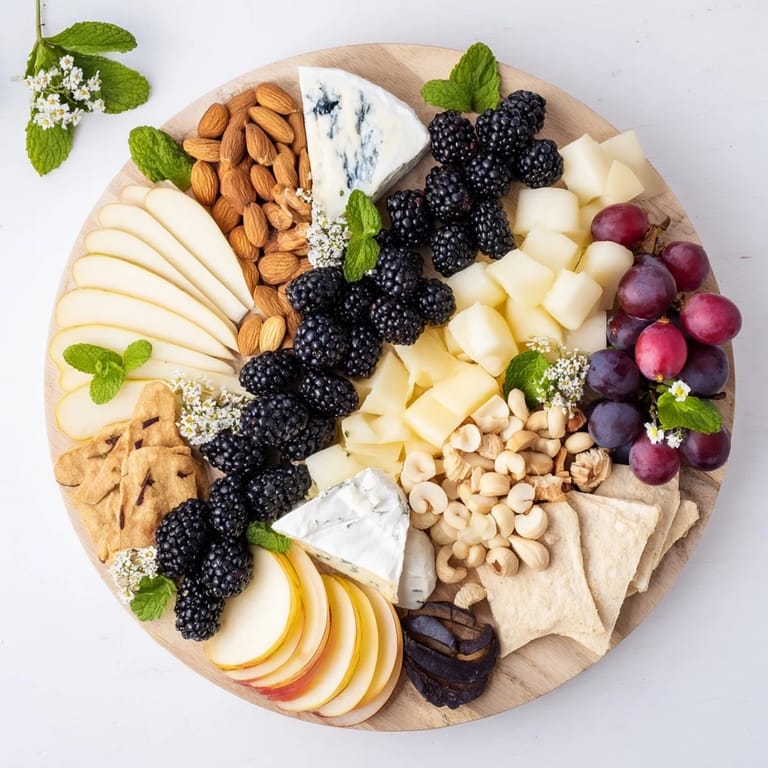
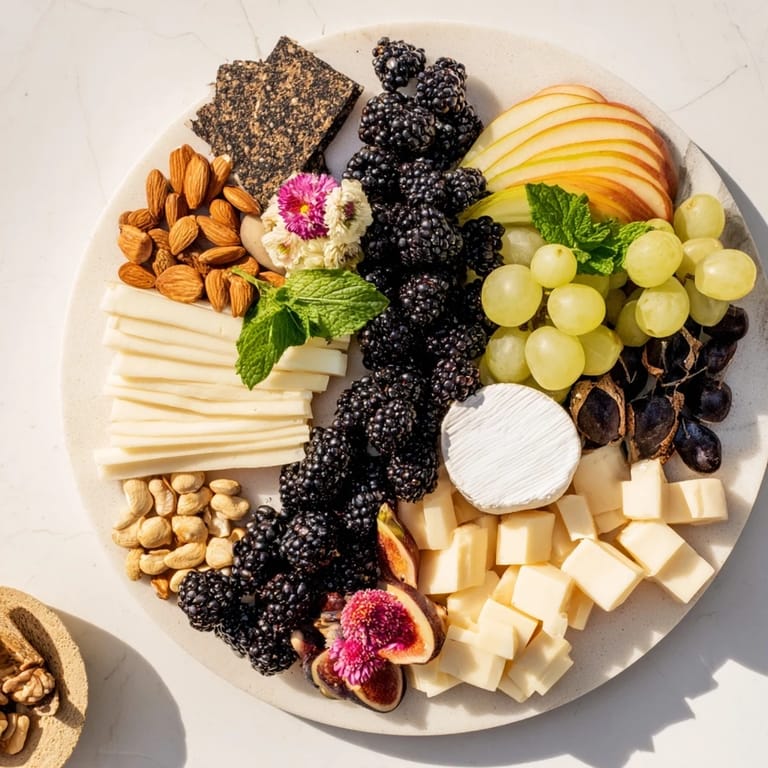
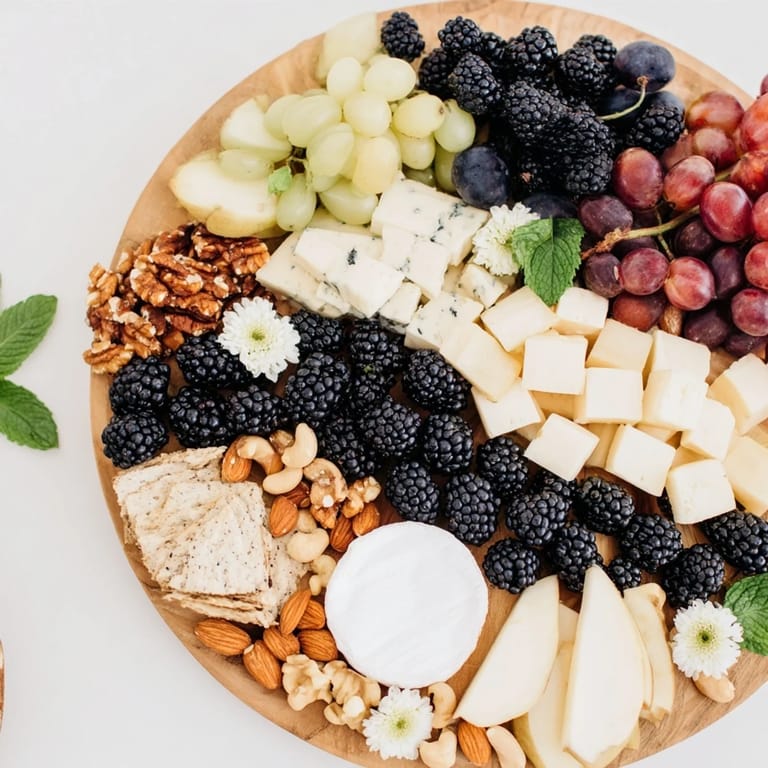
- Arrange the blackberries in a confident curved S-shape across the center of the board, working slowly and adjusting as you go. This curve is your guide for everything else, so take a breath and trust your instincts even if the first attempt feels wobbly.
- Build the light side:
- On one half, begin with the goat cheese, letting its creaminess anchor one section, then scatter the young Manchego cubes nearby for textural contrast. Add pear slices in an organic cluster, let white grapes nestle into the gaps, and scatter almonds where they'll catch the light.
- Balance with the dark side:
- Mirror the light side's energy with blue cheese and aged Gouda, making sure the darker cheeses feel just as intentional and deliberate. The black plum slices, darker grapes, and hazelnuts should create visual echo without being identical copies.
- Finish with flourishes:
- Tuck fresh mint leaves throughout both sides—they bring life and freshness that photos simply can't capture until you see it in person. If you're using edible flowers, place them strategically where they'll make someone smile when they discover them.
- Serve with intention:
- Step back and admire it for a moment—this is the moment before the magic happens. Set it down in front of your guests and watch their faces as they understand what they're looking at.
 Save to Pinterest
 The real turning point came when a dinner guest asked me why I chose a yin-yang board, expecting some complicated answer. I realized then that what moved me wasn't the intellectual concept—it was the simple act of making something beautiful and balanced for people I cared about. Food at its best is never just about taste; it's about the care you show by thinking things through.
The Art of Visual Flavor
What makes this board work isn't the ingredients themselves—it's the conversation their arrangement creates. Light cheeses taste lighter next to dark ones, and fruits seem sweeter when they're paired with their color-opposite companions. I learned this accidentally when I once threw together a haphazard board and realized how flat everything tasted compared to my carefully balanced version. The visual rhythm your eye follows actually changes how your palate perceives the flavors, something I never expected when I started this experiment.
Seasonal Adaptations
One of my favorite parts about this board is how it shifts with the seasons without losing its identity. In summer, I swap the plums for figs and add fresh berries to the light side. In autumn, honeycomb on one side and fig jam on the other create a completely different mood while maintaining that essential balance. Winter brings dried apricots and pomegranate seeds, and spring feels right with fresh strawberries and young asparagus tips. The philosophy stays the same; only the details change, which somehow feels like the perfect metaphor.
- Always taste a small piece of each cheese before arranging so you know exactly how they'll sing together on the board.
- If you're serving this alongside wine, let the board rest at room temperature for ten minutes while you pour, so everything reaches its optimal tasting point at the same moment.
- The board is forgiving—if something doesn't look right, move it, because imperfect arrangement often feels more genuine than precision anyway.
Pairing and Presentation
I've learned that this board tells a different story depending on what you serve alongside it. A crisp white wine makes the light side sing and somehow makes the dark side feel sophisticated rather than heavy. A light-bodied red does the opposite, lifting the darker cheeses and making you appreciate their complexity. I once served it with sparkling water and fresh mint tea to a group of friends avoiding alcohol, and somehow that version felt even more thoughtful because we had to find the balance through the flavors alone rather than relying on wine to bridge them.
 Save to Pinterest
 This board has become my favorite way to say 'I'm glad you're here' without words. Every time I make it, I'm reminded that balance—in food, in presentation, in life—isn't about perfection; it's about thoughtful intention.
Recipe FAQs
- → What cheeses work best for this board?
Soft cheeses like goat cheese and young Manchego complement aged varieties such as blue cheese and Gouda, providing balance and variety.
- → Can I substitute any fruits?
Yes, seasonal or preferred fruits like apples, figs, or berries can replace the pears, grapes, and plums used here for freshness and sweetness.
- → How should I arrange the elements on the board?
Place a curved line of blackberries down the center to divide light and dark ingredients, arranging cheeses, fruits, nuts, and crackers neatly on each side.
- → Are there suggested accompaniments?
Honeycomb on the light side or fig jam on the dark side adds sweetness, while fresh mint and edible flowers enhance aroma and appearance.
- → Is this suitable for special diets?
It is vegetarian and can be gluten-free if crackers are chosen accordingly; check ingredients carefully for allergies.