 Save to Pinterest
 My grandmother's kitchen smelled like earth and vinegar on the day she first taught me to make borscht, the deep crimson broth staining my fingers as I helped grate beets. She moved through the steps with the calm certainty of someone who'd made this soup hundreds of times, never checking a recipe, just knowing when the broth was ready and the vegetables tender enough. I was maybe eight, standing on a stool to reach the counter, and she let me add the sour cream swirl at the end—that moment when the soup transformed into something almost jewel-like. That kitchen lesson stayed with me through decades, and now when I make it, I find myself moving at her pace, trusting the same quiet instincts.
Years later, I made this for a table of hungry friends on a freezing March evening when everyone was tired and uncertain about the season. The borscht emerged deep purple-red from the pot, steaming and alive, and I watched people slow down as they ate—really eat, not just refuel. Someone asked for the recipe that night, and someone else went back for thirds, and I realized that borscht had become my answer to the question of what real comfort food means.
Ingredients
- Beef chuck or brisket, 400 g (14 oz) in large pieces: Choose a cut with some marbling and connective tissue—this becomes gelatin that enriches the broth into something silky, and the meat itself shreds into tender strands that belong in every spoonful.
- Water, 1.5 liters (6 cups): Good cold water is your foundation; it draws out the beef's essence slowly as it simmers.
- Bay leaves, 2: These quiet everything down into a unified flavor rather than individual ingredients.
- Black peppercorns, 1 teaspoon whole: Keep them whole during cooking, then let them sink to the bottom where they belong—you want the gentlest pepper presence, not aggressive heat.
- Salt, 1 teaspoon for cooking: Start conservative; you'll adjust at the end once you taste the final broth.
- Beets, 3 medium, peeled and grated: These are the soul of the soup—their earthiness and slight sweetness define everything that follows.
- Carrots, 2 medium, peeled and grated: They soften quickly and add natural sweetness that plays off the beets and vinegar.
- Onion, 1 medium, finely chopped: This becomes almost invisible in the final broth, but its sweetness is the backbone of the vegetable mixture.
- Potatoes, 2 medium, peeled and diced: They'll soften and thicken the broth slightly, giving it body without cream or flour.
- Green cabbage, 1/4 small head, shredded: This adds a gentle earthiness and slight crunch if you don't overcook it; add it late enough that it stays present.
- Tomato paste, 2 tablespoons: A small amount deepens the color and adds subtle umami complexity—not tomato flavor, just depth.
- Garlic, 2 cloves, minced: Wait until the very end to add this so it stays fresh and bright rather than stewed into submission.
- Oil, 2 tablespoons sunflower or vegetable: Use a neutral oil that won't compete; you're building a base for the vegetables, not flavoring with the oil itself.
- Sugar, 1 tablespoon: Just a whisper of sweetness to balance the vinegar and bring out the beets' natural character.
- White vinegar, 2 tablespoons: This is the magic—it brightens everything and prevents the soup from tasting flat or one-dimensional.
- Sour cream, 150 g (2/3 cup), for serving: The cold dollop is essential, not an afterthought; it cools and enriches each spoonful and adds a note of luxury.
- Fresh dill or parsley, chopped: Choose fresh herbs over dried here—they matter more than you'd expect and they should be bright green when they hit the bowl.
Tired of Takeout? 🥡
Get 10 meals you can make faster than delivery arrives. Seriously.
One email. No spam. Unsubscribe anytime.
Instructions
- Start the beef broth:
- In a large pot, combine the beef pieces with cold water, bay leaves, peppercorns, and salt. Bring it to a rolling boil—you'll see foam and impurities rise to the surface, and this is the moment to skim them off with a spoon or small ladle, taking a moment to do this thoroughly so your final broth stays clear and clean-tasting. Reduce the heat to a gentle simmer and let it cook, mostly undisturbed, for 45 minutes while the beef releases its flavor into the liquid.
- Build the vegetable base:
- While the beef simmers, heat oil in a large skillet over medium heat and add the chopped onion, letting it soften and turn translucent for about 3 minutes until it smells sweet. Add the grated carrots and beets—you'll see the color begin to emerge and deepen—and sauté for 5 minutes, stirring occasionally to coat everything in the oil.
- Deepen with paste and vinegar:
- Stir in the tomato paste, sugar, and vinegar, stirring constantly for a minute so the tomato paste dissolves and the vinegar begins to work its magic, brightening the vegetables. Let this mixture continue cooking for 7 to 8 more minutes, stirring now and then, until the vegetables are tender and the liquid has reduced slightly, concentrating the flavors.
- Prepare the broth:
- Once the beef has simmered for 45 minutes, carefully remove it from the pot and set it on a plate to cool slightly. If you prefer a clearer broth, strain it through a fine sieve, then return it to the pot and bring it back to a gentle simmer.
- Add the potatoes:
- Cut the cooled beef into shreds or small cubes and set aside for now. Add the diced potatoes to the simmering broth and let them cook for about 10 minutes until they're beginning to soften but still hold their shape.
- Build the complete soup:
- Add the shredded cabbage and the entire sautéed vegetable mixture from the skillet to the pot, stirring gently so everything combines. Simmer for another 10 minutes until the cabbage is tender but not mushy and the flavors have begun to meld.
- Finish and rest:
- Return the shredded beef to the pot along with the minced fresh garlic, and taste carefully, adjusting salt and pepper until it tastes like something you'd want to eat—remember, the sour cream and herbs will add their own notes when you serve. Let the soup simmer gently for 5 more minutes so the garlic loses its raw edge, then remove it from heat and let it rest for 15 to 20 minutes, a step that makes an enormous difference in how the flavors settle and deepen.
 Save to Pinterest
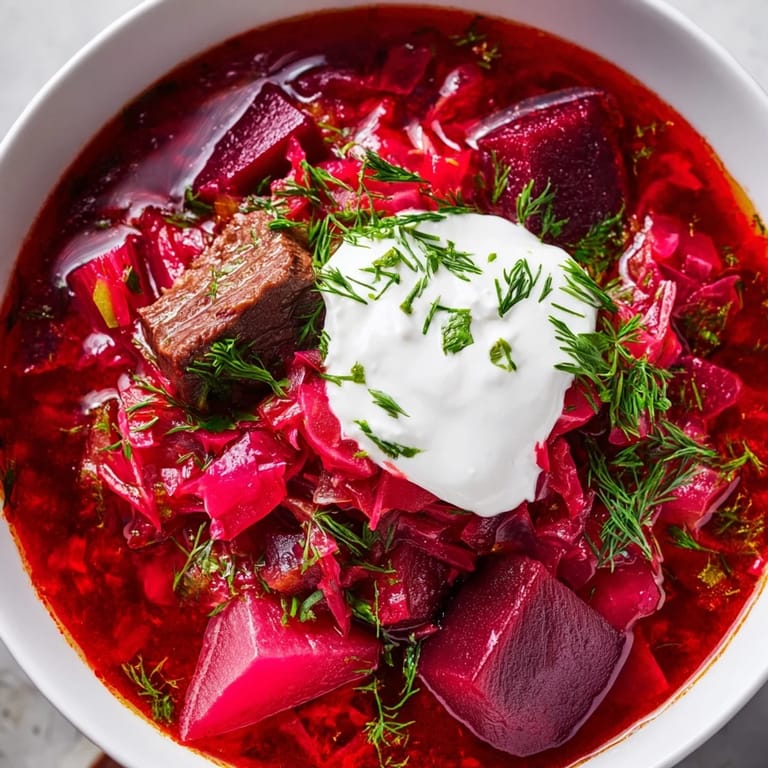
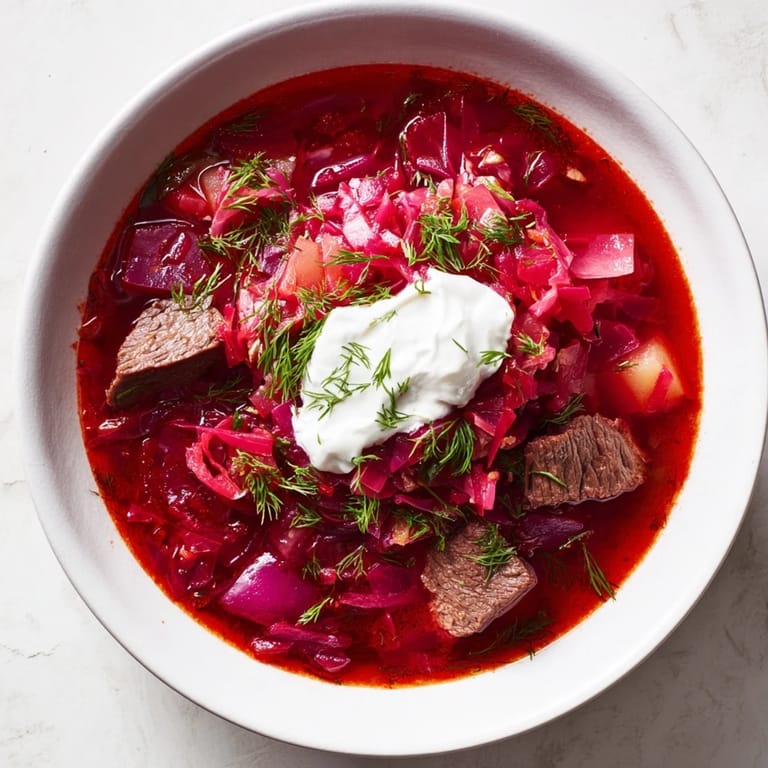
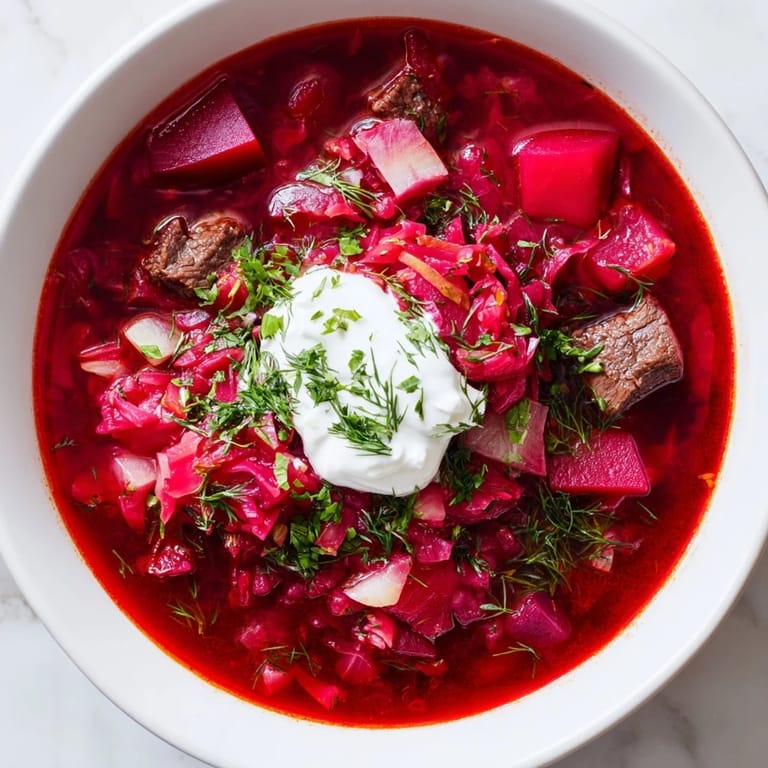
 I've learned that borscht is the kind of dish people remember not because it's complicated, but because it tastes like someone took time to make something real. The color alone—that deep, almost wine-dark red—announces that something thoughtful is happening in the bowl, and the taste follows through on that promise, offering layers of earthiness and brightness and warmth.
The Science of Slow Cooking
Borscht rewards patience in a way that quick soups never do. The long, gentle simmer of the beef allows collagen to convert into gelatin, which gives the broth a silky mouthfeel that can't be rushed, and the vegetables cook slowly enough to release their sugars and flavors into the liquid rather than turning to mush. The vinegar and tomato paste work together to brighten and deepen the natural flavors—the vinegar cuts through richness while the paste adds subtle umami that makes you wonder what the secret ingredient is. When you taste the broth at different stages, you'll notice how it changes and improves, becoming more complex as time passes, which is why resting the finished soup genuinely matters.
Timing and Temperature
The key to borscht that tastes like itself is watching the heat—you want a strong boil at the very beginning to release impurities from the beef, then a gentle simmer for everything else. A gentle simmer means small, occasional bubbles rising to the surface, not a rolling boil that breaks down the vegetables into submission. If your broth boils too vigorously, the beef becomes stringy and tough instead of tender, and the vegetables lose their identity and turn to mush, so adjust your burner to keep things calm and steady once you've reduced the heat initially.
Making It Your Own
The beauty of borscht is that it's forgiving enough to make your own and it still tastes like borscht. Some families add more cabbage, others finish with a squeeze of lemon juice, and I've had versions where the cook roasted the beets first for extra depth or added a small amount of beet kvass for sourness instead of vinegar. The foundation stays the same—the beef, the beets, the slow cooking, the sour cream—but the variations are endless and all of them are honest.
- For a vegetarian version, skip the beef and use vegetable broth, adding the extra time to build flavor through slow-cooking the vegetable base thoroughly.
- Borscht genuinely tastes better the next day or even two days later, so make it in advance if you can; the flavors settle and integrate overnight in ways that improve everything.
- Serve it with dark rye bread or pampushky (Ukrainian garlic rolls) to soak up the beautiful broth and make it a complete meal.
 Save to Pinterest
 Borscht became my soup because it combines everything I love about cooking—simple ingredients, patient technique, and the kind of food that makes people slow down and actually taste what they're eating. Make it for someone you want to feed well.
Recipe FAQs
- → What cut of beef is best for this soup?
Using chuck or brisket yields tender, flavorful meat that softens well during simmering.
- → Can I prepare the soup without meat?
Yes, substituting vegetable broth and omitting beef provides a hearty vegetarian alternative.
- → How do you achieve the vibrant color in the soup?
Grated beets and slow cooking preserve their deep red hue, giving the soup its signature color.
- → Why is the soup better after resting?
Allowing it to rest off heat lets flavors meld and deepen, enhancing the overall taste.
- → What garnishes complement this dish?
A dollop of sour cream and chopped fresh dill or parsley add creaminess and fresh herbal notes.
- → Is this soup gluten-free?
When served without bread, it is naturally gluten-free, but check ingredient labels to confirm.