 Save to Pinterest
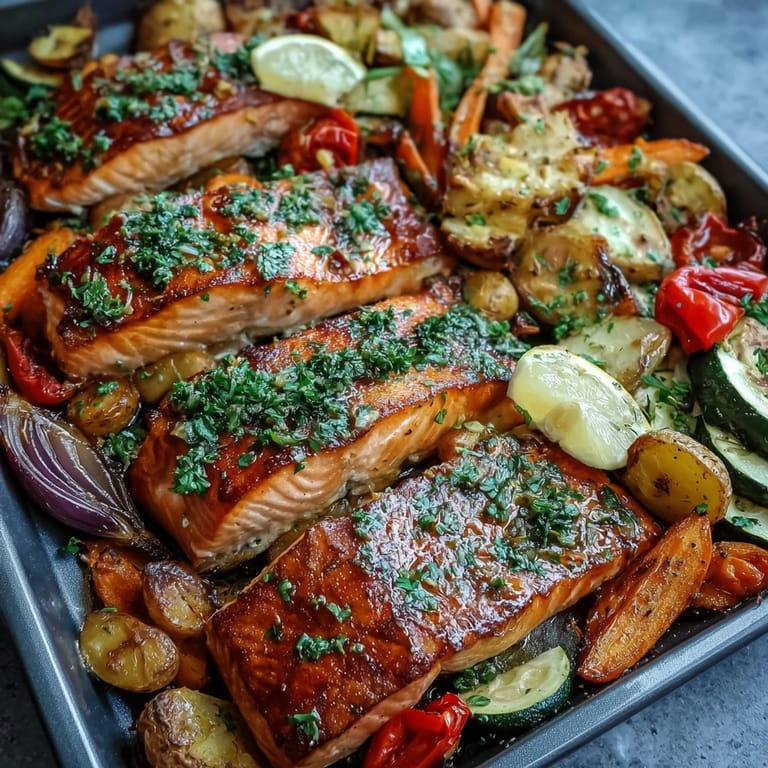
 There's something deeply satisfying about sliding a sheet pan into the oven and knowing dinner is essentially handled. I discovered this salmon and vegetable situation on a Thursday when I had exactly zero energy but hungry people to feed, and honestly, it saved me. The kitchen filled with this incredible roasted aroma within minutes, and somehow the salmon stayed perfectly moist while the vegetables caramelized into little pockets of sweetness. My daughter asked if we were eating fancy, and I didn't have the heart to tell her it took less time than ordering takeout.
I made this for my mom during her first visit after moving to the city, and I watched her face when she tasted that first bite of salmon. She actually paused mid-chew, which she never does, and asked if I'd started taking cooking classes without telling her. It became the joke of the weekend, but really it just proved that sometimes the simplest dishes hit hardest when made with intention.
Ingredients
- Skinless salmon fillets (4 pieces, 5-6 oz each): Look for fillets that feel firm and smell like the ocean, not fishy—your fishmonger should be able to guide you toward the freshest catch, and it absolutely makes a difference in how tender they turn out.
- Red onion: Cut into wedges so the layers stay intact and caramelize rather than scatter, creating these sweet, jammy pieces throughout the pan.
- Carrots: Slice them into half-inch rounds so they roast through without turning to mush, staying with that gentle give when you bite.
- Red and yellow bell peppers: The color matters less than cutting them thick enough to hold their shape, about half-inch strips that char slightly at the edges.
- Zucchini: Half-moon slices prevent them from releasing too much water and turning soggy, a lesson learned through trial and error.
- Cherry tomatoes, halved: Halving them lets the heat reach the center quickly so they burst open and release their sweetness without drying out.
- Olive oil: Use a good quality one you actually enjoy tasting, not the expensive stuff reserved for finishing, but something honest and clean.
- Dried Italian herbs: If you have fresh herbs, use triple the amount and toss them on at the very end to preserve their brightness.
- Lemon zest and fresh parsley: These final touches wake up the whole dish and prevent it from feeling heavy, acting almost like a little bell that says taste me again.
Tired of Takeout? 🥡
Get 10 meals you can make faster than delivery arrives. Seriously.
One email. No spam. Unsubscribe anytime.
Instructions
- Start your oven strong:
- Crank the oven to 425°F and let it preheat fully—a properly hot oven is what makes vegetables crispy and salmon cook evenly. Line your pan with parchment or foil so nothing sticks and you're not scrubbing for twenty minutes afterward.
- Season your vegetables generously:
- Toss the onion, carrots, peppers, zucchini, and tomatoes with olive oil, herbs, salt, and pepper in a bowl first, making sure everything is lightly coated and smells incredible. Spread them in a single layer on the sheet pan, leaving some space where the salmon will eventually nestle in.
- Give vegetables a head start:
- Roast them alone for 10 minutes so they begin softening and the edges start turning golden. This staggered timing prevents the salmon from becoming overcooked while waiting for the vegetables to catch up.
- Prep the salmon while vegetables roast:
- Pat your fillets completely dry with paper towels, then brush with olive oil and sprinkle with lemon zest, salt, and pepper. Dry salmon is the secret to a nice sear and proper cooking, so don't skip this step even though it feels fussy.
- Bring salmon to the party:
- After 10 minutes, pull the pan out, give the vegetables a gentle stir to prevent sticking, then arrange the salmon pieces among them, skin-side up. Return the pan to the oven for 12-15 minutes until the salmon flakes easily with a fork and the vegetables look deeply caramelized.
- Finish with brightness and rest:
- Let everything cool for just a minute before serving, sprinkle with fresh parsley and serve with lemon wedges so everyone can squeeze exactly as much brightness as they want.
 Save to Pinterest
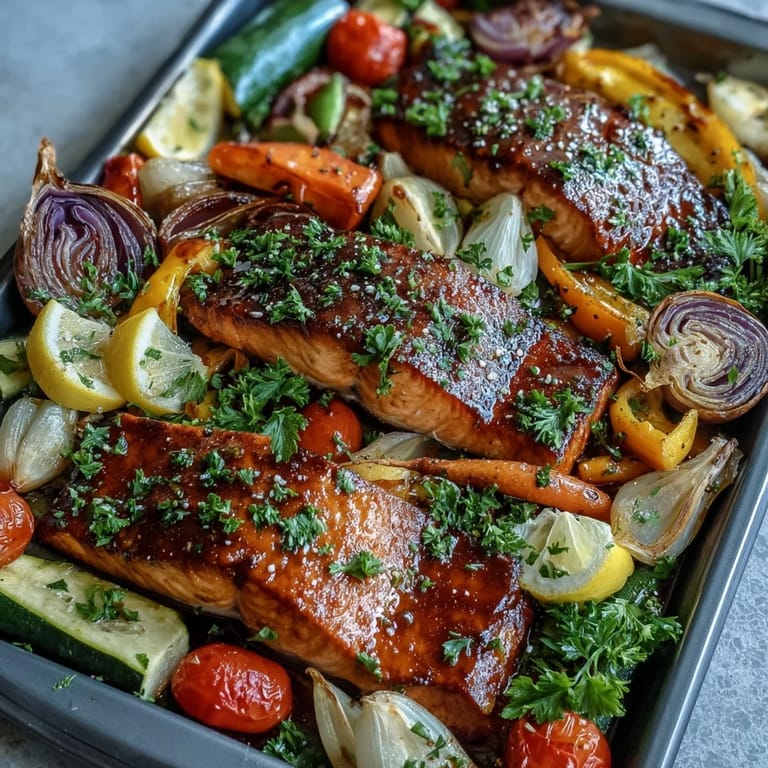
 There was a moment during one of these dinners when my usually picky nephew asked for seconds without any negotiation, and his mom looked genuinely shocked. He pointed at his plate and said the tomatoes tasted like candy, which is exactly what happens when you let them roast properly and concentrate their sweetness. It's funny how a simple sheet pan can become the reason someone discovers they actually love vegetables.
Timing and Temperatures Matter
The 425°F temperature is specific for a reason—it's hot enough to caramelize without burning, and it gives you that perfect window where everything finishes at roughly the same time. If your oven runs cool or hot, adjust by five-degree increments and trust your eyes and a fork more than the timer. I've learned that my oven loses about fifteen degrees over the years, so I mentally add a couple minutes and check early.
Vegetable Swaps and Seasonal Thinking
This recipe is genuinely flexible because the roasting method works for almost anything—asparagus, broccoli, Brussels sprouts, even thin-sliced sweet potato chunks work beautifully. In summer I lean toward zucchini and light peppers, but winter brings me toward root vegetables and heartier options. The real magic is respecting the natural moisture content of whatever you choose and adjusting your layering so nothing gets buried and steams instead of roasts.
Extra Touches That Elevate Everything
After roasting, a drizzle of balsamic vinegar adds a subtle tanginess, and crumbled feta brings this creamy, salty contrast that makes people sit up and pay attention. Some nights I finish with a light squeeze of garlic oil or even a sprinkle of sesame seeds if we're feeling adventurous. These aren't necessary, but they're the difference between dinner and dinner that people remember.
- A squeeze of fresh lemon juice right before serving brightens everything and prevents the dish from tasting heavy or one-note.
- If you have fresh dill, use it instead of parsley for a completely different but equally beautiful personality.
- This pairs perfectly with a crisp white wine or even just ice water with lemon, letting the salmon be the star without competition.
 Save to Pinterest
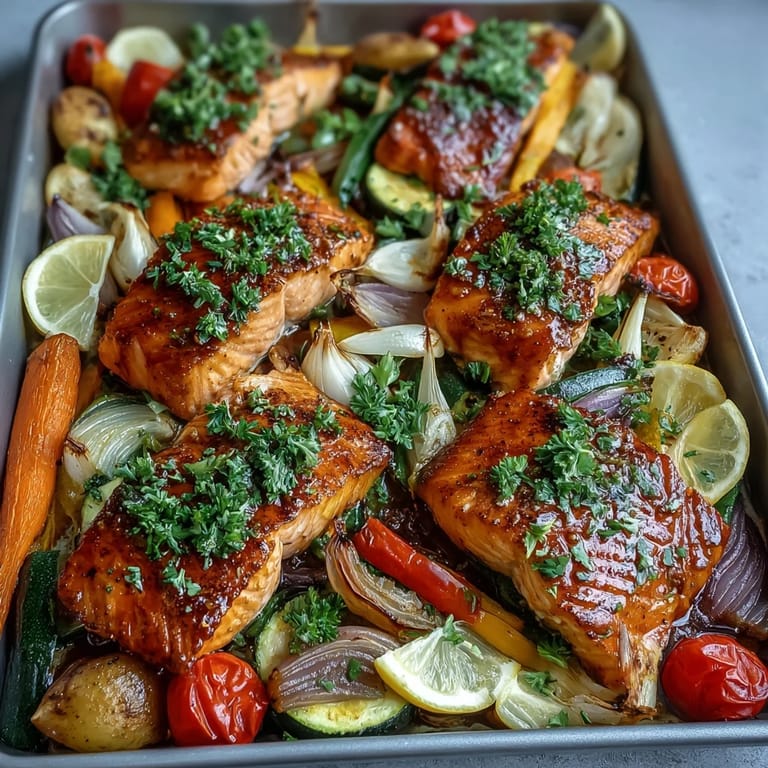
 This sheet pan dinner has become my go-to when I want to feel like I cooked something impressive without the stress, and honestly, that's worth more than any complicated recipe. There's real freedom in knowing you can feed people something beautiful in under 45 minutes.
Recipe FAQs
- → What temperature should the oven be set to?
Preheat your oven to 425°F (220°C) for optimal roasting results.
- → Can I substitute the salmon with another fish?
Yes, you can use other firm fish fillets like Arctic char, trout, or cod with similar cooking times.
- → How do I know when the salmon is done?
The salmon is cooked through when it flakes easily with a fork and reaches an internal temperature of 145°F (63°C).
- → What vegetables work best for this dish?
Seasonal vegetables like asparagus, broccoli, sweet potatoes, or Brussels sprouts make excellent substitutions or additions.
- → Is this dish suitable for meal prep?
Yes, the components can be roasted ahead and stored in the refrigerator for up to 3 days. Reheat gently to maintain texture.
- → What wine pairs well with this meal?
A light white wine such as Sauvignon Blanc complements the delicate flavors of the salmon and roasted vegetables.