 Save to Pinterest
 My neighbor stopped by one Tuesday evening with a container of fresh tilapia from the market, and I realized I'd been rotating the same five dinners for weeks. We stood in my kitchen talking about what felt light but satisfying, and she mentioned how her mom used to plate everything together in bowls—rice as the foundation, tender fish on top, vegetables tucked around the edges. There was something about that presentation that made even a weeknight feel intentional. I've been making it ever since, and it's become the meal I reach for when I want something nourishing without the fuss.
I made this for my partner on a night when they'd had one of those days where everything felt heavy, and watching them taste it, something shifted. They asked for seconds and then brought the bowl to their chest like it was the first warm thing they'd felt in hours. That's when I understood this wasn't just efficient—it was genuinely comforting in a way that quiet, attentive food can be.
Ingredients
- Tilapia fillets (4, about 150 g each): These are forgiving, mild-mannered fish that cook quickly without falling apart, making them perfect if you're still building confidence with seafood.
- Olive oil (3 tbsp total): Use your better stuff here—it's not hiding under heavy sauces, so quality matters.
- Lemon juice (1 tbsp): Fresh lemon is worth the extra 30 seconds of squeezing; bottled tastes thin by comparison.
- Dried Italian herbs (2 tsp): Or make your own blend with parsley, thyme, and oregano—this is where the aromatics live.
- Garlic powder (1/2 tsp): A small amount keeps things subtle; fresh garlic would overpower the delicate fish.
- Salt and black pepper: Taste as you go; the herbs can mask underseasoning more than you'd expect.
- Long-grain white rice (1 cup): Brown rice works if you have time and patience, but white rice is reliable and absorbs flavors well.
- Water (2 cups for rice): The ratio matters more than anything—too much and it's mushy, too little and it's crunchy.
- Broccoli florets (2 cups): Cut them roughly the same size so they steam evenly; bigger pieces stay crunchier, which is exactly what you want.
- Carrots (2, peeled and sliced): Slice them thin enough to actually soften through, not thick rounds that'll resist tenderness.
Tired of Takeout? 🥡
Get 10 meals you can make faster than delivery arrives. Seriously.
One email. No spam. Unsubscribe anytime.
Instructions
- Heat your oven and prep:
- Set the oven to 200°C (400°F) and line a baking sheet with parchment paper—this one small step means no scrubbing later. The parchment also lets steam circulate, keeping the fish moist without any oily residue.
- Prepare the fish:
- Pat the tilapia completely dry with paper towels; this helps the herb mixture actually cling instead of sliding off. Whisk together olive oil, lemon juice, herbs, garlic powder, salt, and pepper in a small bowl, then brush it generously over both sides of each fillet.
- Bake the tilapia:
- Place fillets on the prepared sheet and slide into the oven for 12–15 minutes—the fish is done the moment it flakes easily with a fork and looks opaque inside. It'll keep cooking slightly after you pull it out, so don't wait for it to look completely cooked or it'll dry out.
- Start the rice:
- While the fish bakes, bring 2 cups of water with 1/2 tsp salt to a boil in a saucepan. Add the rice, give it one stir, then reduce heat to low, cover tightly, and let it sit untouched for 15–18 minutes (white rice) or longer for brown rice.
- Steam the vegetables:
- Set up a steamer basket over simmering water and add broccoli and carrots, cooking for about 5–7 minutes until they're tender but still have a slight bite. Season with a pinch of salt, pepper, and a drizzle of olive oil if you want them to taste a little richer.
- Assemble your bowls:
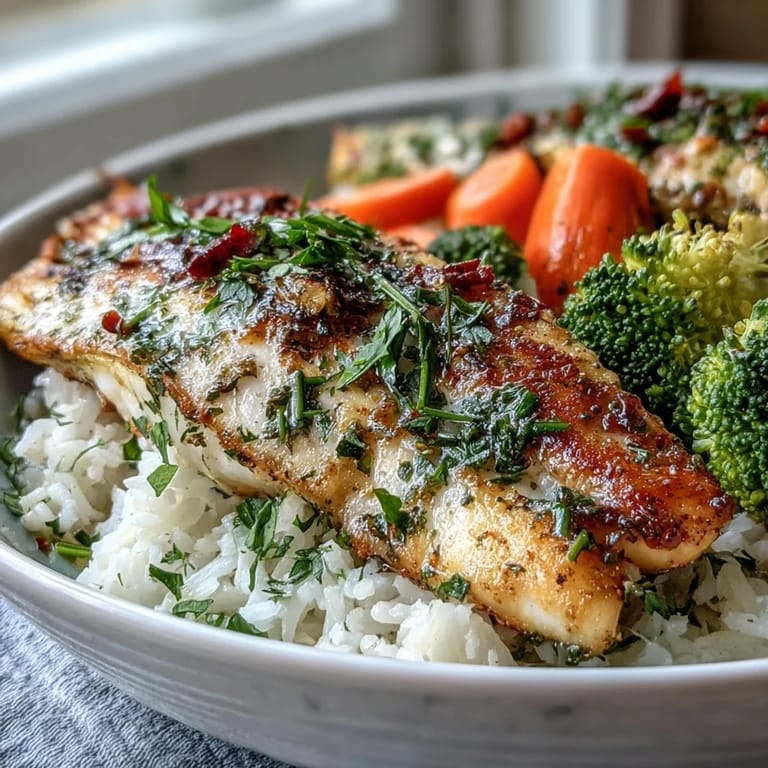
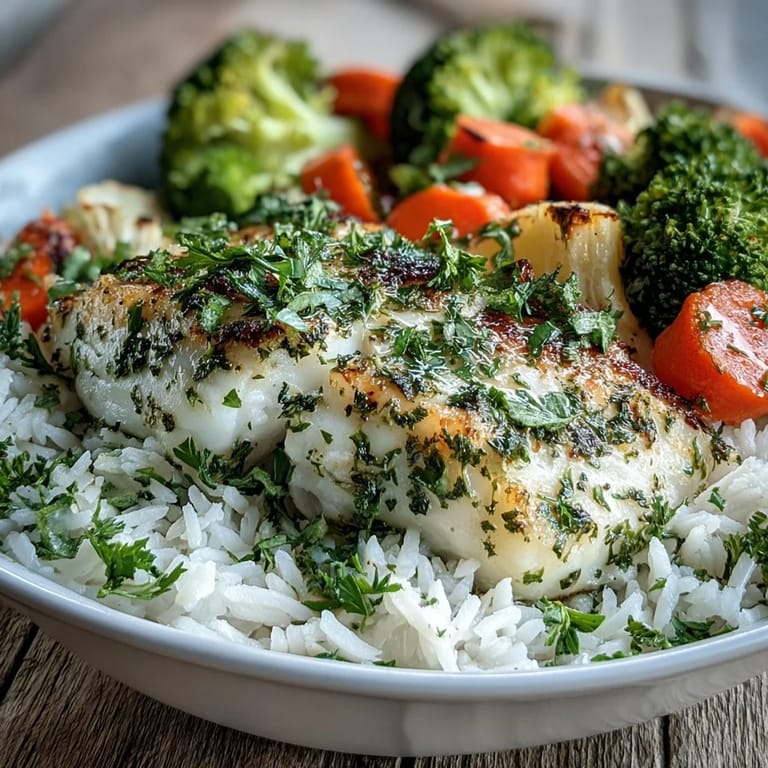
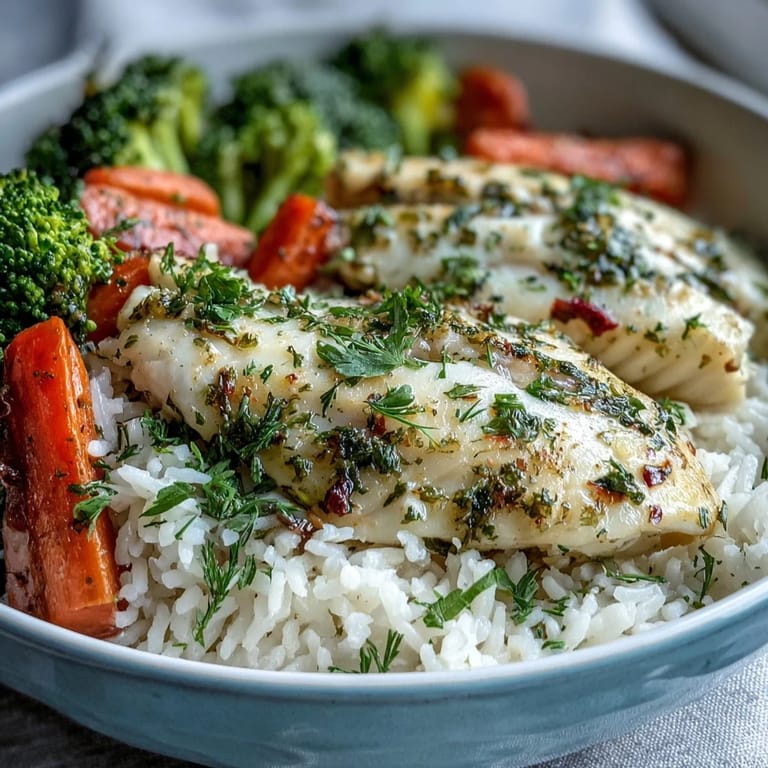
- Divide the fluffed rice among four bowls, top each with a tilapia fillet, and arrange the vegetables around it. The bowl becomes your plate, your presentation, and your comfort all at once.
 Save to Pinterest
 There was a moment, maybe the fourth time I made this, when I realized I wasn't consulting the recipe anymore. My hands knew when the oil and lemon should mix, my nose told me when the herbs had bloomed enough, my eyes could read the fish without overthinking it. That's when a recipe stops being instructions and becomes something you've actually internalized.
The Simplicity of Seasoning
The herb blend here does almost all the heavy lifting, which is exactly why I never rush this step. Some people throw everything at once into a bowl, but I find that whisking the oil and lemon first, then adding the herbs, lets them distribute more evenly. The fish doesn't need much—it's delicate enough that bold flavors would cover it up instead of complement it.
Timing Is Everything
Getting everything to finish at the same moment takes practice, but here's the truth: it's actually hard to mess this up. The rice is the slowest element, so start that first, then get the fish in the oven. The vegetables are fastest, so they're your last-minute thing. Even if something finishes five minutes early, covering it loosely with foil keeps it warm without making it sweaty.
Making It Your Own
This recipe is a foundation more than a rigid formula, which is part of why I keep coming back to it. Some nights I add a squeeze of fresh lemon over the top when it's plated, other times I'll toast breadcrumbs with a little garlic and oil to scatter over everything for texture. The bowl format means you can adjust portions for whoever's eating—more vegetables for someone who wants that, extra rice for someone else.
- Try substituting cod or haddock if tilapia isn't available; they cook the same way and take to the same seasonings beautifully.
- If you're reaching for brown rice or quinoa instead of white rice, add an extra 20–25 minutes to your cook time and adjust the water accordingly.
- Fresh herbs sprinkled on top just before eating make this feel less everyday and more like something you took time with.
 Save to Pinterest
 This bowl has become my answer to the question of what to make when I want to feed someone well without making a fuss about it. It's nourishing, honest, and somehow always tastes like you were thinking of them.
Recipe FAQs
- → Can I use frozen tilapia fillets?
Yes, frozen tilapia works well. Thaw completely in the refrigerator overnight, then pat dry before seasoning and baking. Cooking time may need an extra 2-3 minutes if still slightly frozen.
- → What other vegetables can I add?
Bell peppers, zucchini, green beans, or snow peas make excellent additions. Steam them alongside the broccoli and carrots, adjusting cooking time based on vegetable thickness.
- → How do I know when the tilapia is done?
The fish is ready when it flakes easily with a fork and appears opaque throughout. The internal temperature should reach 145°F (63°C). Avoid overcooking, as tilapia dries out quickly.
- → Can I meal prep these bowls?
Absolutely. Store components separately in airtight containers for up to 3 days. Reheat rice and vegetables in the microwave, then warm the fish gently to maintain moisture. Assemble just before serving.
- → Is brown rice a good substitute?
Brown rice adds fiber and nutrients but requires 35-40 minutes of simmering time. Start cooking brown rice before preparing the fish, or use quick-cooking brown rice to stay within the 40-minute timeframe.
- → What herbs work best with tilapia?
Dried Italian seasoning, parsley, dill, thyme, or basil complement tilapia's mild flavor. Fresh herbs added after baking provide bright notes, while dried herbs work beautifully in the marinade.