 Save to Pinterest
 The first time I made lahmacun at home, I was standing in a tiny Istanbul kitchen on a humid afternoon, watching my neighbor's hands move through the meat mixture with the confidence of someone who'd done this a thousand times. She barely measured anything, just tossed ingredients together while telling me about the street vendors who'd sell these crispy-edged treasures from carts at dusk. I went home determined to recreate that moment, that perfect balance of thin, blistered dough and seasoned meat that tasted alive with herbs and spices. It took a few tries to get the dough thin enough and the oven hot enough, but once I did, I understood why people queue for these things.
I remember serving these to friends on a Friday night when I was nervous about cooking something unfamiliar, and watching their faces light up after that first bite was electric. One friend immediately asked if this was takeout, and when I admitted I'd made it, she demanded the recipe before even finishing hers. That's when I realized lahmacun isn't just food—it's proof that you can master something that seems exotic and complicated with just a little practice and a hot oven.
Ingredients
- All-purpose flour (300 g): The foundation of everything; you want it fresh because old flour can make the dough tough and unwilling to stretch thin.
- Warm water (180 ml): Not hot, not cold—that goldilocks temperature wakes up the yeast without killing it.
- Instant yeast (1 tsp): This works faster than active dry, which matters when you're hungry.
- Ground lamb or beef (300 g): Lamb gives you that authentic Turkish depth, but beef works beautifully if that's what you have on hand.
- Onion and garlic (minced fine): These two are where the flavor actually lives; don't rush the chopping.
- Tomato and red bell pepper (diced small): They add sweetness and texture to the meat without making it wet, which is the trick to a crispy finished lahmacun.
- Tomato paste (2 tbsp): This concentrates the flavor in a way fresh tomatoes alone never could.
- Fresh parsley (finely chopped): Added right before cooking, it stays bright green and gives you these little pockets of fresh taste.
- Cumin and paprika (1 tsp each): These spices are the heart of the seasoning; don't skip either one.
- Chili flakes (optional): Start with less than you think you need, because these little things have a long memory on your palate.
- Olive oil (2 tbsp for topping): This carries all the flavors and helps everything cook evenly.
- Lemon wedges and fresh mint (to serve): These aren't optional—they're what makes people keep eating after they're full.
Tired of Takeout? 🥡
Get 10 meals you can make faster than delivery arrives. Seriously.
One email. No spam. Unsubscribe anytime.
Instructions
- Mix and knead the dough:
- Combine your flour, sugar, and salt in a large bowl, then dissolve the yeast in warm water and let it sit for a minute—you'll see it bloom slightly, which means it's alive and ready to work. Add this to your dry ingredients along with olive oil and mix until everything comes together into a shaggy mass, then knead for five to seven minutes until the dough feels smooth and slightly elastic under your hands.
- Let it rise:
- Cover the bowl loosely and find a warm spot—a turned-off oven with the light on works perfectly. You're waiting for the dough to roughly double in size, which usually takes thirty minutes, but don't stress about exact timing; just watch it until it looks puffy and alive.
- Build the meat mixture:
- In another bowl, combine the ground meat with all the finely chopped vegetables, spices, and herbs, then pour in the olive oil and mix everything together with your hands until it's completely incorporated. The mixture should feel like a thick paste, not wet or crumbly.
- Heat your oven aggressively:
- Set it to 250°C (480°F) or as hot as your oven will go, and stick a pizza stone or baking tray inside to preheat—this heat is what gives you those blistered, crispy edges you're after. A cold pan will just steam everything.
- Shape the lahmacun:
- Once the dough has risen, divide it into eight equal pieces and roll each one out on a lightly floured surface into a thin oval about twenty centimeters across. The thinner you can get it, the crispier it'll be, but don't stress about perfection; rustic shapes taste just as good.
- Top with meat:
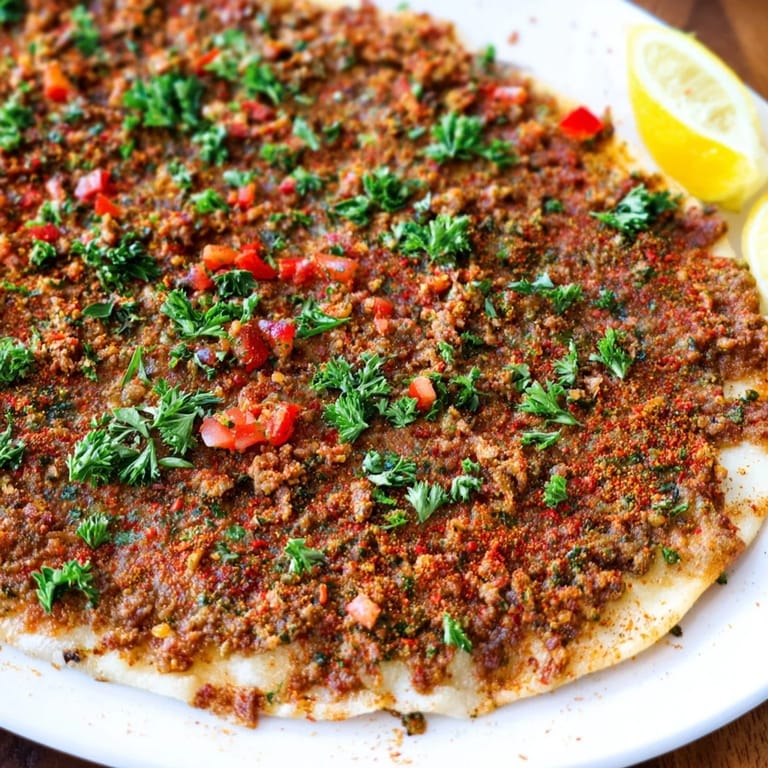
- Spread a thin, even layer of the meat mixture over each dough round—you're looking for coverage without drowning it, so about a quarter-inch thickness. This is where restraint matters; too much meat and the dough never crisps.
- Bake quickly:
- Working in batches if you need to, transfer each topped lahmacun to the hot baking tray and slide it into that screaming-hot oven. Six to eight minutes is all it takes; you're watching for the edges to turn golden and crispy while the meat just cooks through, still fragrant and not dried out.
- Finish and serve:
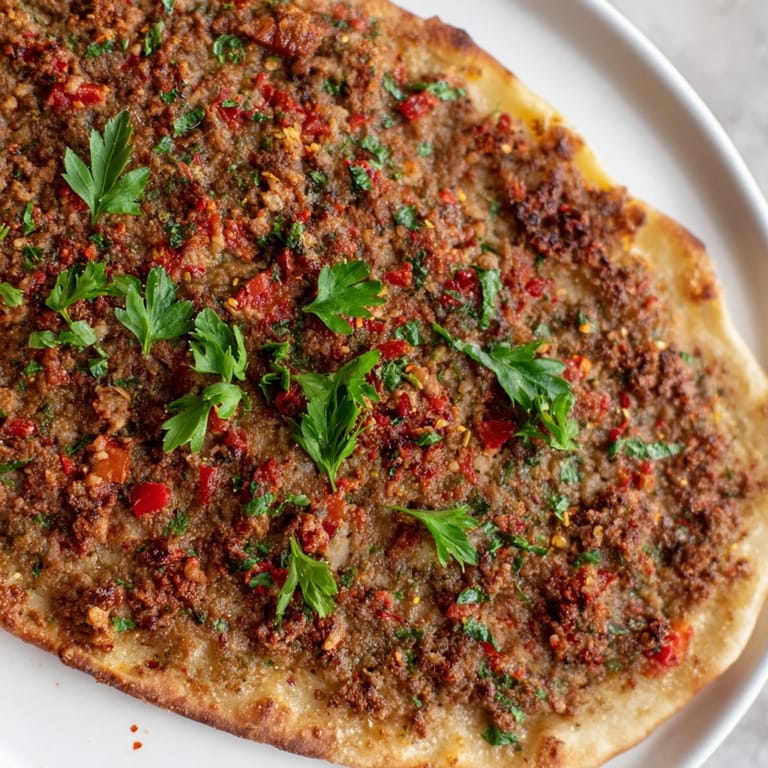
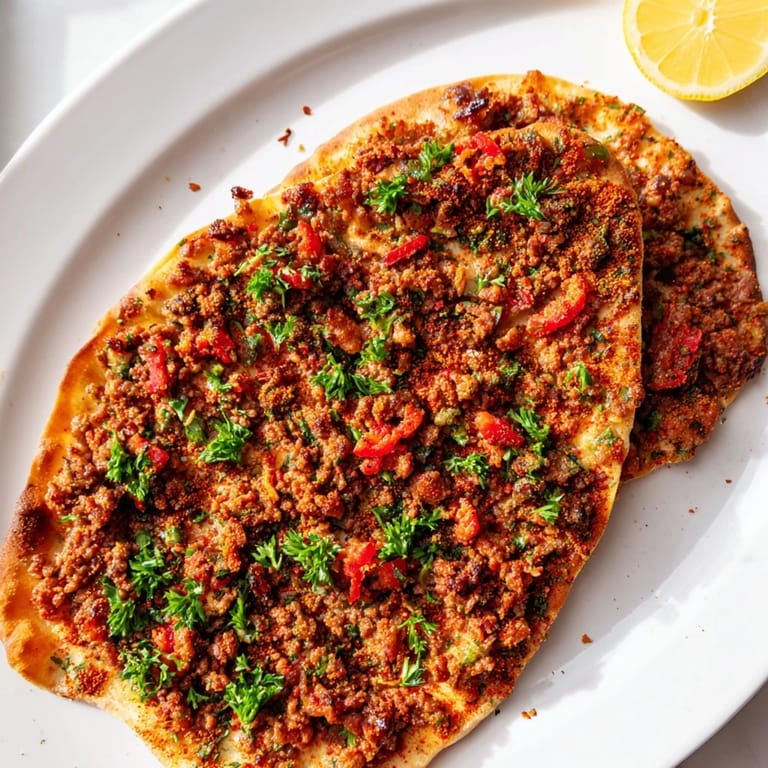
- Pull them out, let them cool for just a minute so you don't burn your mouth, then top with fresh parsley, a squeeze of lemon, and any sliced onions or sumac you're using. Eat them immediately while they're still warm and the dough still has that snap to it.
 Save to Pinterest
 There was an evening when I made these for my Turkish colleague, half-worried she'd find them lacking compared to what she grew up with, and she took one bite and actually closed her eyes. She told me they reminded her of her mother's kitchen, which meant more to me than any compliment ever could. That's the magic of this recipe—it doesn't just fill your stomach; it can fill a room with memory and warmth.
The Art of the Thin Dough
Getting the dough thin enough is half the battle, and honestly, it's easier than you'd think once you understand what you're aiming for. The dough should be almost translucent in places, definitely thin enough that you can see the baking tray through it. If you're used to making thick focaccia or pizza, this is the opposite direction—you want delicate and crispy, not bread-like and chewy. A light hand with the rolling pin and a little patience is all it takes.
Building Layers of Flavor
The meat mixture is where all the magic happens, and each ingredient has a purpose beyond just making it taste good. The finely minced onion and garlic break down slightly as they cook and almost dissolve into the meat, creating a savory depth without any chunks. The tomato paste is concentrated enough that you don't need much, but it ties everything together, and the spices—especially that cumin—are what separate a good lahmacun from just seasoned ground meat on flatbread. The fresh parsley added right before spreading is the final touch that keeps everything tasting bright.
Serving and Storing
Lahmacun is best served immediately while the dough is still crackling and warm, but you can absolutely make the dough and topping ahead of time and just assemble and bake them when you're ready. The magic of this recipe is that once you have prepared dough, a finished lahmacun is only ten minutes away from your oven, which means you can make them as people arrive and everything tastes fresh.
- Leftover lahmacun can be wrapped in foil and reheated gently, though they'll never be quite as crispy as fresh.
- You can make the meat topping up to two days ahead and keep it covered in the refrigerator.
- If you want to eat them later, roll them up with fresh herbs, sliced onions, and tomato—that's the traditional street-vendor way.
 Save to Pinterest
 Every time I make these, I'm reminded of that Istanbul kitchen and my neighbor's easy confidence with something so perfectly simple. These are the kind of dishes that remind you why cooking matters—not because it's complicated, but because it connects you to people and places.
Recipe FAQs
- → What type of meat is used in the topping?
Ground lamb or beef is combined with spices and vegetables to create the savory topping.
- → How thin should the dough be rolled?
Roll the dough into thin ovals or rounds about 20 cm (8 inches) in diameter for a crisp texture.
- → Can this be made vegetarian?
Yes, the meat can be substituted with a minced mixture of mushrooms and walnuts for a vegetarian version.
- → What is the ideal baking temperature?
Bake at a high oven temperature around 250°C (480°F) using a pizza stone or baking tray for a crisp finish.
- → What are typical serving suggestions?
Serve garnished with fresh parsley, lemon wedges, and optionally sliced onions with sumac for added flavor.