 Save to Pinterest
 I discovered this recipe on a quiet Tuesday evening when I had salmon thawing and an almost-empty jar of gochujang staring at me from the pantry. The combination felt uncertain at first—Korean chili paste with citrus?—but I mixed it anyway, brushed it onto the fillets, and the smell that came from the broiler was revelatory. My kitchen filled with this deep, caramelized warmth that made everyone pause mid-conversation. That one unexpected pairing taught me that the best meals often come from happy accidents.
I made this for my sister's first week in her new place, when she was too tired from unpacking to think about cooking. Watching her take that first bite and immediately exhale with relief—like the food was doing something her body needed—reminded me why cooking for people matters. She asked for the recipe before she'd even finished her plate, and now it's become her go-to dinner when she wants to feel capable and fed at the same time.
Ingredients
- Salmon fillets (4, skin-on, 150g each): Skin-on keeps the fish moist and gives you something crispy to look forward to; ask your fishmonger for fillets that are similar in thickness so they cook evenly.
- Gochujang (2 tablespoons): This Korean chili paste is the backbone—it brings heat, funk, and umami that orange juice alone could never achieve, so don't skip it or substitute.
- Fresh orange juice (1/4 cup): Freshly squeezed makes a real difference; bottled juice tastes flat by comparison and changes the whole balance of the glaze.
- Soy sauce (2 tablespoons): The salt anchor that ties everything together and deepens the caramel color on the salmon.
- Honey (2 tablespoons): This sweetness is what catches and caramelizes under the broiler, creating those glossy, sticky layers.
- Rice vinegar (1 tablespoon): A small splash keeps the glaze from becoming one-note sweet; it's subtle but essential.
- Fresh ginger and garlic (1 teaspoon grated ginger, 1 minced clove): These add warmth and complexity that feel distinctly present without overpowering the fish.
- Sesame oil (1 teaspoon): A final whisper of nuttiness that rounds out the whole sauce.
- Jasmine rice (1 1/2 cups): Fluffy and slightly fragrant, it absorbs the glaze beautifully without fighting for attention.
- Water (3 cups), butter (2 tablespoons), and salt (1/2 teaspoon): Rice needs good liquid ratio, and butter makes it luxurious enough to deserve the salmon on top.
- Scallions (3, thinly sliced): These add a green brightness that cuts through the richness and gives you something fresh to bite into.
- Sesame seeds and orange zest (optional): Finishing touches that make the dish look intentional and taste complete.
Tired of Takeout? 🥡
Get 10 meals you can make faster than delivery arrives. Seriously.
One email. No spam. Unsubscribe anytime.
Instructions
- Build the glaze:
- Whisk together gochujang, orange juice, soy sauce, honey, rice vinegar, ginger, garlic, and sesame oil in a medium bowl until smooth. Taste it right now—it should taste bold and a little spicy, slightly too sweet on its own. That's perfect; it will transform under the broiler.
- Marinate the salmon:
- Pat your salmon fillets completely dry (moisture is the enemy of caramelization), then place them skin-side up in a shallow dish. Spoon 2 tablespoons of glaze over each fillet and turn gently to coat both sides. Let it sit for 10 minutes while you start the rice—this brief marinating window is enough without being excessive.
- Cook the rice:
- Rinse your jasmine rice under cold running water until the water runs clear; this removes excess starch and keeps each grain separate. In a saucepan, combine the rinsed rice with 3 cups water, butter, and salt, then bring to a boil. Once boiling, reduce the heat to low, cover tightly, and simmer undisturbed for 15 minutes—resist the urge to peek or stir. Remove from heat and let it sit covered for another 5 minutes, then fluff gently with a fork.
- Prepare the oven:
- While the rice is cooking, preheat your broiler to high and line a baking sheet with foil. Lightly oil the foil so the salmon skin won't stick.
- Broil the salmon:
- Place your marinated salmon fillets skin-side down on the prepared baking sheet. Brush each one with more glaze, then broil 5–7 inches from the heat source for 6–8 minutes, pausing halfway through to brush on more glaze. Watch for the top to turn deep caramel and the edges to caramelize slightly; the fish is done when an instant-read thermometer reads 52–54°C (125–130°F) for medium doneness.
- Finish the glaze:
- While the salmon is broiling, pour the remaining glaze into a small saucepan and simmer over medium heat for 2–3 minutes until it thickens slightly and becomes glossy. This concentrated glaze will pool beautifully on your finished plate.
- Serve:
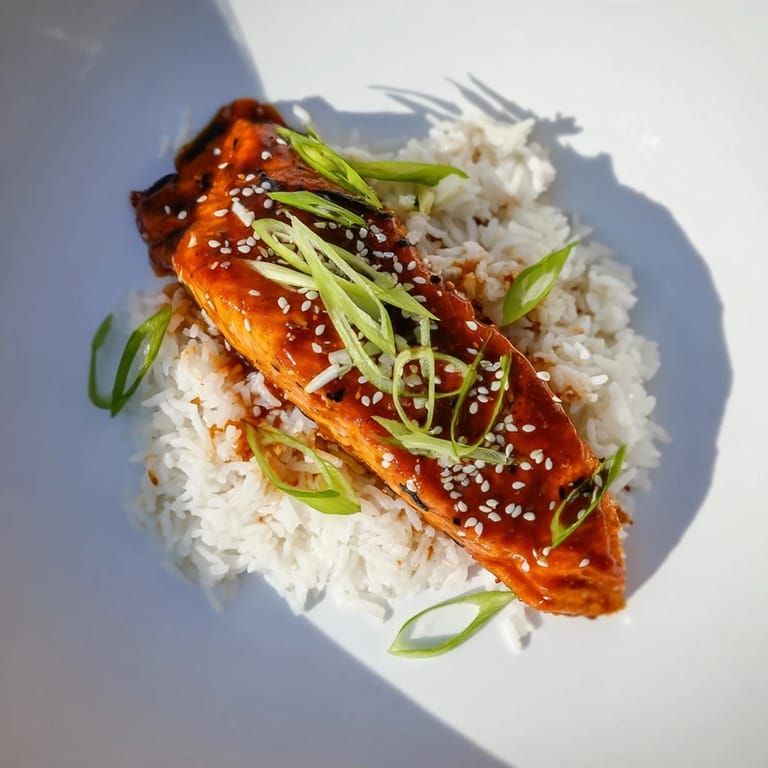
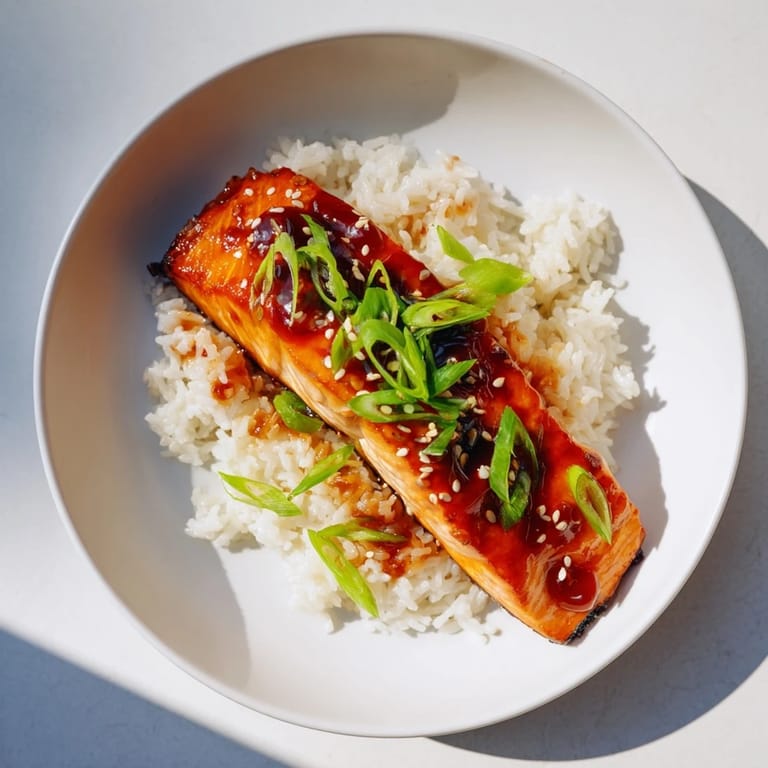
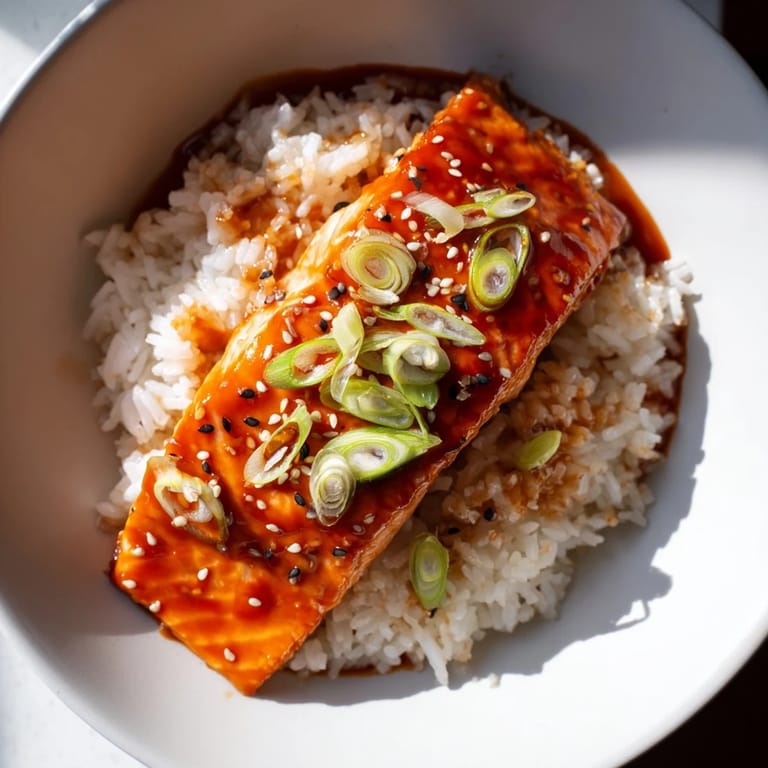
- Divide the fluffy rice among bowls, top each with a warm salmon fillet, drizzle generously with the thickened glaze, and scatter scallions, sesame seeds, and orange zest over the top if you're using them.
 Save to Pinterest
 There's something about watching salmon skin go from pale to mahogany brown under the broiler—it happens fast, and when you brush that glaze on and see it bubble and caramelize, you know you've made something special. My dad once took one bite and asked me to teach him this recipe, which felt like the highest compliment he could pay, and now it's something we cook together when he visits.
Why This Combination Works
Gochujang and orange seem like an unlikely pairing until you understand that the chili paste thrives on acid and sweetness to balance its heat. Orange juice provides that brightness, honey adds the sweetness, and together they create a glaze that caramelizes beautifully under high heat. The umami from soy sauce and the warmth from ginger and garlic anchor everything so it never feels like a dessert with fish, but rather a complete, savory dish with depth.
Temperature and Timing Matter Here
The hardest part of this recipe is actually the waiting—not because it takes long, but because the broiler moves fast. Medium-rare salmon (internal temp 52–54°C or 125–130°F) means the fish stays moist and silky inside while the exterior caramelizes. If you're unsure, use an instant-read thermometer; it takes the guesswork out and prevents overcooked, dry salmon. The rice simultaneous timing is deliberate—both finish within a few minutes of each other, so everything lands on the plate warm and at its best.
Variations and Flexibility
This recipe is forgiving in small ways. If you don't have sesame oil, omit it without catastrophe. For extra heat, add a pinch of chili flakes to the glaze. Brown rice or quinoa swap in neatly for jasmine rice if that better fits your pantry or preferences. Some people add a teaspoon of Dijon mustard to the glaze for brightness, and it absolutely works. The foundation is strong enough to bend without breaking.
- A crisp white wine like Sauvignon Blanc or a citrusy IPA drinks beautifully alongside this—the acidity cuts through the richness.
- If you're cooking for someone avoiding soy, tamari works as a 1-to-1 swap.
- Leftovers reheat gently in a low oven and taste better the next day as the flavors deepen.
 Save to Pinterest
 This meal has become my answer when I want to feel like I've cooked something impressive without actually spending the evening in the kitchen. It's the kind of dish that tastes like restaurant-quality food but costs almost nothing in stress or time.
Recipe FAQs
- → What type of rice pairs best with this dish?
Jasmine rice is recommended for its fragrant aroma and fluffy texture, complementing the glaze and salmon perfectly.
- → Can the glaze be made spicier?
Yes, adding chili flakes to the glaze will increase the heat while maintaining the balance of sweet and tangy flavors.
- → What is the best cooking method for the salmon?
Broiling the salmon allows the glaze to caramelize nicely while cooking the fish evenly and quickly.
- → Are there suitable substitutions for jasmine rice?
Brown rice or quinoa can be used as alternatives for a heartier or more nutritious option.
- → How can I enhance the glaze’s flavor?
Simmering the glaze after glazing the fish thickens it and intensifies the flavor, making it perfect for drizzling at serving.