 Save to Pinterest
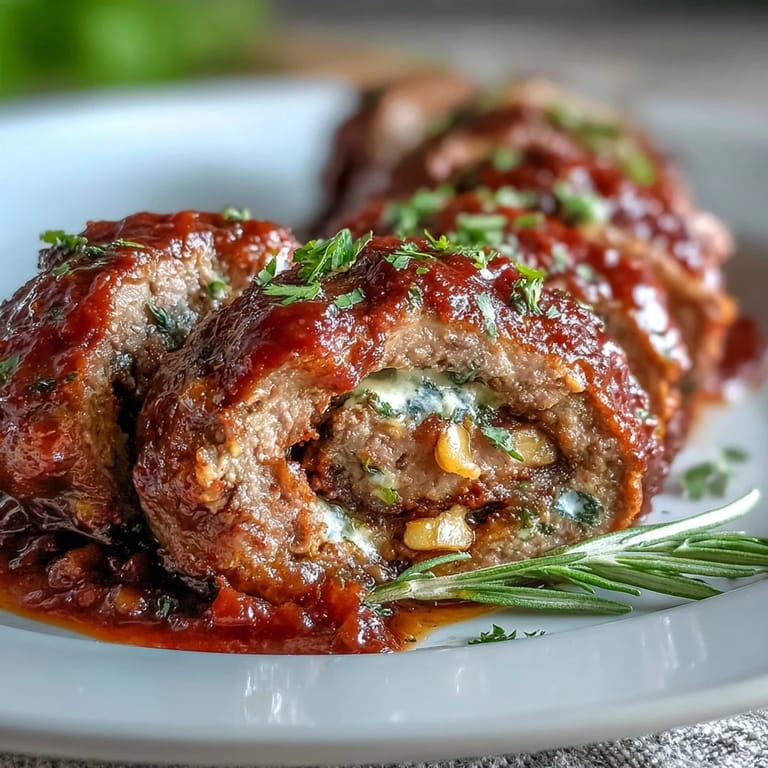
 My neighbor Maria stood at my door with a foil-covered dish, steam curling from the edges. She'd just made braciole the way her nonna taught her in Palermo, and the smell alone—sweet tomato, browned meat, something faintly floral from the raisins—made my kitchen feel inadequate. I watched her unwrap it, slice through those pinwheels of tender beef, and I knew I had to learn this. That Sunday, she walked me through it, her hands moving quickly, talking the whole time about filling proportions and patience.
I made this for my brother's birthday dinner, and he went quiet after the first bite, which is how I know he's genuinely moved by food. His wife asked for the recipe twice before dessert. I realized then that braciole isn't just a dish, it's a conversation starter, a reason to linger at the table. The rolls sat in the center of the table like small gifts, and everyone wanted to know what was inside.
Ingredients
- Beef top round or flank steak: Thin slices are essential so they roll without tearing, and pounding them evenly ensures they cook tender without drying out.
- Pecorino cheese: Its sharp, salty bite balances the sweetness of raisins and plays better with tomato than milder cheeses ever could.
- Pine nuts: Toasting them first brings out a buttery richness that raw nuts just don't have, so don't skip that step.
- Raisins: They plump up in the sauce and add little bursts of sweetness that surprise anyone unfamiliar with Sicilian cooking.
- Fresh parsley and basil: The herbs keep the filling bright and prevent it from feeling too heavy or one-note.
- Garlic: Minced fine so it distributes through the filling without overpowering the delicate balance of flavors.
- Breadcrumbs: They soak up juices and help bind the filling so it doesn't all tumble out when you slice the rolls.
- Olive oil: Use a decent one for searing, the flavor carries through and coats every surface with richness.
- Crushed tomatoes: A good-quality canned variety works better here than fresh, you want consistency and a slight sweetness.
- Dry red wine: It deglazes the pan and adds a subtle depth, but if you skip it, the dish still works beautifully.
- Dried oregano: A small amount goes a long way and reinforces that warm, Italian comfort without tasting like pizza.
Tired of Takeout? 🥡
Get 10 meals you can make faster than delivery arrives. Seriously.
One email. No spam. Unsubscribe anytime.
Instructions
- Prep the beef:
- Lay each slice flat on a cutting board and pound gently with a meat mallet until they're an even quarter-inch thick. Season both sides with salt and pepper, being generous because the filling is flavorful but the meat itself needs seasoning too.
- Make the filling:
- In a medium bowl, mix the pecorino, toasted pine nuts, raisins, parsley, basil, minced garlic, and breadcrumbs until everything is evenly distributed. The mixture should look chunky and smell incredible.
- Roll the braciole:
- Spread a few tablespoons of filling over each beef slice, leaving about half an inch around the edges. Roll them up tightly from one short end, tucking in the sides as you go, then secure with kitchen twine or a couple of toothpicks so they hold their shape during cooking.
- Sear the rolls:
- Heat two tablespoons of olive oil in a large skillet over medium-high heat until it shimmers. Add the braciole and brown them on all sides, turning carefully, about six to eight minutes total, then remove them to a plate.
- Build the sauce:
- In the same skillet, add another two tablespoons of olive oil and sauté the chopped onion until soft and translucent, about three minutes. Stir in the garlic and cook one minute more until fragrant.
- Deglaze and simmer:
- Pour in the red wine if using, scraping up all those beautiful browned bits from the bottom of the pan, and let it reduce by half. Add the crushed tomatoes, oregano, salt, pepper, and a pinch of sugar if your tomatoes taste too acidic, then bring everything to a gentle simmer.
- Braise the braciole:
- Nestle the seared rolls back into the sauce, cover the skillet, and reduce the heat to low. Let them simmer gently for about an hour and fifteen minutes, turning them occasionally so they cook evenly and the beef becomes meltingly tender.
- Finish and serve:
- Carefully remove the braciole from the sauce, snip off the twine or pull out the toothpicks, and slice each roll into thick rounds. Spoon the rich tomato sauce over the top and serve immediately while everything is hot and aromatic.
 Save to Pinterest
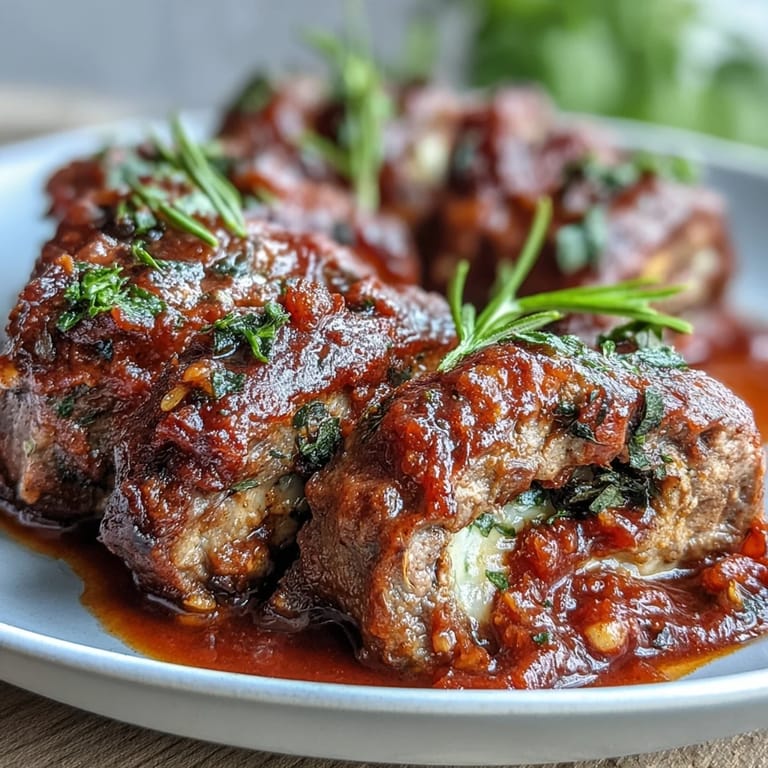
 The first time I brought this to a potluck, someone asked if I'd ordered it from an Italian deli. I laughed, but honestly, it felt like the highest compliment. Braciole has this way of making any table feel special, like you put in effort that actually shows. It's become my go-to when I want to impress without pretending to be someone I'm not.
Choosing Your Beef
Top round works beautifully because it's lean and takes well to pounding, but flank steak has a bit more flavor if you can slice it thin enough. Ask your butcher to cut it for you if you're unsure, most are happy to help and will give you pieces that are perfect for rolling. Avoid anything too thick or marbled, you want something that will tenderize in the long braise without falling apart.
What to Serve Alongside
I almost always make pasta to toss with the leftover sauce, rigatoni or penne works best because it catches all that tomatoey goodness. Polenta is another excellent choice, especially if you want something creamy and comforting to soak up every last bit. A simple arugula salad with lemon and olive oil cuts through the richness and makes the whole meal feel balanced.
Storage and Reheating
Braciole keeps well in the fridge for up to three days, and honestly, it tastes even better the next day after the flavors have had time to settle. Store the rolls whole or sliced in an airtight container with plenty of sauce covering them so they don't dry out. Reheat gently on the stovetop over low heat, adding a splash of water or broth if the sauce has thickened too much.
- Freeze the cooked braciole in sauce for up to two months, thaw overnight in the fridge before reheating.
- If you're making this ahead, you can assemble and sear the rolls in the morning, then finish braising them later in the day.
- Leftover sauce is incredible stirred into scrambled eggs or spread on toast with a little ricotta.
 Save to Pinterest
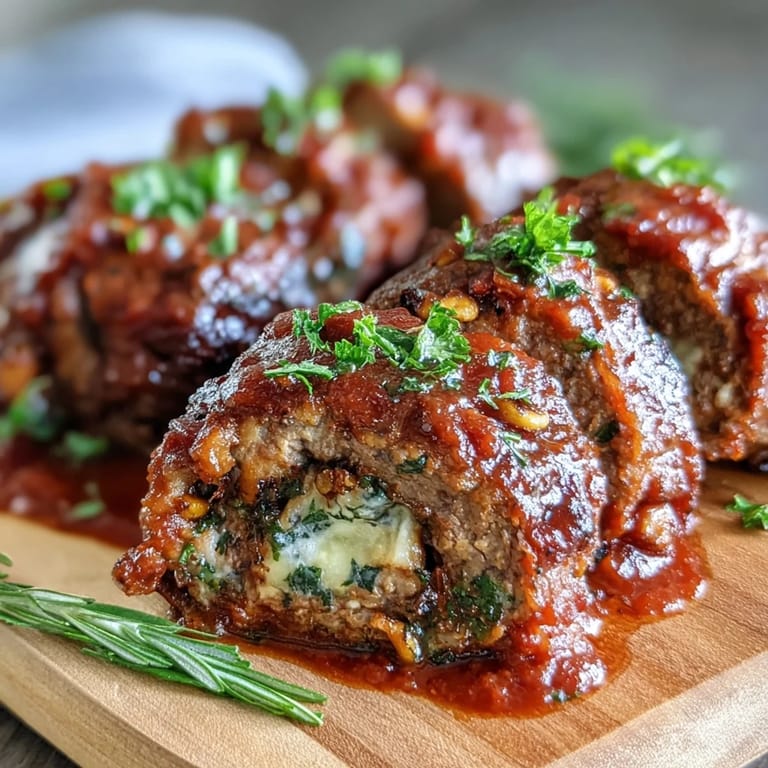
 There's something about slicing into a braciola and seeing that spiral of filling that makes all the rolling and tying worth it. It's a dish that asks for your attention but rewards you with something truly memorable.
Recipe FAQs
- → What cut of beef works best for braciole?
Top round or flank steak are ideal choices as they're lean, flavorful, and become tender when slowly simmered. Make sure slices are pounded thin to about 1/4-inch thickness for easy rolling and even cooking.
- → Can I make braciole ahead of time?
Absolutely! You can assemble the rolls up to 24 hours in advance and refrigerate them. You can also cook them completely, then refrigerate and reheat gently in the sauce. The flavors often deepen overnight.
- → What should I serve with braciole?
Braciole pairs beautifully with pasta tossed in the cooking sauce, creamy polenta, or crusty Italian bread for soaking up the rich tomato sauce. A simple green salad rounds out the meal perfectly.
- → How do I prevent the rolls from falling apart?
Secure each roll tightly with kitchen twine or toothpicks after rolling. Don't overfill them, and leave a small border around the edges. Searing the rolls well before simmering also helps seal them.
- → Can I substitute the pine nuts or pecorino?
Yes! Walnuts or almonds can replace pine nuts, and Parmesan or Romano cheese work well instead of pecorino. The flavor profile will vary slightly, but the dish will still be delicious and authentically Italian.
- → Why add raisins to a savory dish?
Raisins are traditional in Sicilian cooking, adding subtle sweetness that balances the salty pecorino and rich tomato sauce. This sweet-savory combination is characteristic of Southern Italian cuisine influenced by Arab culinary traditions.