 Save to Pinterest
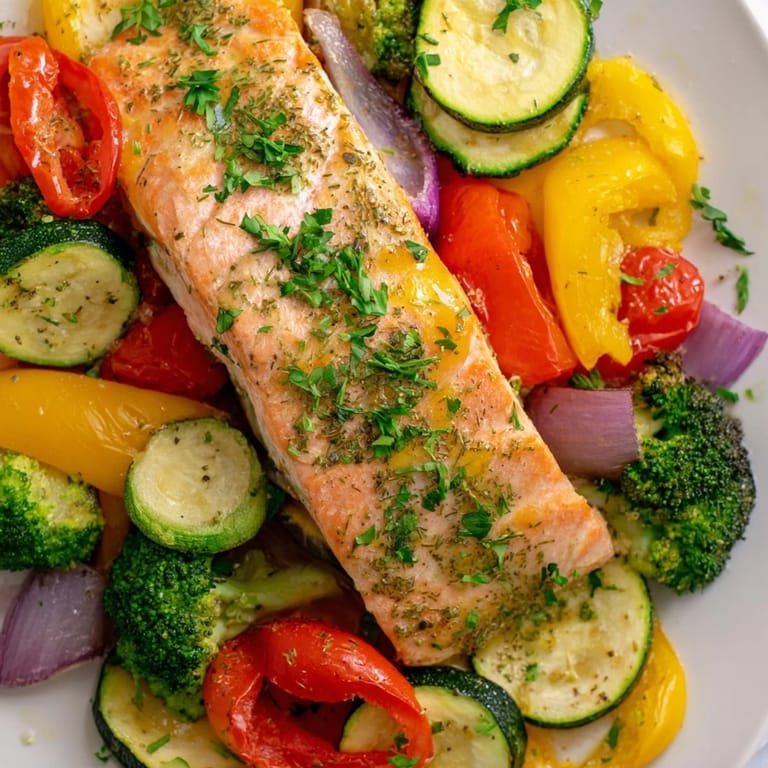
 There's something about a sheet pan that makes me feel like I've got my life together, even on nights when I'm running behind. I discovered this salmon bake during one of those Wednesday evenings when I needed something impressive but didn't want to babysit multiple pans. The first time I pulled it out of the oven, the smell of roasted lemon and dill filled my kitchen so completely that my neighbor texted asking what I was cooking. It turned out to be one of those dishes that looks restaurant-quality but asks so little of you.
I made this for my sister's book club once, not realizing half the group was pescatarian. It became the star of the potluck—people actually asked for the recipe instead of just being polite. What I loved most was watching everyone pile their plates high with vegetables they might normally push to the side, because roasted in that lemony oil they become something else entirely.
Ingredients
- Salmon fillets (4, about 6 oz each): Look for fillets with some thickness so they don't dry out during cooking, and if you can find them with the skin on, roasting becomes even more forgiving.
- Olive oil (2 tbsp): This is your base for flavor—don't skip it or use the cheap stuff, it really matters here.
- Lemon (1, zested and juiced): The zest goes into the oil, the juice follows, and together they're what makes this dish sing.
- Fresh or dried dill (1 tbsp fresh or 1 tsp dried): Fresh is better if you have it, but dried works perfectly fine and keeps longer in your cupboard.
- Garlic powder (1 tsp): A full teaspoon might sound like a lot, but it distributes evenly and doesn't overpower.
- Salt and pepper (½ tsp and ¼ tsp): Season generously—the vegetables will absorb a good amount.
- Red and yellow bell peppers (1 each, sliced): They soften beautifully and add sweetness that balances the salmon.
- Red onion (1 small, cut into wedges): Roasting mellows the bite and makes them almost caramelized at the edges.
- Zucchini (1 medium, sliced into rounds): Doesn't take long to cook, so slice it just before assembling.
- Cherry tomatoes (1 cup, halved): They burst slightly in the heat and become concentrated and jammy.
- Broccoli florets (1 cup): The crowns get crispy on the outside while staying tender inside.
- Lemon wedges and fresh parsley (for garnish): Optional, but they transform the final presentation from simple to thoughtful.
Tired of Takeout? 🥡
Get 10 meals you can make faster than delivery arrives. Seriously.
One email. No spam. Unsubscribe anytime.
Instructions
- Start hot:
- Get your oven to 425°F and line your sheet pan with parchment or foil while it preheats. This is not laziness—it's the smart move that saves you 10 minutes of cleanup later.
- Make your flavor base:
- In a small bowl, whisk together the olive oil, lemon zest, lemon juice, dill, garlic powder, salt, and pepper. Let it sit for a moment and you'll notice how the lemon juice slightly thickens the oil—that's when you know the flavors are getting acquainted.
- Prep your vegetables:
- Spread all your chopped vegetables across the sheet pan and pour half of that lemony oil over them, tossing everything until it's evenly coated. The vegetables should all be touching the pan so they can roast and caramelize slightly.
- Nestle in the salmon:
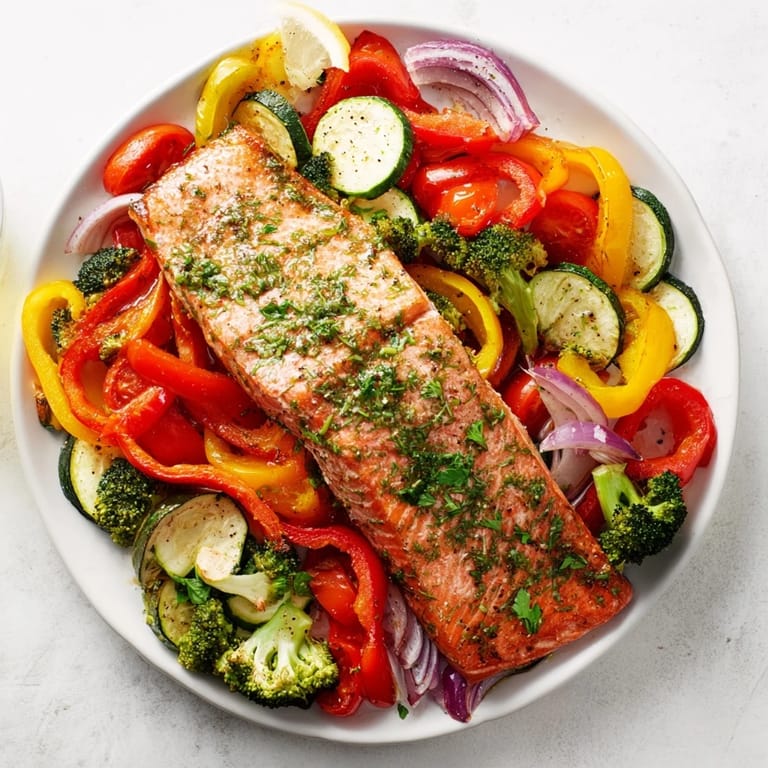
- Arrange the salmon fillets among the vegetables, leaving a little space so steam can circulate. Brush the remaining oil mixture over each fillet, and don't be shy—this is where all the flavor is.
- Roast until perfect:
- Into the oven for 18–20 minutes, watching for the moment when the salmon just begins to flake when you touch it with a fork. The vegetables should be tender but still have some brightness to their color.
- Finish and serve:
- Pull everything from the oven, let it rest for just a minute, then scatter with fresh parsley and lemon wedges if you have them. Serve straight from the pan if you're feeling casual, or transfer to a platter if you're trying to impress someone.
 Save to Pinterest
 The moment that made this recipe stick for me came on a night when my teenager actually put their phone down during dinner and asked for seconds. They'd been skeptical about the broccoli until they tasted how the edges got crispy from the heat, and suddenly vegetables weren't the thing they were tolerating, they were the thing they wanted more of.
Why Sheet Pan Cooking Changed My Weeknight Life
There's a reason sheet pan recipes have become my default on busy nights. One pan means one oven, which means I can use my stovetop for whatever else needs doing, or I can just not do anything and sit down for five minutes. The cleanup is genuinely minimal—parchment paper gets tossed, the pan comes out clean—and that mental lightness at the end of cooking is worth its weight in gold. Plus, everything that cooks together develops this harmonious flavor that feels impossible to achieve when you're juggling multiple burners and timers.
Vegetables That Actually Taste Like Something
I used to think roasted vegetables were just a way to make people eat their vegetables, until I realized the transformation that happens in a hot oven. The zucchini softens to the point where it's almost luxurious, the onion loses its harsh edge and becomes sweet, and the broccoli—especially the broccoli—develops this nutty, slightly caramelized character that even people who claim to hate vegetables will eat without complaint. It's not magic, it's just heat and time and good seasoning doing what they do best.
Making This Recipe Your Own
The beauty of this formula is that it works with whatever's in your kitchen or at the market. Spring calls for asparagus and fresh peas, summer begs for green beans and thinner zucchini, fall works with roasted root vegetables, and winter welcomes Brussels sprouts. The only rule is to keep things roughly the same size so they cook in the same amount of time. Some nights I add capers for a briny note, other times I crumble feta cheese right at the end and let it soften from the residual heat.
- Swap in asparagus, green beans, carrots, or Brussels sprouts depending on what's in season.
- A handful of capers or a sprinkle of feta cheese changes the entire flavor profile in unexpected ways.
- If you want it richer, drizzle with a good vinaigrette right before serving.
 Save to Pinterest
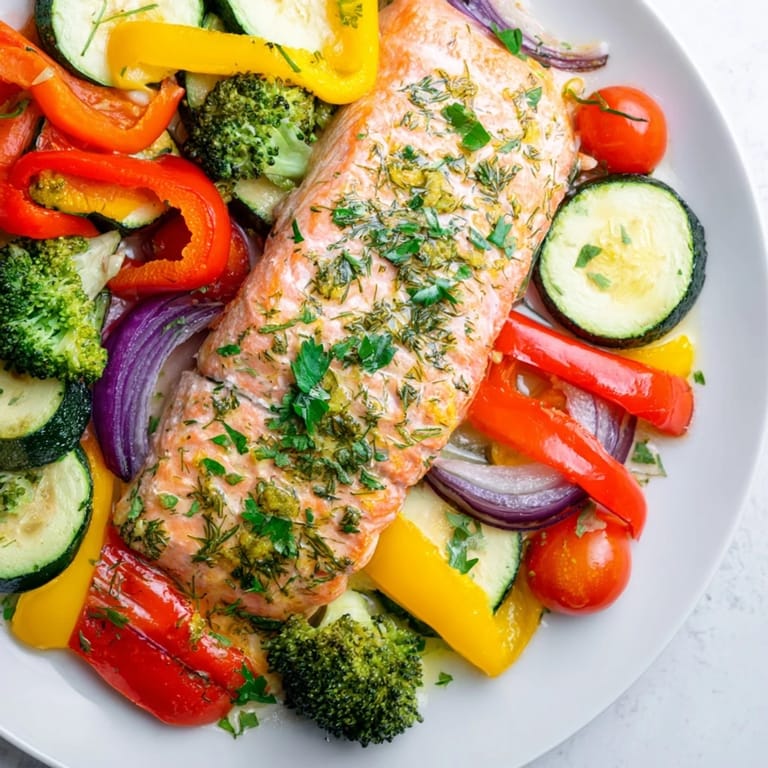
 This dish has become my answer to the question of what to cook when I want to feel accomplished but don't want to spend my evening in the kitchen. It's the kind of meal that makes you look forward to dinner, and that's really what cooking is supposed to do.
Recipe FAQs
- → What is the best way to ensure salmon stays moist while baking?
Coating the salmon with olive oil and using lemon juice helps retain moisture during roasting, while the high oven temperature cooks it quickly without drying.
- → Can I substitute other vegetables in this dish?
Yes, seasonal vegetables like asparagus, green beans, or carrots can replace the listed ones for variety and freshness.
- → How do I know when the salmon is cooked perfectly?
The salmon is done when it flakes easily with a fork and has an opaque appearance throughout.
- → Is it necessary to line the sheet pan for cooking?
Lining with parchment paper or foil simplifies cleanup and prevents sticking, making the process easier.
- → What garnishes complement this dish well?
Fresh parsley and lemon wedges brighten flavors, while optional additions like feta cheese or capers add depth.