 Save to Pinterest
 I still remember the first time I stood in a sun-drenched kitchen in Tuscany, watching my host arrange an enormous wooden board with the kind of casual generosity that only comes from abundance and joy. She didn't measure anything or fuss over perfection—she simply broke cheese into uneven chunks, draped prosciutto in loose folds, and scattered olives and bread as if painting. That afternoon taught me that a rustic Italian farmhouse board isn't really about the food at all; it's about creating a moment where people gather, slow down, and savor being together.
The first time I made this board for friends at my place, I was nervous—would it seem too simple, too humble? But as soon as people gathered around and started mixing flavors together, pulling bread, tearing cheese, discovering little pockets of sun-dried tomatoes, I realized this was exactly what they needed: permission to relax and eat with their hands, like we were all sitting at a long table somewhere in the Italian countryside.
Ingredients
- Parmigiano-Reggiano, 200 g broken into large chunks: The salty, crystalline backbone of every great Italian board—buy a wedge and break it yourself so the pieces catch the light differently
- Pecorino Toscano, 200 g cut into wedges: Sharper and more peppery than Parmigiano, this sheep's milk cheese adds complexity and reminds you why Italian cheeses don't need fancy names to be special
- Taleggio, 150 g torn into rustic pieces: This is your creamy, slightly tangy element—it softens at room temperature, which is exactly why it belongs on a board where people will eat slowly
- Prosciutto di Parma, 150 g loosely piled: Never slice it too thin or lay it flat—let it fall naturally into folds and creases so it stays delicate and melts on your tongue
- Finocchiona salami, 120 g thickly sliced: The fennel seeds hidden inside this Tuscan salami are what make it taste like autumn and make people ask what the secret is
- Coppa, 120 g arranged in rustic folds: The marbling in this shoulder meat is beautiful—arrange it so people can see it, and it becomes as much about visual pleasure as taste
- Rustic Italian loaf such as ciabatta, 1 large loaf torn into rough pieces: Tear by hand rather than slicing—rougher edges hold onto oil and cheese better, and the jagged pieces look more inviting
- Castelvetrano olives, 1 cup: The buttery, almost sweet green ones from Sicily—these aren't the harsh briny olives people remember hating in their childhood
- Sun-dried tomatoes in olive oil, 1 cup drained: The oil they're packed in is liquid gold, so don't throw it away—it's perfect for drizzling or dipping bread
- Marinated artichoke hearts, 1 cup quartered: These add a bright, vinegary note that cuts through the richness and makes people want to keep eating
- Fresh grapes or figs, 1 small bunch halved: The sweetness surprised me the first time someone told me to add fruit—now I know it's the bridge that makes every flavor feel complete
- Extra-virgin olive oil, 1/4 cup for drizzling: This isn't for cooking, so buy something you love—you'll taste every bit of it
- Fresh rosemary sprigs for garnish: Just a few—their fragrance tells people this is special before they even taste anything
- Coarse sea salt and cracked black pepper to taste: These should be the last things you add, tasted as you go, because they're the final voice in the conversation
Tired of Takeout? 🥡
Get 10 meals you can make faster than delivery arrives. Seriously.
One email. No spam. Unsubscribe anytime.
Instructions
- Set your stage with the right board:
- Pull out your largest wooden board or platter—this board is about generosity, and that only works if there's space for things to breathe. If you're worried about it being too big, you're thinking about it wrong. Wood also has this beautiful way of making everything look warmer and more welcoming than ceramic or slate ever could.
- Break the cheeses with intention:
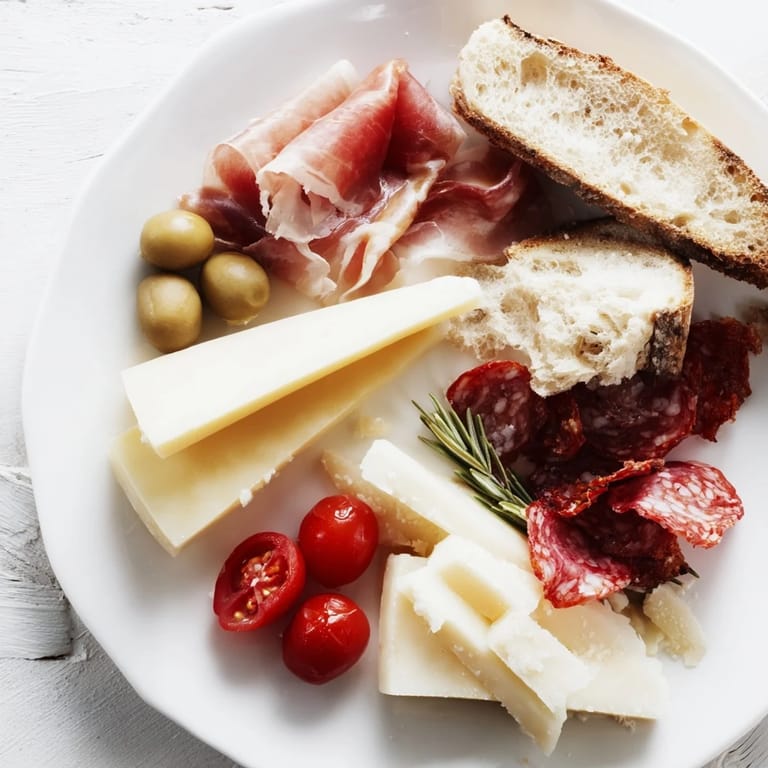
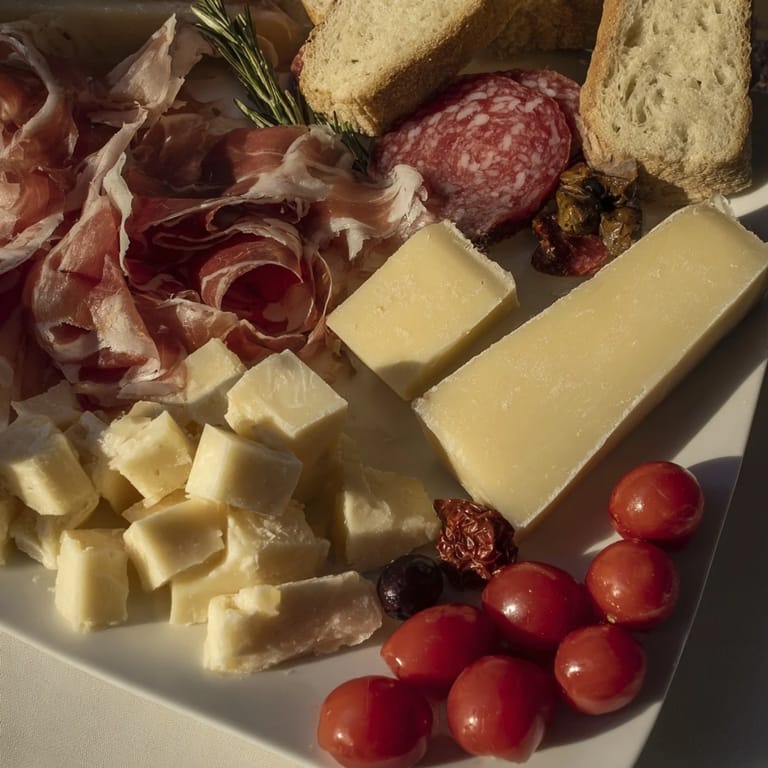
- Start by tearing or breaking your Parmigiano-Reggiano into irregular chunks—large, visible pieces that show off those gorgeous crystalline bits inside. Add the Pecorino in wedges, and the Taleggio in rustic torn pieces. Don't arrange them in neat piles or geometric patterns; scatter them across the board in clusters. This randomness is what makes it feel like an abundant farmhouse spread rather than a curated cheese course.
- Drape the cured meats with confidence:
- Loosely pile the prosciutto so it falls into soft folds—never stretch it tight or lay it flat like tiles. The coppa should be arranged so you can see those beautiful marbled swirls. Lay your finocchiona slices in overlapping, generous layers. The whole point is that these meats look abundant and inviting, like someone just brought them out of the cellar moments before guests arrived.
- Scatter the bread and supporting players:
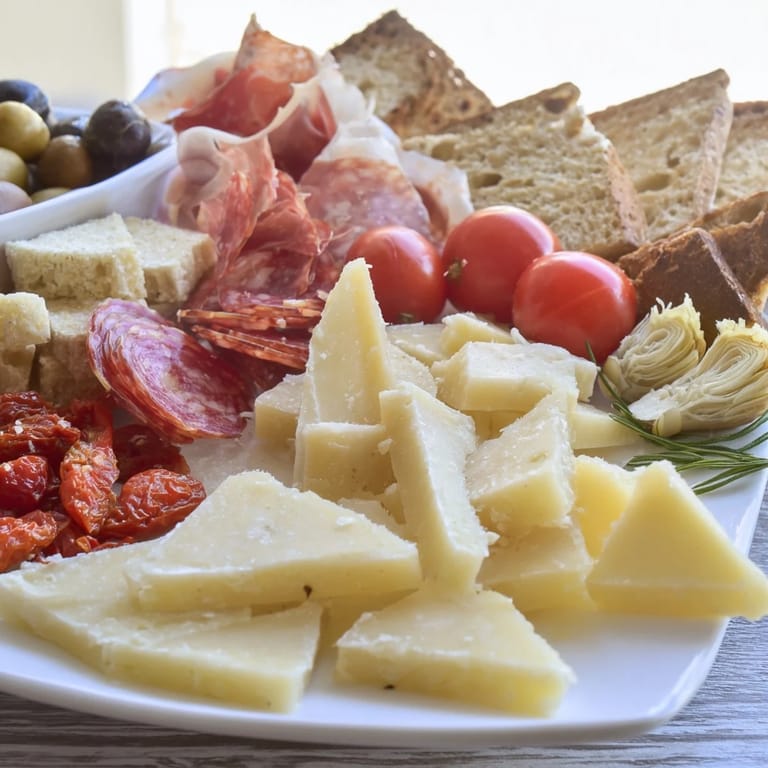
- Tear your bread into rough, uneven pieces—some bigger, some smaller—and scatter them casually across open spaces on the board. This is where you create visual pockets and valleys. Now fill those spaces with olives, sun-dried tomatoes, artichoke hearts, and fruit. Think about color balance—the jewel tones of the olives next to the golden sun-dried tomatoes, the green grapes peeking out. This is the moment it stops looking like ingredients and starts looking like an occasion.
- Finish with oil, fragrance, and seasoning:
- Drizzle a little of that extra-virgin olive oil over the bread and some of the cheese—not everything, just little pools of gold that catch the light and invite people to dip. Scatter fresh rosemary sprigs across the board so their fragrance floats up when people lean in. Finally, take a moment to taste and season with coarse sea salt and cracked black pepper. These last touches bring everything into focus and show people you cared enough to taste as you went.
- Serve with the board itself:
- Bring this straight to the table while everyone can still see it whole and beautiful. Let people gather around before anyone starts taking pieces. This moment—when everyone sees it for the first time—is the whole point. Serve immediately, and watch how people naturally slow down and eat differently when food looks this good.
 Save to Pinterest
 There's something that happens when you gather people around a board like this—they forget about their phones, they forget about what happened at work, and they start having the kind of conversations that make you realize why food matters. I had a friend who barely ate anything at restaurants, but watching her at this board, moving from prosciutto to cheese to bread, discovering new combinations with each bite, I understood that sometimes people just need permission to eat slowly and with joy.
Building the Perfect Flavor Journey
The magic of a farmhouse board is that it's not about eating a meal in sequence—it's about dancing between flavors and textures as you go. Each person at your table will create their own perfect bite: perhaps salty Pecorino with sweet grapes, or creamy Taleggio draped with prosciutto on rough bread, or a combination that surprises everyone. The artichoke hearts and sun-dried tomatoes are there to refresh your palate between richer bites, while the olives are there to anchor you back to the earth and remind you where all of this comes from. Don't think of this as separate items; think of it as a conversation where cheese talks to cured meat, bread listens to both, and fruit gets the final word.
Why This Board Works for Any Occasion
I've made this board for casual weeknight hangs with close friends, for my parents' anniversary dinner, for my daughter's birthday celebration, and for winter holidays when everyone's tired of cooking. It works because there's no cooking involved, which means you're actually present with your guests instead of stressed in the kitchen. It works because it looks special without requiring any technique or skill beyond choosing good ingredients. And it works because it naturally accommodates everyone—the vegetarians can skip the meat, someone with a gluten sensitivity can focus on cheese and fruit, and your friend who only eats soft cheeses can keep hunting through the board until they find exactly what they want. That's the real generosity of this dish.
Secrets from Years of Making This
I've learned that the most important thing you can do is taste as you season at the end—that final layer of salt and pepper is what brings every other flavor into sharp focus, and it's impossible to get right without tasting. I've also learned that shopping for this board is an event in itself. Walk into a good Italian market or deli counter, tell them you're building a board, and let them recommend things. They'll give you pieces they're proud of, sometimes things they're tasting themselves that day. And I've learned that this board tastes better when you're not anxious about it being perfect—the moment you stop worrying and start enjoying, your guests will feel that ease too.
- Buy your cheese as close to serving time as possible, even if it means a quick trip to the market the day of—cheese tastes entirely different at room temperature on the day you buy it
- The wood board matters more than you might think; it keeps the temperature of the ingredients stable and has a way of making everything taste slightly better
- If you find yourself with leftover board, don't waste it; tomorrow it becomes sandwiches and pasta salad and a hundred other things
 Save to Pinterest
 This board taught me that hospitality isn't about perfection or complexity—it's about abundance, good ingredients, and making space for people you love. Serve it with wine, serve it with laughter, and watch how it becomes the meal everyone remembers.
Recipe FAQs
- → What cheeses are used on the board?
Parmigiano-Reggiano, Pecorino Toscano, and Taleggio are featured in rustic chunks and wedges.
- → How should the bread be prepared?
Tear a large rustic Italian loaf, like ciabatta, into rough, uneven pieces for a natural look and texture.
- → Which cured meats complement this board best?
Prosciutto di Parma, Finocchiona salami, and Coppa are ideal for layering and offering distinct flavors.
- → What accompaniments enhance the flavors?
Castelvetrano olives, sun-dried tomatoes in olive oil, marinated artichoke hearts, and fresh grapes or figs add balance and freshness.
- → How should this board be seasoned?
Lightly drizzle with extra-virgin olive oil, garnish with fresh rosemary sprigs, and season with coarse sea salt and cracked black pepper.
- → Can ingredients be substituted for variety?
Yes, cheeses like Gorgonzola or Asiago can replace the originals and nuts or pickled vegetables can add extra texture.