 Save to Pinterest
 The first time I put this roasted asparagus flatbread together, the kitchen filled so quickly with the scent of lemon and toasted bread that my neighbor popped her head in, lured by the aroma. You know those recipes that come together in one melodic flurry, all sizzling pans and vivid greens I wasn’t even planning on company. Sometimes the lure of spring vegetables and creamy burrata feels more like an invitation than a meal plan. As I layered the cheese and speckled it with basil, I realized this was the kind of dish you make when you want to share even if you meant to eat alone.
There was a rainy afternoon last April when my cousins arrived unannounced, all muddy shoes and stories. I pulled these flatbreads from the oven right as they walked in, pretending I’d planned it. We joked that I should always keep asparagus on hand just in case, and that became our ritual: spontaneous visits and impromptu meals that tasted better because of the laughter echoing in the kitchen.
Ingredients
- Store-bought flatbreads or naan: Grab ones about 8 inches for easy handling, and brush them lightly with olive oil for the crispiest edges.
- Olive oil: Adds both richness and helps vegetables roast to golden perfection—don’t skip brushing the flatbread before baking.
- Fresh asparagus: Trim the woody ends and slice into thirds so every bite catches a little green crunch.
- Sea salt and cracked black pepper: Season the asparagus generously before roasting for full flavor in each mouthful.
- Burrata cheese: This creamy cheese is all about indulgence—let it come to room temperature before assembling, so it spreads silkily.
- Lemon zest and juice: Zest first before cutting, and drizzle juice after baking for that bright, fresh finish.
- Fresh basil leaves: Torn basil releases even more aroma; scatter them just before serving for a pop of color and fragrance.
- Chili flakes (optional): A touch of heat stands up to all the creaminess, but you can easily leave them out.
Tired of Takeout? 🥡
Get 10 meals you can make faster than delivery arrives. Seriously.
One email. No spam. Unsubscribe anytime.
Instructions
- Preheat and Prepare:
- Crank the oven to 220°C and line your baking sheet with parchment so nothing sticks—now the kitchen starts warming up.
- Roast the Asparagus:
- Toss the chopped asparagus with olive oil, salt, and pepper, then spread out on your sheet; roasting brings out a gentle sweetness with a hint of char.
- Crisp the Flatbread:
- Brush each flatbread with more olive oil and bake them separately just until edges get golden and inviting.
- Spread the Burrata:
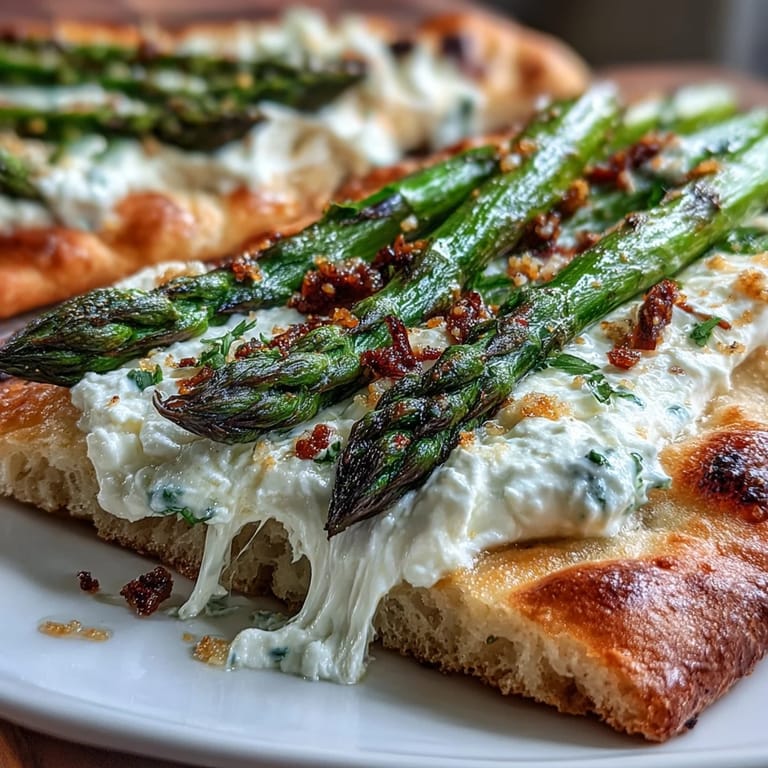
- As soon as they're out of the oven, gently press burrata on each base—it’ll ooze a little, and that’s exactly what you want.
- Top and Finish:
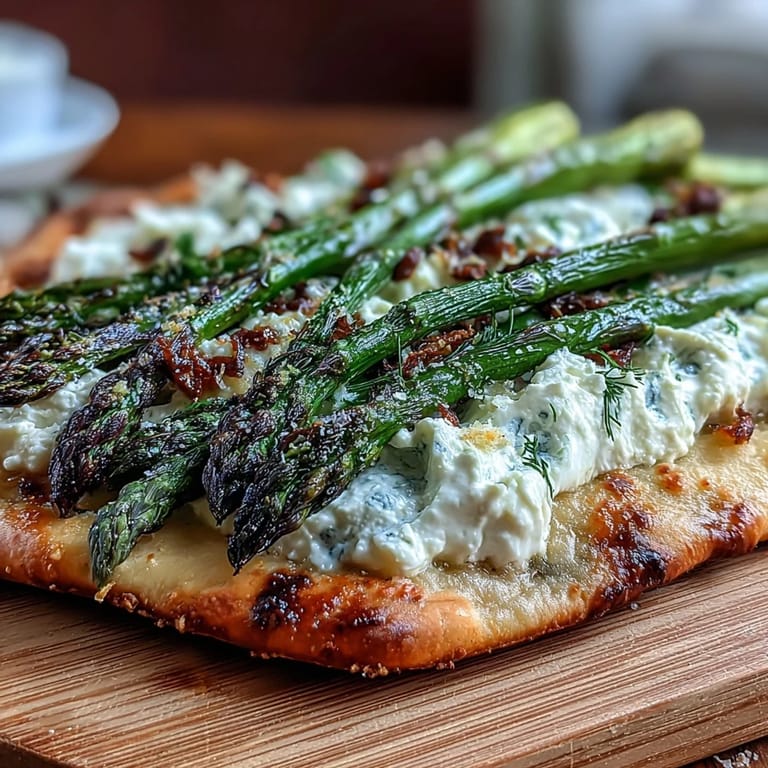
- Layer on the roasted asparagus pieces, dapple with lemon juice and zest, and sprinkle with torn basil and chili flakes if you’re feeling bold.
- Slice and Serve:
- While everything is still warm, cut into slices and serve—watch as strings of cheese stretch and everyone reaches for seconds.
 Save to Pinterest
 One spring evening, a friend brought two bottles of wine and we ate this flatbread right on the balcony, our napkins dancing in the breeze. Somehow the combination of zesty lemon and pillowy burrata made for a memory far bigger than the meal itself.
Flatbread Troubleshooting (So You Never Panic Again)
Once, I forgot to oil the flatbread and wondered why my base was disappointingly dry. The fix is simple but critical: a gentle brush of olive oil not only crisps the bottom but also creates that bakery aroma when you pull it from the oven. If you end up with chewy edges, try placing the flatbread directly on the oven rack for the last minute—result: perfection. Mostly though, don’t stress—imperfect flatbreads are still absolutely delicious and disappear just as quickly.
Choosing and Prepping Asparagus Like a Pro
If it squeaks when you snap it, you know your asparagus is super fresh. I sometimes roast a few extra stalks and pop them onto the flatbread even if they look a little wild—messy is good. Cut asparagus pieces roughly the same size so they bake evenly and don’t get lost under the cheese. Whenever you trim, save the ends for tossing into a veggie broth later.
Creative Add-Ons and Pairings
Once you’ve mastered this flatbread, let yourself riff: try a scatter of toasted pine nuts for crunch or swap in smoked salmon when you’re feeling indulgent. Pair with a glass of dry Rosé and a quick salad of arugula tossed in lemon for a meal that impresses without fuss.
- Finish with a whisper of flaky salt at the end for texture.
- Don’t overload with toppings—balance makes every bite better.
- If you need it extra warm, give each finished slice a minute back in the oven before serving.
 Save to Pinterest
 Here’s to every gathering that starts spontaneous and ends with happy faces and not a crumb of flatbread left behind. Let the zesty lemon remind you to slow down enough to savor every bite.
Recipe FAQs
- → Can I make this ahead of time?
You can roast the asparagus and crisp the flatbreads ahead, then store separately in the fridge for up to 24 hours. Rewarm flatbreads briefly before assembling and add burrata and lemon just before serving to keep textures fresh.
- → What can I use instead of burrata?
Fresh mozzarella is a great substitute — tear it into pieces so it melts slightly over warm flatbread. For a dairy-free option, try a creamy cashew spread or a dollop of whipped tofu seasoned with lemon.
- → How do I prevent soggy flatbread?
Brush the flatbreads with oil and crisp them well on the rack or a hot tray so they form a firm base. Add burrata and asparagus just before serving to avoid steam softening the crust.
- → Can I use frozen asparagus?
Fresh is best for texture and char, but thawed, well-drained asparagus can work. Pat dry thoroughly and roast at high heat to evaporate excess moisture and encourage browning.
- → Any tips for seasoning and balance?
Use lemon zest and a squeeze of juice for brightness to cut the richness of burrata. Finish with fresh basil for herbaceous notes and a pinch of chili flakes for gentle heat if desired.
- → What wine pairs well with these flavors?
A crisp Sauvignon Blanc or a dry Rosé complements the citrus and creamy cheese, while a light, unoaked Chardonnay also matches the texture and acidity of the dish.