 Save to Pinterest
 Last Tuesday I stood in my kitchen surrounded by vegetables in every color imaginable, realizing I'd accidentally bought enough produce to feed a small gathering. My sister was coming over for lunch between meetings, and I needed to turn this rainbow of ingredients into something coherent. That spontaneous pile of chopped vegetables became the first Buddha bowl I'd ever made, and now I can't imagine my week without these vibrant, satisfying meals.
My roommate walked in while I was arranging the vegetables in neat sections and asked if I was running a restaurant. We ended up sitting on the floor eating straight from the prep bowls, testing different combinations and debating whether sweet potato belonged in the mix. Those impromptu lunch sessions taught me that the best part of Buddha bowls is how customizable they are for everyone at the table.
Ingredients
- 1 cup quinoa, rinsed: The fluffy foundation that holds everything together
- 2 cups water: For perfectly cooked grains
- 1/2 teaspoon salt: Enhances the quinoa's natural flavor
- 1 cup cooked chickpeas: Protein that keeps you satisfied for hours
- 1 cup red cabbage, thinly sliced: Brings crunch and gorgeous purple color
- 1 cup carrots, julienned: Sweet orange ribbons that add texture
- 1 cup cherry tomatoes, halved: Little bursts of brightness
- 1 cup yellow bell pepper, sliced: Sunny crispness that pops against other colors
- 1 cup cucumber, sliced: Cool, refreshing crunch
- 1 cup fresh baby spinach: Delicate greens that wilt slightly under warm quinoa
- 1 ripe avocado, sliced: Creamy richness that ties everything together
- 2 tablespoons toasted pumpkin seeds: Nutty crunch scattered on top
- 2 tablespoons sesame seeds: Delicate seeds for extra texture
- 3 tablespoons tahini: The velvety base for our dressing
- 2 tablespoons lemon juice: Bright acidity that cuts through rich ingredients
- 1 tablespoon maple syrup or honey: Just enough sweetness to balance the tahini
- 2 tablespoons water: Thins the dressing to pourable consistency
- 1 clove garlic, minced: Punchy aromatic that wakes up the whole bowl
- Salt and black pepper: Essential seasoning to make all flavors pop
Tired of Takeout? 🥡
Get 10 meals you can make faster than delivery arrives. Seriously.
One email. No spam. Unsubscribe anytime.
Instructions
- Cook the quinoa:
- Bring 2 cups water to a boil, add quinoa and salt, then reduce heat to low and cover tightly. Simmer for 15 minutes until the water is absorbed, then remove from heat and let it steam for 5 minutes before fluffing with a fork.
- Prep your vegetables:
- While quinoa cooks, slice the cabbage into thin ribbons, julienne the carrots, halve the tomatoes, slice the pepper and cucumber, and cut the avocado just before serving.
- Whisk the dressing:
- Combine tahini, lemon juice, maple syrup, minced garlic, water, salt and pepper in a small bowl, whisking until completely smooth. Add more water if it's too thick to drizzle.
- Arrange the bowls:
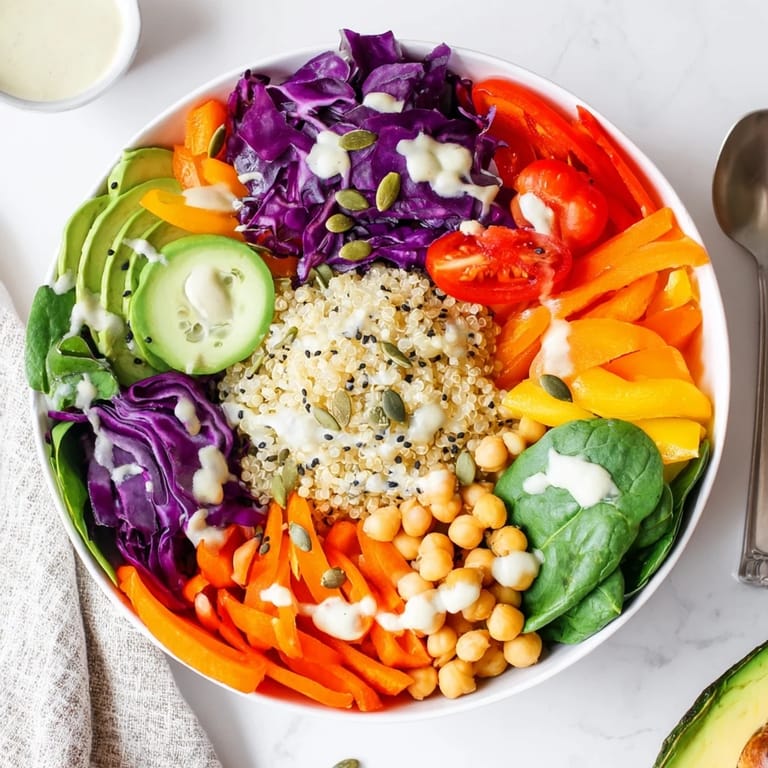
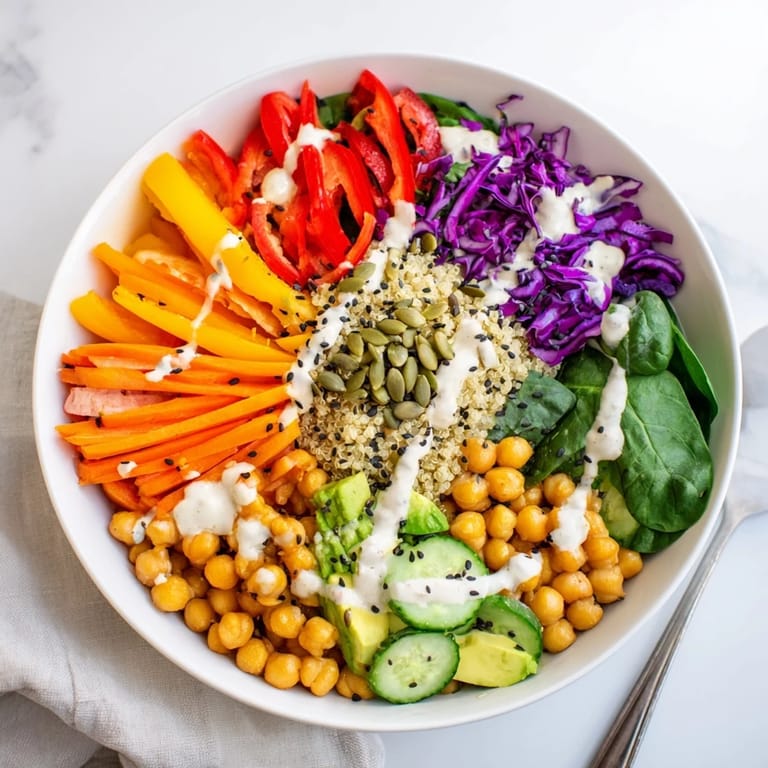
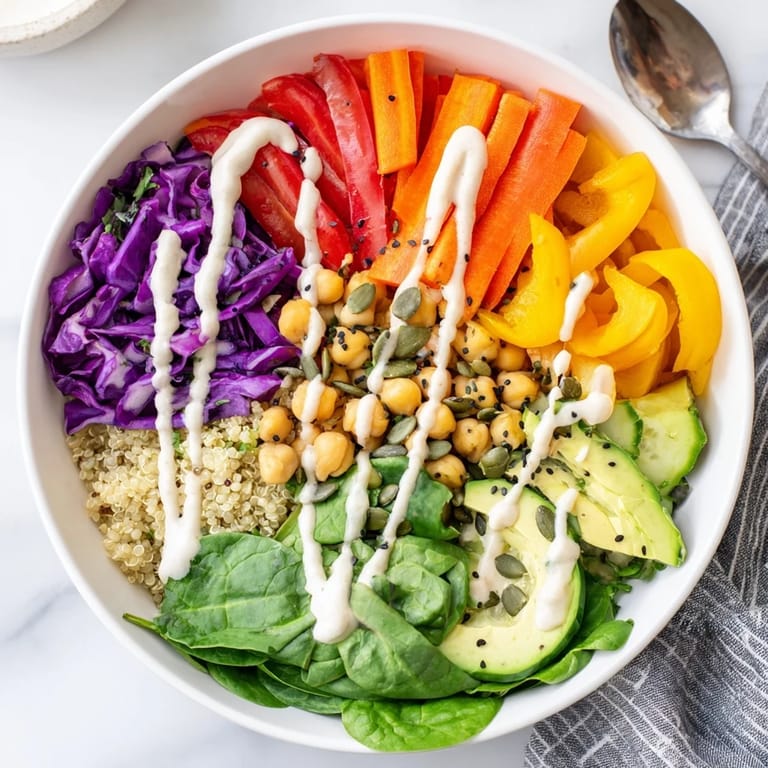
- Divide warm quinoa among four bowls, then arrange chickpeas and each vegetable in colorful sections on top like a beautiful edible mandala.
- Add the finishing touches:
- Drizzle each bowl generously with tahini dressing and scatter pumpkin seeds and sesame seeds over everything for that final crunch.
 Save to Pinterest
 These bowls have become my go-to for Sunday meal prep because they make Monday mornings feel so much more vibrant. There's something deeply satisfying about opening the fridge and seeing those colorful components ready to assemble.
Make It Your Own
The beauty of Buddha bowls is their infinite adaptability based on what's in season or lingering in your crisper drawer. Sometimes I swap chickpeas for crispy roasted sweet potato cubes when I want something heartier, especially during colder months when warm components feel more comforting.
Perfecting The Assembly
I've learned that arranging ingredients in sections rather than tossing everything together makes each bite feel intentional. When you take your fork through different layers, you experience all the textures and flavors separately before they blend together, which somehow makes the meal feel more substantial.
Storage Solutions
For meal prep, store the quinoa, vegetables, and dressing in separate containers and assemble fresh each day. This prevents everything from becoming soggy and keeps those crisp vegetables perfectly crunchy.
- Leave avocado out of storage containers and add fresh when serving
- Keep delicate spinach on top of quinoa so it doesn't get crushed
- Bring dressing to room temperature before drizzling for the best consistency
 Save to Pinterest
 Hope these colorful bowls bring as much brightness to your table as they've brought to mine over the past year of discovering them.
Recipe FAQs
- → What makes this bowl called a buddha bowl?
Buddha bowls get their name from their resemblance to a Buddha's belly - round, full, and nourishing. They typically feature a grain base, various vegetables arranged in sections, a protein source, and a complementary dressing, all packed into a single bowl.
- → Can I prepare the components ahead of time?
Absolutely! You can cook quinoa, slice vegetables, and prepare dressing up to 2 days in advance. Store components separately in airtight containers in the refrigerator. Assemble bowls just before serving and add avocado and dressing fresh.
- → What other grains work well in this bowl?
Farro, brown rice, millet, or bulgur are excellent alternatives to quinoa. Cook according to package directions and season similarly. Each grain brings a slightly different texture and nutritional profile to your bowl.
- → How can I add more protein to this dish?
Grilled tofu, tempeh, edamame, or roasted chickpeas boost protein content. Hard-boiled eggs, cooked chicken, or shrimp work well if you eat animal protein. Hemp seeds or nutritional yeast also add plant-based protein when sprinkled on top.
- → Is the tahini dressing necessary?
The tahini dressing provides creaminess and ties the ingredients together, but you can substitute with other options. Try an avocado-lime dressing, cashew cream, or a simple vinaigrette made with olive oil and vinegar to suit your taste preferences.