 Save to Pinterest
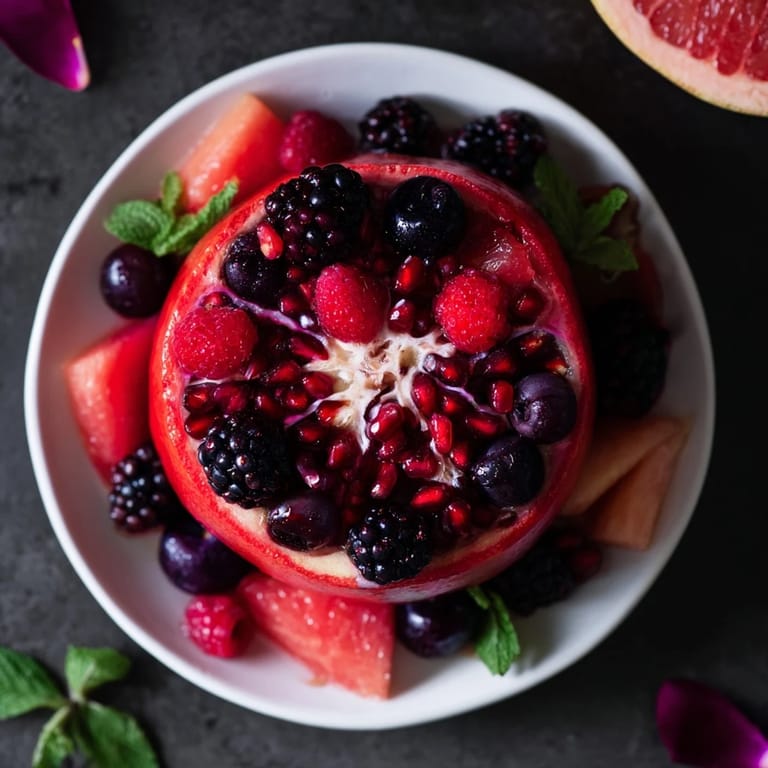
 I discovered the magic of color coordination one afternoon when a dinner guest asked me to make something that looked as good as it tasted. Staring at my fruit bowl, I realized I had everything I needed to build something visual—something that could tell a story just by looking at it. The pomegranate, split open and gleaming ruby-red, became my anchor point. From there, the arrangement fell into place almost like painting with fruit, each shade feeding into the next. That's when The Pomegranate Pivot was born, and it's been my go-to whenever I want to impress without stress.
The first time I made this for a small gathering, my friend Sarah walked in mid-arrangement and just stopped talking. She stood there watching me place the last raspberries, and when I stepped back, she said, "That's almost too pretty to eat." Almost. We demolished it in twenty minutes, and I've been making it ever since because that moment taught me that food doesn't have to be complicated to feel memorable.
Ingredients
- 1 large pomegranate, halved: This is your centerpiece and your flavor anchor, so pick one that feels heavy for its size—that means juicy seeds ready to pop.
- 1 cup dark cherries, pitted: These start your color journey at the deepest red, and pitting them fresh (not canned) keeps everything looking intentional.
- 1 cup red grapes: They roll slightly and fill gaps beautifully, so don't stress about perfect placement.
- 1 cup strawberries, hulled: Slice or halve these just before arranging so they stay bright and don't weep juice everywhere.
- 1 cup raspberries: Handle these like they're delicate because they are, and they bridge the gap between deep red and softer pink tones perfectly.
- 1 cup watermelon, cubed: The palest pink cubes anchor your middle ground and add a cool, refreshing element that balances the sweetness.
- 1 cup pink grapefruit segments: These bring tartness and a slightly translucent quality that catches the light beautifully.
- 1 cup dragon fruit, cubed: The pale flesh with tiny black seeds becomes almost architectural on the platter, and it's milder in flavor so it won't compete.
- 1 cup apple slices, pink or blush varieties: Slice these last and toss them in a tiny bit of lime juice to keep them from browning while you work.
- 1 cup pear slices: These should be ripe but still firm, and they finish your gradient at the softest, most delicate end of the spectrum.
- Fresh mint leaves and edible rose petals (optional): These are your finishing touch—a whisper of extra color and fragrance that says you really care.
Tired of Takeout? 🥡
Get 10 meals you can make faster than delivery arrives. Seriously.
One email. No spam. Unsubscribe anytime.
Instructions
- Set your stage:
- Choose a large platter that's flat and light-colored so your fruit colors pop against the background. I use a white ceramic platter because it frames everything like a gallery wall.
- Plant your anchor:
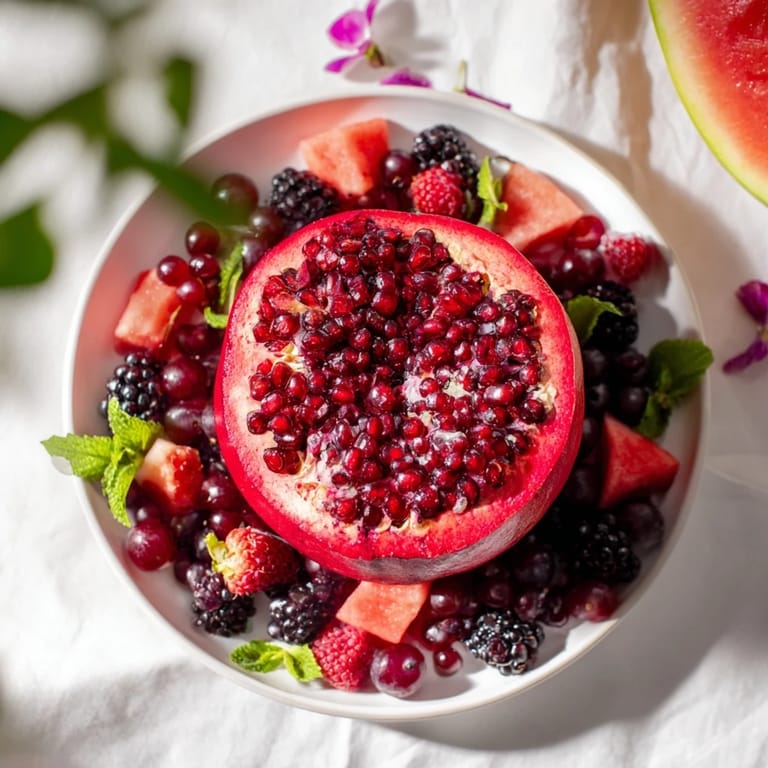
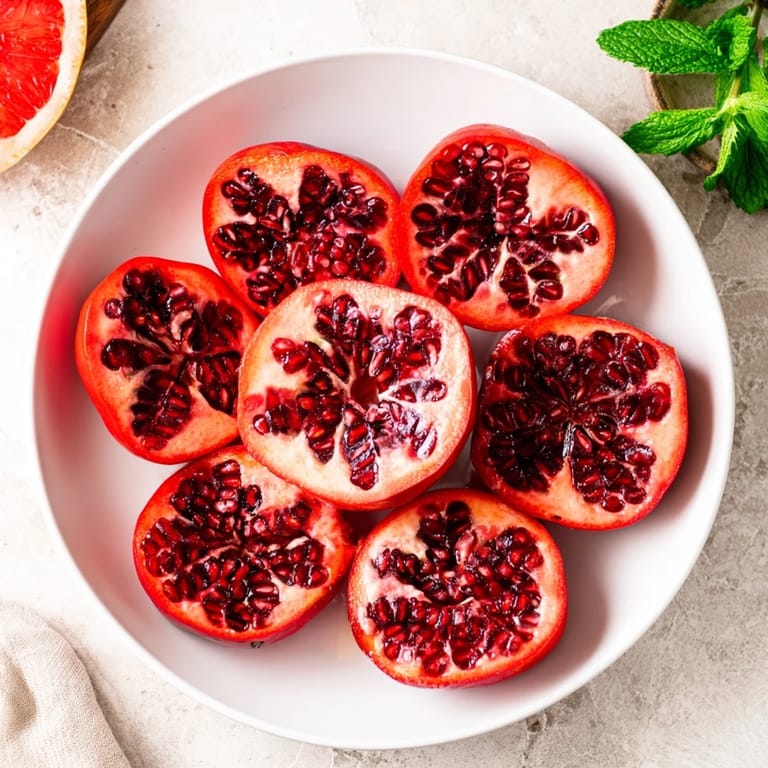
- Place the pomegranate halves cut-side up in the very center of your platter, nestled slightly so they won't roll. The seeds inside should be visible and gleaming, like jewels waiting to be discovered.
- Build your first layer:
- Start arranging your darkest fruits—cherries, grapes, and strawberries—in a crescent or circle around the pomegranate. Overlap them slightly like roof shingles so you see color density, not white platter gaps.
- Create the pink transition:
- Move outward and layer your medium-pink fruits next—raspberries, watermelon cubes, and grapefruit segments. This is where the gradient magic happens, so let the colors whisper into each other rather than stopping abruptly.
- Fade to pale:
- Fill the outer edge with your lightest fruits—dragon fruit, apple slices, and pear slices. These should feel like they're floating away from the intensity at the center.
- Finish and serve:
- Scatter mint leaves and rose petals across the arrangement if you're using them, then step back and admire your work before anyone else sees it. That moment is yours alone.
 Save to Pinterest
 What surprised me most about this platter is how it changes the entire mood of a gathering. People don't just eat it; they photograph it, talk about it, and ask you to make it again. It becomes less about the individual fruits and more about the fact that you took time to see them as part of something bigger and more beautiful than they'd be alone.
Seasonal Swaps That Work Beautifully
The truth about this platter is that it adapts to whatever season you're in. In summer, lean into peaches and berries at their peak. In winter, pomegranate and pear are your friends, and you can add persimmons for a deeper blush tone. Spring brings fresh strawberries and lighter pears, while fall gives you access to figs and those deeper red apple varieties. I've learned to build this platter around what's actually ripe, not around some imaginary perfect version.
The Psychology of Color and Eating
I didn't realize until later that the reason people love this platter so much is because they're experiencing their food through their eyes first. A bowl of mixed fruit can taste identical to this arranged version, but the visual journey—the way the colors lead you from deep red to pale pink to white—actually makes you taste it differently. Your brain is primed to expect sweetness, texture, and freshness because you watched the gradient build.
Making It Work for Your Table
This platter isn't just beautiful; it's practical in ways I didn't expect. It serves six people easily, but you can scale it up or down by using the same proportions. It sits well at room temperature for a couple of hours, and if you cover it and refrigerate it, it stays fresh and cold, which actually makes the fruits taste even better. The best part is that there's no cooking, no last-minute fussing, and no cleanup beyond rinsing a knife and a cutting board.
- Prep everything the morning of if you're serving at dinner, and arrange just an hour before guests arrive so colors stay bright.
- If you're nervous about the arrangement, remember that nature isn't perfect, so neither does your platter need to be.
- Serve this with something cold and slightly sweet—sparkling rosé, a crisp white wine, or even sparkling water with fresh mint—because the combination elevates everything.
 Save to Pinterest
 This platter has taught me that sometimes the most impressive thing you can bring to the table is simply taking time to see beauty in what's already there. That's worth more than any fancy technique.
Recipe FAQs
- → How do I keep the apple and pear slices from browning?
Drizzle them lightly with lime juice to prevent oxidation and maintain their fresh appearance.
- → Can I substitute fruits based on season?
Yes, try seasonal options like red currants, pomegranate seeds, lychees, or peaches to vary flavors and colors.
- → What is the best way to arrange the fruits for visual appeal?
Layer fruits in overlapping sections with gentle color transitions from deep reds near the pomegranate to pale pinks and whites at the edges.
- → Are garnishes necessary?
Fresh mint leaves and edible rose petals are optional but enhance aroma and add visual elegance.
- → What tools are recommended for preparation?
A sharp paring knife, cutting board, large serving platter, and small bowls for organizing the fruit make assembly easier.