 Save to Pinterest
 My grandmother's kitchen smelled like butter and dough on pierogi day—the kind of smell that made you hungry before you'd even tasted anything. She'd stand at her worn wooden table, her flour-dusted hands moving with the kind of certainty that comes from making the same thing a hundred times. Watching her fold and pinch those little half-moons, I understood that pierogi weren't just dumplings; they were edible proof that someone cared enough to take their time. Now, whenever I make them, I find myself moving at her pace, not rushing, because there's something sacred about feeding people food you've shaped with your own hands.
I made these for my roommate after she'd had a terrible week at work, and she literally cried—not because they were fancy or complicated, but because they were warm and generous and tasted like someone had been thinking about her in the kitchen. That's when I realized pierogi transcend being just food; they're a way of saying you matter to me without having to use words.
Ingredients
- All-purpose flour (3 cups): This is your structure—the flour needs enough protein to create a dough supple enough to fold without tearing, but not so much that it becomes tough.
- Egg (1 large): Acts as a binder and adds richness; it's what makes the dough tender rather than dense.
- Lukewarm water (¾ cup): Temperature matters here—too cold and the dough won't hydrate properly, too hot and you'll scramble the egg.
- Sour cream (2 tbsp): This is the secret to soft dough; it adds tang and helps keep the pierogi tender even after they're boiled and fried.
- Salt (1 tsp for dough, more for seasoning): Seasons the dough throughout and strengthens the gluten network.
- Unsalted butter (2 tbsp melted for dough, 2 tbsp for filling, 3 tbsp for onions): Melted butter in the dough creates a softer crumb; the filling butter carries the onion flavor into the potatoes.
- Russet potatoes (1½ lbs): The starchy potato is essential—waxy potatoes won't mash smooth and will make your filling heavy.
- Farmers cheese (1 cup): This is the ingredient that distinguishes pierogi from other dumplings; it's milder and creamier than sharp cheddar alone.
- Sharp cheddar (½ cup grated): Adds depth and prevents the filling from tasting flat or one-dimensional.
- Onion (1 small, finely chopped for filling): Cooked into the filling, it becomes sweet and mellow, not harsh.
- Large onions (2, thinly sliced): These become the caramelized crown; sliced thin means they'll release their sugars faster.
- Sour cream (for serving): The cool, tangy finish that brightens every bite.
Tired of Takeout? 🥡
Get 10 meals you can make faster than delivery arrives. Seriously.
One email. No spam. Unsubscribe anytime.
Instructions
- Build Your Dough Foundation:
- Combine flour and salt in a large bowl, then create a well in the center like you're cradling something precious. Add egg, melted butter, sour cream, and water, stirring until shaggy bits form. Knead on a floured surface for 5–7 minutes, working until the dough becomes silky and springs back when you poke it. Cover with a damp towel and rest for 30 minutes—this resting time is non-negotiable because it relaxes the gluten and makes rolling easier.
- Cook and Season the Filling:
- Boil cubed potatoes in salted water until they fall apart at the fork, about 15–18 minutes. While they drain, melt 2 tbsp butter in a skillet and sauté your finely chopped onion until the edges brown and caramelize slightly. Combine hot mashed potatoes, caramelized onion, farmers cheese, and cheddar, tasting and seasoning generously with salt and pepper. The filling should taste like something you'd want to eat by itself; let it cool completely before filling or the dough will get warm and sticky.
- Roll and Fill With Care:
- Divide your rested dough into two portions to make it manageable. Roll the first portion to about ⅛-inch thickness on a well-floured surface, using a light hand and turning the dough often so it doesn't stick. Cut circles using a 3-inch cutter (a glass works perfectly if you don't have a cutter), placing 1 heaping teaspoon of filling in the center of each circle. Fold the circle in half, pressing the edges firmly to seal—a tight seal prevents filling from leaking into the boiling water.
- Boil Until They Float and Dance:
- Bring a large pot of salted water to a gentle boil (too vigorous and they'll burst). Drop pierogi in batches, letting them settle on the bottom before stirring gently to prevent sticking. Once they float to the surface, cook for 1–2 minutes more to ensure the filling is hot throughout. Remove with a slotted spoon and set on a clean towel to drain.
- Caramelize Onions Into Gold:
- In a large skillet, melt 3 tbsp butter over medium-low heat, then add thinly sliced onions. Stir occasionally (not constantly—you want some fond to develop on the pan for deeper flavor), cooking for 20–25 minutes until the onions are deeply golden, soft, and sweet. They should smell almost jammy when they're ready.
- Pan-Fry to Crispness:
- Working in batches so you don't crowd the skillet, add your boiled pierogi to the warm skillet with caramelized onions. Fry for 2–3 minutes per side until the edges are golden and crispy. You're not frying them in fresh butter; you're nestling them into the onions, so they pick up that sweetness and caramel color.
- Plate and Finish:
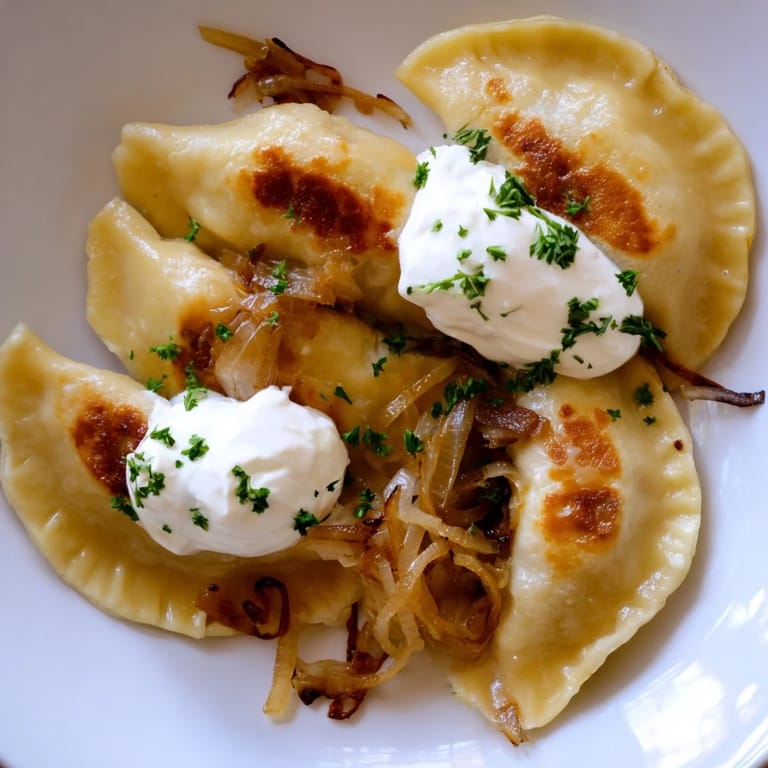
- Transfer warm pierogi to a serving dish, spooning the caramelized onions and pan sauce over the top. Add a generous dollop of cold sour cream and scatter with fresh chives or parsley. Serve immediately while the contrast between warm dumplings and cool sour cream is still vivid.
 Save to Pinterest
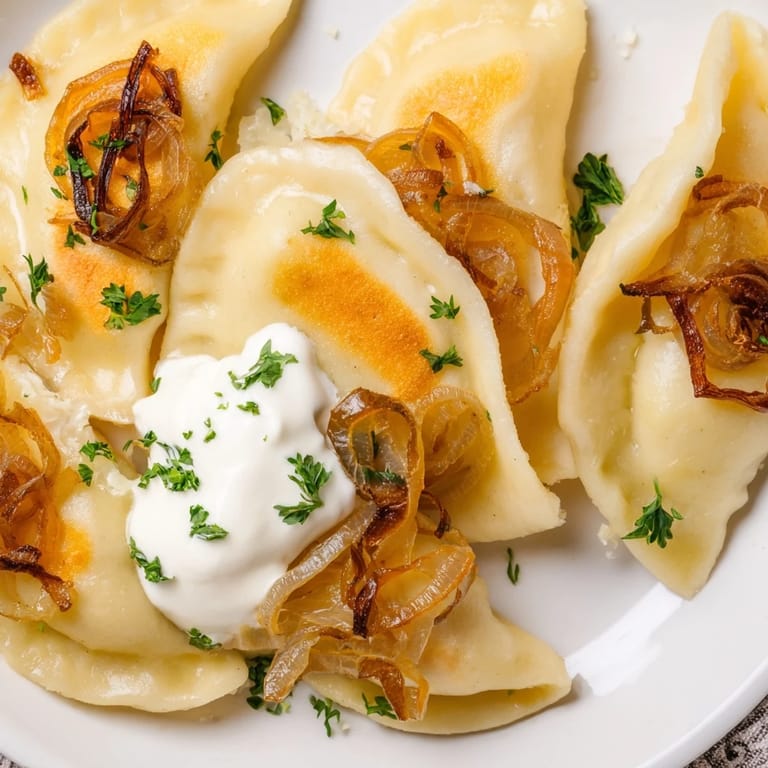
 There's a moment when you bite into a perfectly made pierogi—that instant when the soft dough gives way and the hot potato filling meets cold sour cream—and you realize why your grandmother made these so often. It's not about impressing anyone; it's about creating a moment of pure comfort.
Freezing and Make-Ahead Magic
Uncooked pierogi are even better than fresh because you can freeze them directly on a tray, then transfer to freezer bags for up to two months. There's something wonderful about knowing that on a tired evening, you can pull a handful of frozen dumplings from the freezer and have a meal ready in twenty minutes. Boil them straight from frozen (they'll take 2–3 minutes longer), then pan-fry as usual.
Filling Variations to Explore
The potato and cheese filling is classic for a reason, but once you understand the technique, you can swap in other fillings: sauerkraut with mushrooms, ground meat with onions, or even just cheese if you want something lighter. The dough and cooking method stay exactly the same—it's the filling that lets you play and discover.
Serving Pierogi Like You Mean It
Pierogi can be a side dish alongside roasted chicken or baked fish, a main course with a simple salad, or even a late-night snack standing at the counter when nobody's watching. The combination of butter, caramelized onions, and sour cream means they're rich enough to satisfy but still feel light enough to enjoy generously.
- A crisp Polish lager or dry white wine pairs perfectly and cuts through the richness beautifully.
- Crispy bacon pieces scattered over the top transform the vegetarian version into something even more indulgent if you're in the mood.
- Leftover pierogi reheat beautifully in a pan with a bit of butter, so this is truly a recipe that keeps giving.
 Save to Pinterest
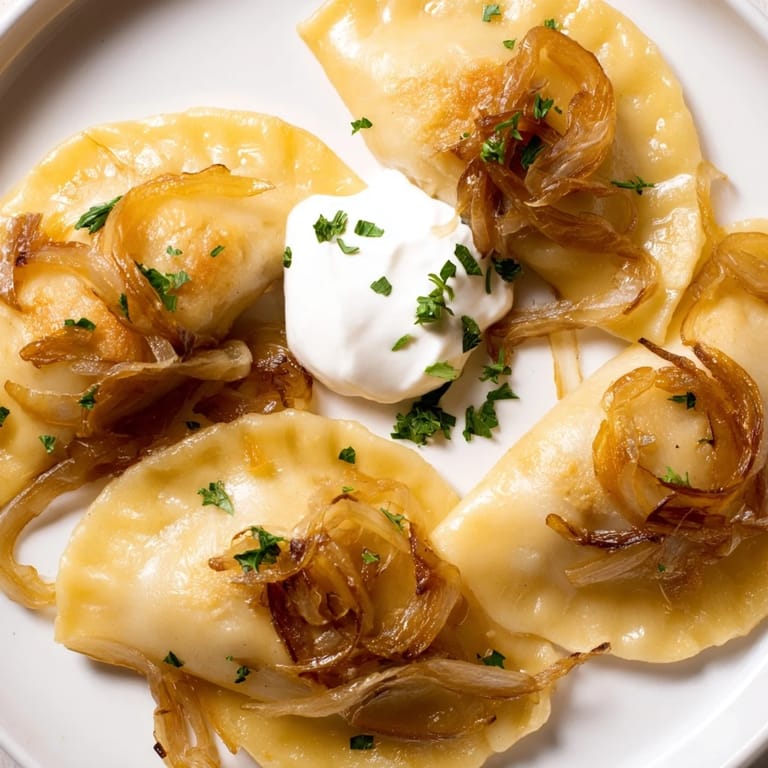
 Making pierogi is one of those cooking projects that feels like a commitment while you're doing it, but the second someone takes that first bite, you understand why it's worth every fold and seal. These dumplings carry warmth in a way that few foods can.
Recipe FAQs
- → What dough ingredients ensure tender pierogi?
Using all-purpose flour, egg, sour cream, and lukewarm water creates a smooth, elastic dough that remains tender after cooking.
- → How do I achieve creamy potato filling?
Boil russet potatoes until tender, then mash thoroughly. Mixing in farmers cheese and sharp cheddar adds richness and depth.
- → Why pan-fry pierogi after boiling?
Pan-frying after boiling gives pierogi a golden crisp exterior, adding texture and enhancing flavor without drying out the filling.
- → What is the role of caramelized onions in this dish?
Slowly cooking the onions in butter brings out their natural sweetness, providing a savory-sweet topping that complements the filling.
- → Can I prepare pierogi in advance?
Yes, freeze uncooked pierogi on a tray before transferring to bags; they can be stored for up to two months without losing quality.
- → Are there variations for the filling?
You can substitute farmers cheese with well-drained cottage cheese or add bacon lardons to the caramelized onions for a non-vegetarian twist.