 Save to Pinterest
 The kitchen was flooded with afternoon sunlight when I first threw this together during a chaotic spring week. I had ricotta lingering in the fridge and a bag of peas I'd forgotten about, craving something that tasted like green grass and brighter days. My roommate wandered in, fork in hand, and we ended up eating straight from the mixing bowl while leaning against the counter. That impromptu lunch became our go-to whenever we needed food that felt like a deep breath.
Last summer I made this for my sister who claimed she hated peas her entire life. She watched suspiciously as I tossed everything together, then went back for thirds and asked for the recipe before she'd even wiped her plate clean. Sometimes the simplest combinations are the ones that make people sit up and pay attention.
Ingredients
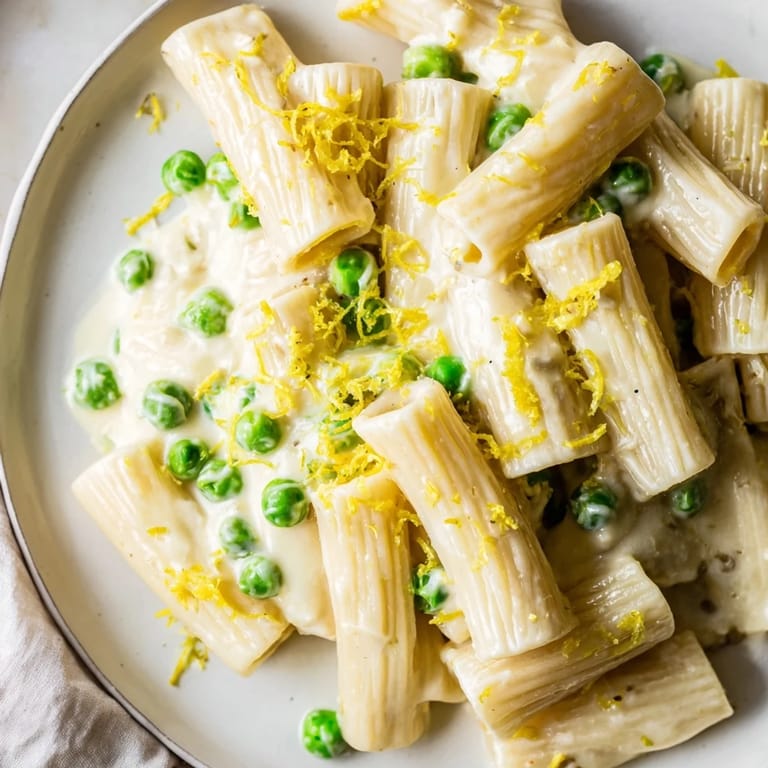
- 400 g rigatoni: The ridges catch every bit of that creamy ricotta sauce, though penne works in a pinch.
- 250 g ricotta cheese: Whole milk ricotta gives you that silky texture—part-skim can turn slightly grainy.
- 1 lemon, zested and 2 tbsp juice: Microplane the zest gently, avoiding the bitter white pith beneath.
- 2 tbsp extra-virgin olive oil: This bridges the gap between the cheese and pasta, keeping everything luscious.
- 1 small garlic clove, finely grated: Grating releases all the aromatic oils without any harsh chunks.
- 40 g grated Parmesan cheese: Adds that savory depth that balances the bright lemon.
- 200 g frozen or fresh green peas: Frozen peas are actually sweeter and more consistent than fresh, plus no shelling required.
Tired of Takeout? 🥡
Get 10 meals you can make faster than delivery arrives. Seriously.
One email. No spam. Unsubscribe anytime.
Instructions
- Get your water boiling:
- Bring a large pot of salted water to a rolling boil—the water should taste like the sea, which is your only chance to season the pasta itself.
- Cook the pasta:
- Add rigatoni and cook until al dente, then reserve 120 ml of that starchy cooking water before draining—it's liquid gold for your sauce.
- Blanch those peas:
- Drop peas into the boiling water during the last 2 to 3 minutes of pasta cooking time, then drain everything together.
- Whisk up the magic:
- In a large mixing bowl, combine ricotta, lemon zest, lemon juice, olive oil, grated garlic, Parmesan, salt, and pepper until you have something smooth and inviting.
- Bring it together:
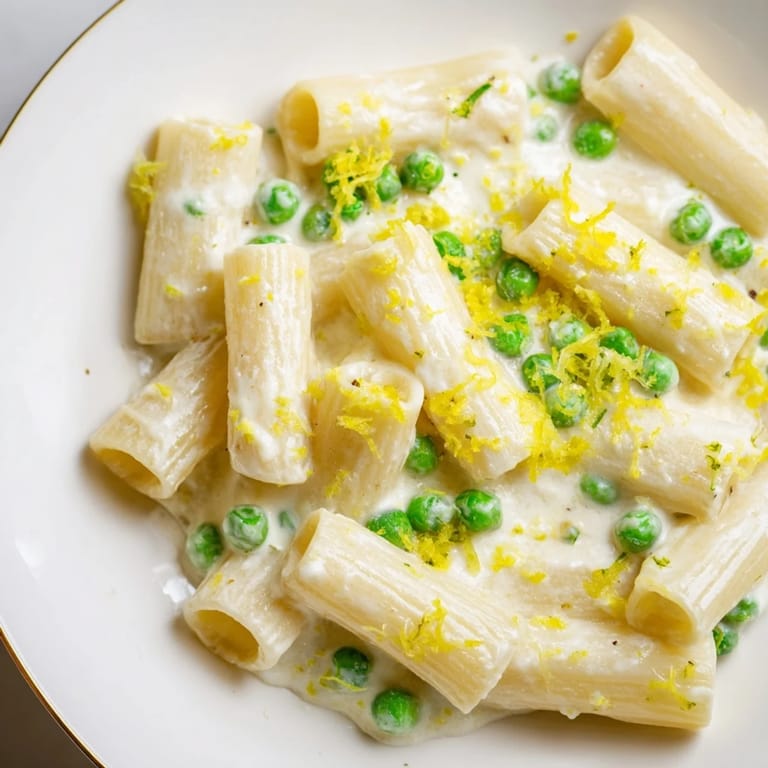
- Add hot pasta and peas directly to the ricotta mixture, tossing vigorously and adding splashes of pasta water until everything's coated in a glossy, silky sauce.
 Save to Pinterest
 This dish has become my emergency dinner for unexpected guests because it looks like something from a restaurant but takes zero planning. There's something beautiful about food that doesn't demand perfection—just good ingredients and a willingness to toss things together with confidence.
Making It Your Own
I've discovered that a handful of fresh mint or basil at the end completely transforms the dish, making it feel even more like spring. Sometimes I'll add a pinch of red pepper flakes when I want that gentle hum of heat beneath all the creaminess. The beauty here is that the foundation is so solid you can play around without worrying about breaking anything.
What to Serve Alongside
A crisp arugula salad dressed with nothing but lemon juice and olive oil cuts through the richness beautifully. If you're feeling indulgent, some garlic bread never hurt anyone, though honestly this pasta is substantial enough to stand on its own. A chilled white wine, something pinot grigio or sauvignon blanc, makes the whole meal feel like a proper occasion.
Make-Ahead Wisdom
The ricotta mixture can be prepped up to a day ahead and stored in the refrigerator—it actually gives the flavors time to meld together. When you're ready to eat, just bring it to room temperature while the pasta cooks. The sauce comes together even faster when you're not scrambling to zest lemons and grate garlic at the last minute.
- Leftovers reheat surprisingly well with a splash of water to loosen the sauce.
- The peas hold their texture better than I expected, even after a day in the fridge.
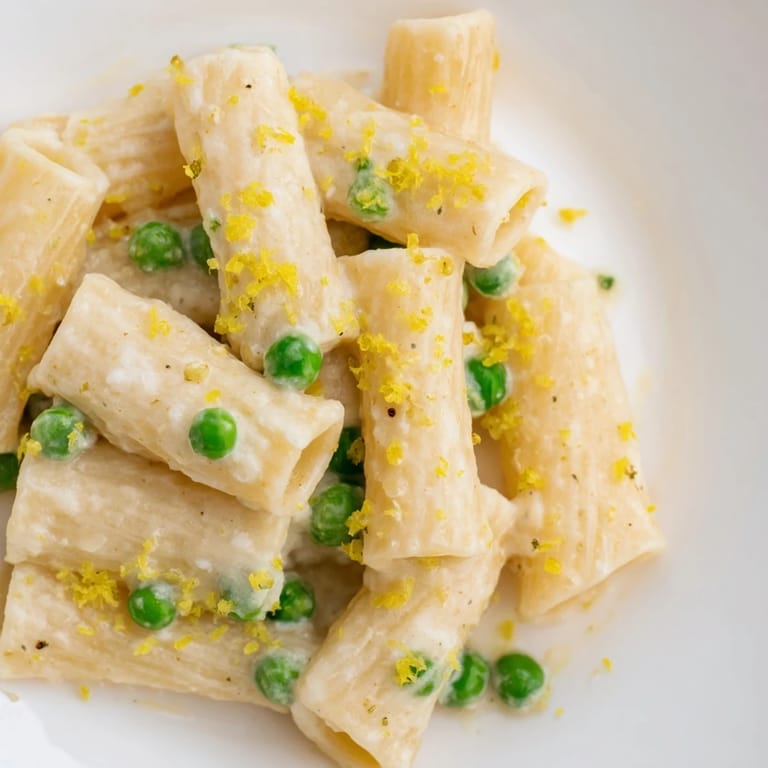
- Don't skip the fresh lemon zest garnish—it wakes everything back up.
 Save to Pinterest
 Spring in a bowl, ready whenever you need something that tastes like sunshine and doesn't require you to be a perfectionist to get it right.
Recipe FAQs
- → Can I use a different pasta shape?
Absolutely. Penne, fusilli, or farfalle work beautifully with this ricotta mixture. Choose shapes that capture sauce well for the best results.
- → How do I prevent the ricotta from becoming grainy?
Keep the heat moderate when tossing the hot pasta with the ricotta mixture. The residual heat will warm the ricotta smoothly. Adding pasta water gradually helps create a silky, cohesive sauce rather than lumpy texture.
- → Can I make this dairy-free?
Yes. Substitute vegan ricotta and plant-based Parmesan alternatives. The lemon and garlic will still provide excellent flavor. Adjust seasoning to taste as dairy alternatives can vary in saltiness.
- → What's the best way to zest a lemon efficiently?
Use a microplane grater for fine, fluffy zest that distributes evenly throughout the dish. Avoid the white pith underneath, which tastes bitter. A channel zester also works, though the texture differs slightly.
- → Can I prepare the ricotta mixture in advance?
Yes, you can mix the ricotta, lemon, garlic, and Parmesan up to 4 hours ahead. Cover and refrigerate. Bring to room temperature before tossing with hot pasta for the best texture and flavor development.
- → How much pasta water should I reserve?
Reserve about 120 ml or ½ cup of starchy pasta water. This emulsifies with the ricotta, creating a silky sauce that coats the pasta evenly. Add gradually while tossing—you may not need all of it.