 Save to Pinterest
 I discovered the magic of a Moroccan tent arrangement at a dinner party where the host had layered vegetables like a peacock displaying its feathers. The vibrant reds, yellows, and greens weren't just placed on a plate—they were part of the performance, creating a focal point that made guests lean in before they even tasted anything. That evening, I realized appetizers didn't have to hide; they could be the showstopper. Now whenever I need to impress, I think back to that moment and build my own version, letting the arrangement tell the story before the flavors do.
My sister brought her new partner to dinner and I panicked about what to serve—something that said welcome without screaming I spent all day cooking. I arranged this platter while they were settling in, and by the time I turned around, they were already photographing it. He later told me he'd never seen a vegetable platter like that before, which felt like the highest compliment I could get.
Ingredients
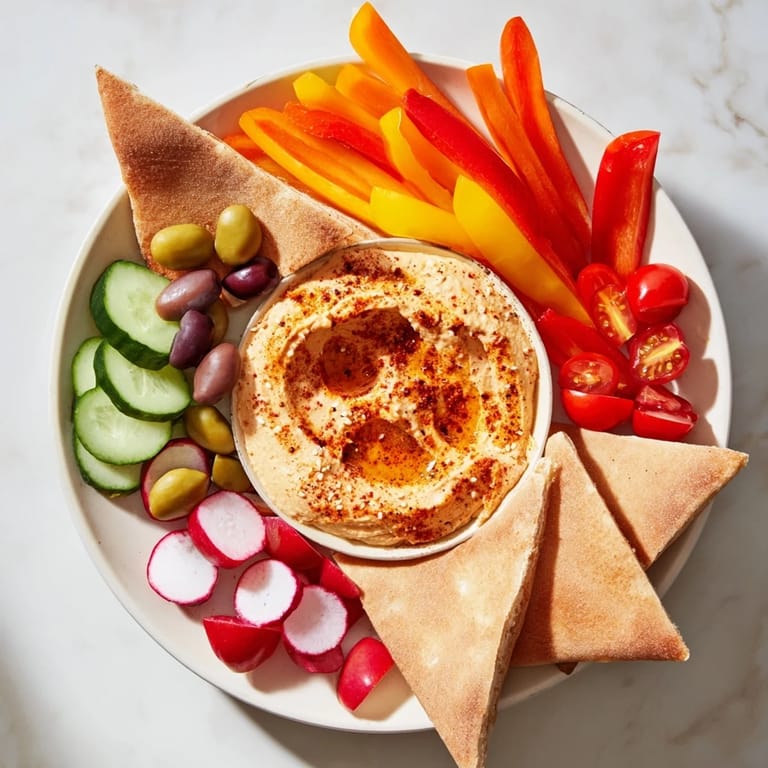
- Cucumber, red and yellow bell peppers, carrots, cherry tomatoes, red onion, radishes: Fresh vegetables are the tent's framework—choose firm specimens and slice them uniform in thickness so they stand tall and proud on the platter.
- Pita breads or Moroccan msemen: Warming them briefly makes them pliable enough to fan out gracefully at the base and gives them a whisper of warmth that guests appreciate.
- Hummus, roasted red pepper muhammara, baba ganoush: These creamy dips are the soul of the arrangement; buy quality or make them fresh if you have time, as they're what people actually taste.
- Green and black olives, cilantro or parsley, toasted sesame seeds, ground cumin, smoked paprika: These finishing touches add depth and visual contrast—the sesame seeds especially catch the light and make the whole platter shimmer.
Tired of Takeout? 🥡
Get 10 meals you can make faster than delivery arrives. Seriously.
One email. No spam. Unsubscribe anytime.
Instructions
- Prepare your canvas:
- Slice all vegetables into sticks, coins, or lengths about the size of your pinky finger so guests can grab them easily and arrange them on a large platter. If you have time, soak the cucumber and onion slices in ice water for 10 minutes to crisp them up and make them curl slightly—they'll look more inviting.
- Build the tent frame:
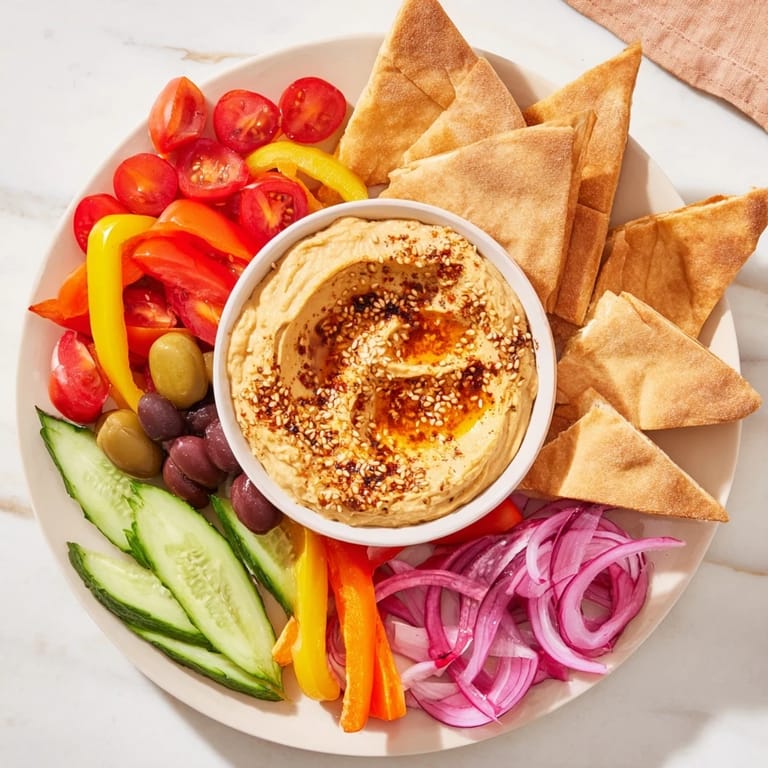
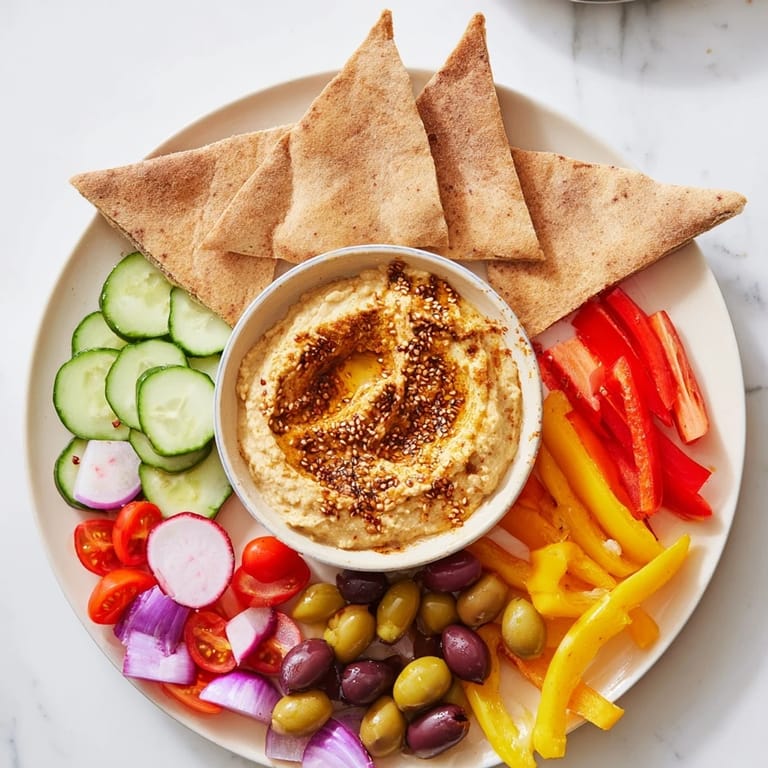
- Starting from the center, arrange vegetables in triangular groupings that point upward like a tent's peaked roof. Alternate colors deliberately—red next to yellow next to orange—because your eyes will travel across the platter like you're reading a map.
- Warm and arrange the bread:
- Toast your pita or msemen in a dry skillet for 2-3 minutes per side until they're warm and flexible, then cut them into triangles. Fan these out at the base of your vegetable canopy like you're layering flower petals.
- Present the dips with intention:
- Spoon hummus, muhammara, and baba ganoush into small bowls and nestle them at the center base where the tent meets the ground. Sprinkle each dip with a pinch of cumin and paprika, then scatter the sesame seeds across all three—this step takes 30 seconds but transforms them from ordinary to special.
- Garnish and serve:
- Scatter your olives around the dips, then rain cilantro or parsley over the entire arrangement like confetti. Trust your instincts here—there's no such thing as too much green.
 Save to Pinterest
 There's a moment right before guests arrive when you step back and look at what you've made, and something shifts—you're not nervous anymore because the platter itself becomes proof that you know what you're doing. This dish taught me that sometimes the most generous thing you can offer people is something that makes them feel like they're being treated with real care.
The Architecture of Appetizers
A good appetizer platter works because it respects different appetites and moods. Some people want to graze quietly with one dip, others want to try everything, and the beauty of this tent is that it invites all three approaches. I've learned that when you give people choices rather than a single path, they feel more welcome—food becomes permission to be yourself at a table.
Shopping and Prep Strategy
The first time I made this, I prepped everything the morning of and felt calm for the entire party. Now I have a system: wash and chop vegetables the night before and store them in containers with damp paper towels to keep them crisp. The dips and bread should be touched only on the day of serving so everything tastes bright. This small shift in timing removed all the stress and left me free to actually enjoy hosting.
Making It Your Own
The tent structure is flexible, which is its secret strength—it works with whatever fresh vegetables your market has or your garden grew. I've made it with snap peas in spring, blanched green beans in summer, and even added roasted chickpeas one winter when I wanted something heartier. The framework stays the same, but the contents tell a story about the season and what felt right that week. Once you understand the principle—fresh vegetables pointing upward, dips in the center, bread fanned at the base—you're free to improvise.
- Roasted chickpeas or marinated feta cubes add substance without changing the visual impact.
- Swap vegetables seasonally or based on what your farmers market whispers at you that morning.
- For vegan guests, just double-check that your store-bought dips are dairy-free and you're golden.
 Save to Pinterest
 This platter has become my secret weapon for moments when I want to serve something that feels elegant but requires only the confidence to arrange, not the patience to cook. It reminds me every time that sometimes the most memorable meals are the ones where the food does the talking.
Recipe FAQs
- → What flatbreads can be used for this platter?
Pita breads or Moroccan msemen cut into triangles work best, warmed slightly before serving for a soft texture and added aroma.
- → How should the vegetables be prepared?
Slice cucumbers lengthwise, bell peppers into strips, carrots into sticks, and halve cherry tomatoes. Arrange them in pointed, triangular groups for visual appeal.
- → What spices enhance the dips?
Ground cumin, smoked paprika, and toasted sesame seeds are sprinkled over the dips to boost their flavor and add a subtle smoky warmth.
- → Can this platter be adapted for vegan diets?
Yes, ensure that all dips and flatbreads are dairy-free to maintain a fully vegan-friendly option.
- → What garnishes add to the presentation?
Pitted green and black olives along with chopped fresh cilantro or parsley create festive colors and enhance flavor complexity.
- → Is this platter suitable for party servings?
Absolutely, it is designed as a vibrant party platter offering variety and easy sharing for 6 servings.