 Save to Pinterest
 I still remember the first time I put together a Mediterranean mezza platter—it was for a casual dinner party on a warm summer evening, and I was nervous about impressing my guests with something that felt effortless yet special. I grabbed whatever beautiful produce I could find at the market, added some store-bought dips I trusted, and arranged everything on my grandmother's old wooden board. By the end of the night, people were still gathered around it, sharing stories and reaching for one more olive or cube of feta. That's when I realized: this wasn't just appetizers. It was an invitation to linger, to taste, to connect. Now, whenever I need to bring people together without fuss, this is what I make.
There was this moment at a dinner party when my friend Sarah, who usually played it safe with food, tried the baba ganoush and her eyes lit up. She'd never had it before, and suddenly she was asking me what it was, how to make it, whether I could teach her. That's the magic of a mezza platter—it's not intimidating. It's curious and welcoming, full of little discoveries waiting to happen.
Ingredients
- Classic hummus (1 cup): The creamy anchor of your platter—tahini and chickpeas whipped smooth. If you make it yourself, it's transcendent, but a good store-bought version saves you time without losing soul. The secret is a drizzle of olive oil right before serving.
- Baba ganoush (1 cup): Roasted eggplant that tastes like sunshine. It's milder than hummus, with an almost smoky elegance. This is the one that converts people who think they don't like eggplant.
- Tzatziki (1 cup): Cool, herbaceous, and grounding—Greek yogurt meets cucumber and dill. It's the refreshing pause your palate needs between rich bites.
- Feta cheese, rustic cubes (150 g): Don't cube it too small or perfectly. Rough, uneven pieces are more inviting. The slight saltiness plays beautifully against everything else.
- Cherry tomatoes, halved (1 cup): Look for ones that smell like tomato when you bring them to your nose. Their sweetness is your platter's brightness.
- Cucumber, sliced into rounds (1 cup): Cooling and crisp. Thin slices are elegant, but don't stress perfection—organic, hand-cut is actually more beautiful.
- Assorted olives (1 cup): Mix Kalamata, green, and Castelvetrano for complexity. Each has its own personality: briny depth, grassy bite, buttery smoothness. The variety keeps people reaching.
- Roasted red bell pepper, sliced: Silky and sweet. Jarred ones are wonderful and save you the roasting step. They contribute a gentle, rounded sweetness.
- Red onion, thinly sliced: Paper-thin slices with their peppery bite and jewel color. A small amount goes a long way; it wakes up every bite.
- Pita breads, cut into triangles (2 large): Warm them gently before serving if you can—they taste like possibility. They're the edible spoon that makes sense of this whole beautiful chaos.
- Fresh parsley, roughly chopped (1/4 cup): Don't mince it fine. Rough, fragrant pieces scattered across everything at the last second feel alive and fresh.
- Fresh mint leaves, torn (2 tbsp): The secret brightness. Torn, not cut—it bruises less and releases more fragrance. This is what makes people pause and wonder what they're tasting.
- Extra-virgin olive oil (2 tbsp for drizzling): Use one you'd actually want to drink. A generous pour over the dips, cheese, and vegetables isn't extravagant—it's essential. This is where quality matters most.
- Sumac or zaatar, optional (1 tsp): If you have it, sprinkle it everywhere. Sumac is tart and beautiful; zaatar is herbaceous and complex. Either adds a whisper of sophistication.
- Sea salt and freshly ground black pepper: Taste as you go. A pinch here, a grind there—seasoning brings everything into focus.
- Marinated artichoke hearts, optional (1/2 cup): Tender, briny, unexpectedly delicious. These are for the people who want to taste everything.
- Dolmas, optional (1/2 cup): Grape leaves wrapped around rice and herbs. They're elegant, slightly chewy, and taste like Mediterranean tradition.
- Toasted pine nuts, optional (1/4 cup): A handful scattered about adds crunch and richness. They toast in just three minutes—watch them closely or they'll burn and taste bitter.
Tired of Takeout? 🥡
Get 10 meals you can make faster than delivery arrives. Seriously.
One email. No spam. Unsubscribe anytime.
Instructions
- Choose your stage:
- Decide on a large serving platter or board—I love a wooden one because it feels warm and lived-in, but any platter that speaks to you works. Make sure it's big enough that everything can breathe and be seen. A crowded platter loses its magic.
- Anchor with dips:
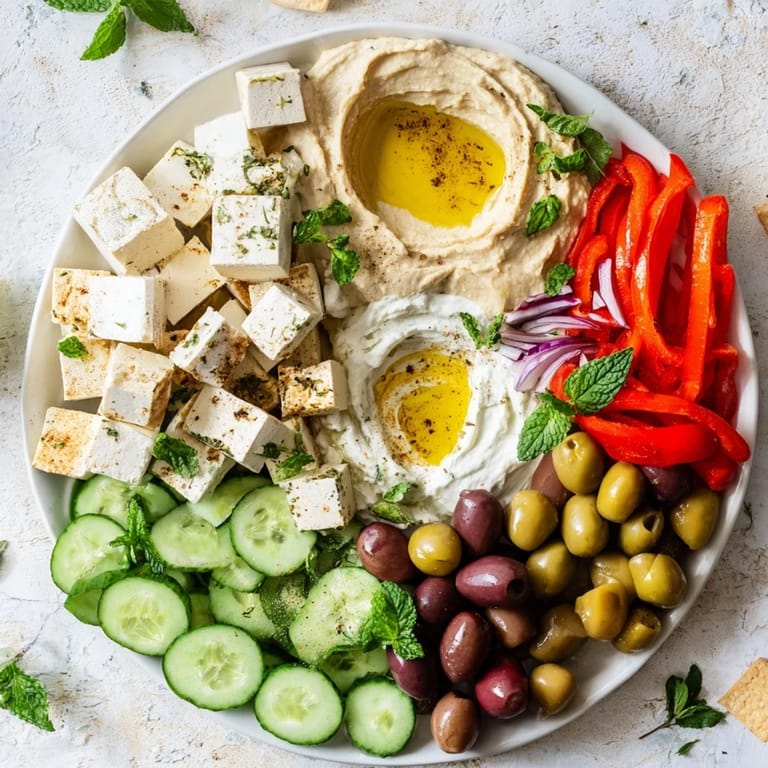
- Place your three dips—hummus, baba ganoush, and tzatziki—in small, distinct mounds around the platter. These are your foundation. Leave them slightly separate from each other so their colors and textures can each be appreciated. Use small bowls if you have them, or let them sit directly on the platter. Picture the colors: creamy tan, smoky brown, snowy white.
- Add the cheese moment:
- Cluster the feta cubes in one generous pile. They should look inviting, like little edible sculptures. The white against whatever platter you're using will catch light.
- Arrange vegetables with intention:
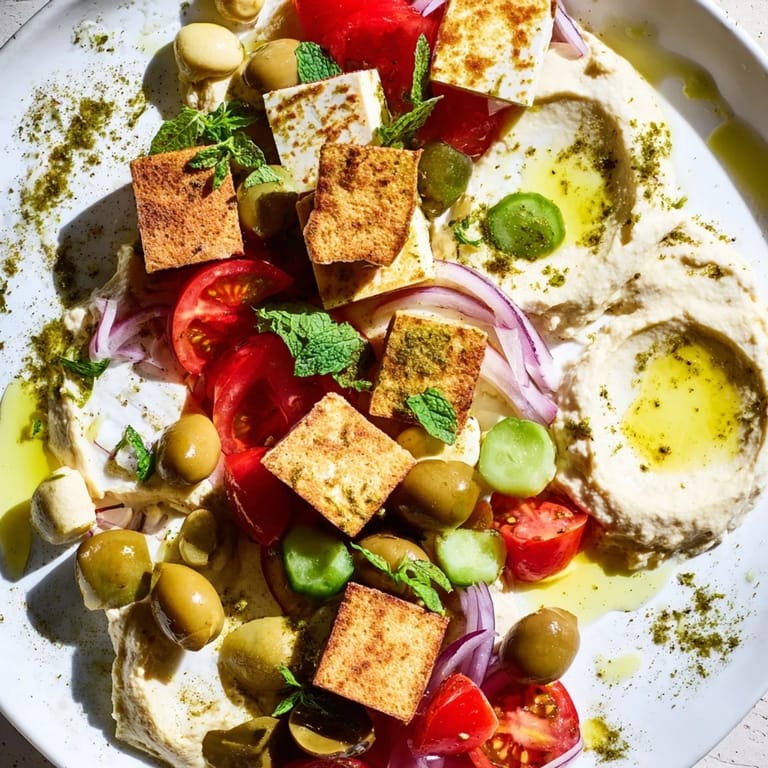
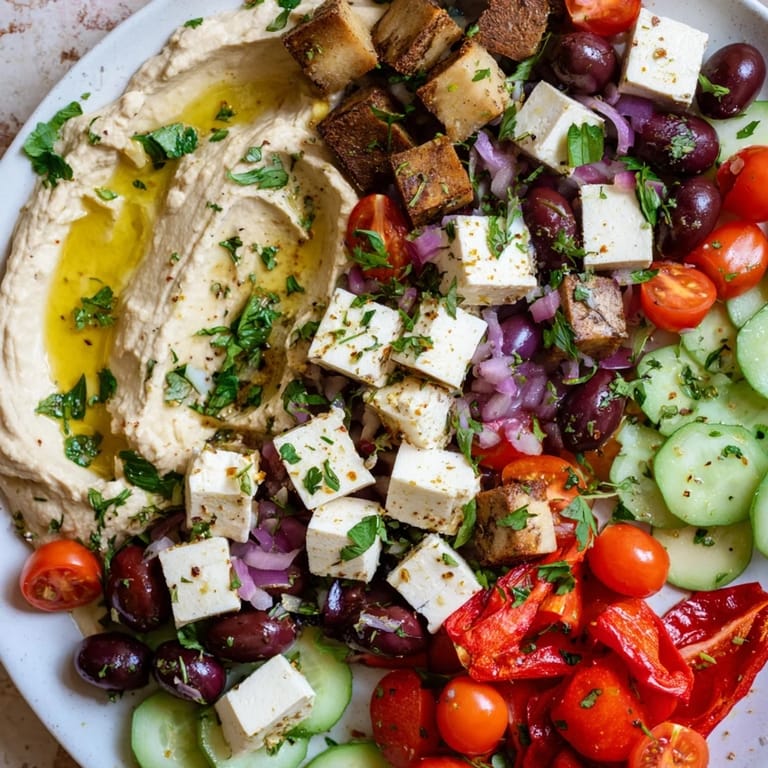
- This is where you let your eye guide you. Scatter the cherry tomato halves in loose groups—not neat rows, but organic clusters that feel like they naturally fell into place. Do the same with cucumber slices, olives, roasted pepper, and red onion. Think of it less like a puzzle and more like you're painting with vegetables. Let colors echo each other. Put reds near reds, let the green olives sit next to cucumber.
- Position the bread:
- Warm your pita triangles if you can—just a minute in a warm oven or wrapped in foil next to something hot. Stack them or fan them around the platter's edge. Warm bread smells like welcome.
- Layer in the extras:
- If you're using artichoke hearts, dolmas, or pine nuts, scatter them in small clusters. Don't hide them—let them have their moment as little surprises people will discover.
- The golden finish:
- Generously drizzle extra-virgin olive oil over the dips, cheese, and vegetables. This isn't restraint; this is generosity. You'll see how the oil catches the light and brings everything to life. It's also how flavors start to marry.
- The final flourish:
- Scatter your chopped parsley and torn mint everywhere like confetti. Sprinkle sumac or zaatar if you have it—this is the moment when someone will lean in and ask what that spice is. Season with sea salt and black pepper to taste. Step back. It should look like an invitation to joy.
- Serve and savor the moment:
- Bring it to the table and watch people's faces. Let them help themselves. The best part about a mezza platter is that there's no wrong way to eat it. Everyone creates their own experience.
 Save to Pinterest
 I'll never forget hosting a dinner where someone's elderly mother came along. She barely spoke English, but she stood at that mezza platter for the longest time, slowly savoring each thing as if each flavor told a story. Her daughter told me later it reminded her of home—of platter meals her grandmother used to make. Food became a language we all understood.
Building Your Own Variations
The beauty of a mezza platter is that it's deeply personal. Once you understand the structure—dips, cheese, vegetables, bread—you can make it entirely your own. Add grilled halloumi if you want something warm and squeaky-delicious. Throw in some store-bought falafel for crunch and earthiness. If you're cooking for someone who loves lamb, pan-fry some spiced lamb meatballs and tuck them in. I've added roasted chickpeas when I wanted something crunchy, marinated white beans when I wanted to be clever, even sliced fresh peaches when summer felt abundant. The rule isn't what goes on the platter—it's that everything should taste like it belongs in the Mediterranean sun.
Pairing & Serving Moments
A mezza platter is honestly more of a mindset than a recipe. It's meant to be eaten slowly, while talking, while people linger and share. Pair it with a crisp white wine—something with minerality and freshness—or a light rosé that tastes like summer. Serve it on a warm evening when you want people to feel like they've been invited somewhere special but also completely comfortable. I've served it at everything from casual weeknight gatherings to more intentional dinner parties, and it always has the same effect: it slows people down and makes them present.
Storage & Make-Ahead Magic
The dips can be made a day or two ahead and stored in the refrigerator—they actually taste better when flavors have time to settle. Cut vegetables can be prepped an hour or two before serving and kept in sealed containers. The one thing you want to do just before serving is arrange everything and add the fresh herbs and olive oil drizzle. That's where the magic happens. If you have leftovers (which is rare with a good mezza platter), the dips keep beautifully. Cut vegetables should be eaten the same day. Leftover bread? Toast it, brush it with olive oil, and you've got the most delicious crisps.
- Make dips up to two days ahead for better flavor development and easy day-of assembly
- Prep vegetables the morning of, keeping them in separate sealed containers so nothing gets soggy
- The final arrangement and herb scatter should happen no more than 15 minutes before serving to keep everything at its freshest
 Save to Pinterest
 Every time I make a mezza platter, I'm reminded that some of the best meals aren't about complicated cooking—they're about thoughtful gathering. This one has never let me down.
Recipe FAQs
- → What are common dips included in this platter?
Classic dips such as hummus, baba ganoush, and tzatziki feature prominently, providing a variety of creamy and tangy flavors.
- → Can this platter accommodate dietary restrictions?
Yes, it can be made vegan by omitting dairy-based ingredients like feta and tzatziki or using plant-based alternatives. Gluten-free bread options can also be used.
- → What herbs enhance the flavor of this dish?
Fresh parsley and mint add aromatic freshness, while sumac or zaatar offers a subtle, zesty spice to balance the rich elements.
- → How should this platter be served?
Arrange all components in small clusters on a large platter and drizzle with extra-virgin olive oil. Serve immediately to maintain freshness and flavor.
- → Are there suggested pairings with this spread?
Light wines such as crisp white or rosé complement the bright, herbaceous flavors and creamy textures beautifully.