 Save to Pinterest
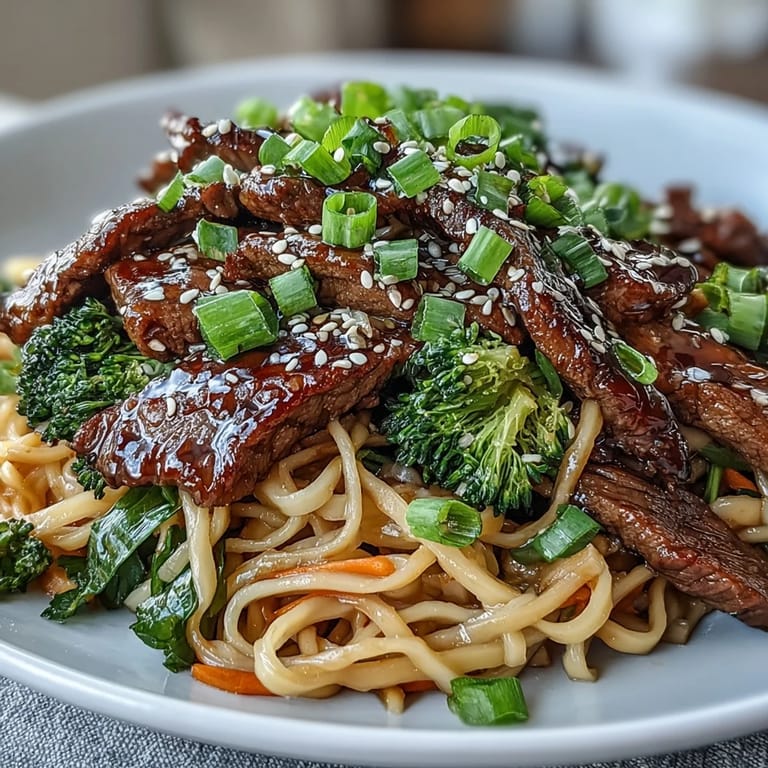
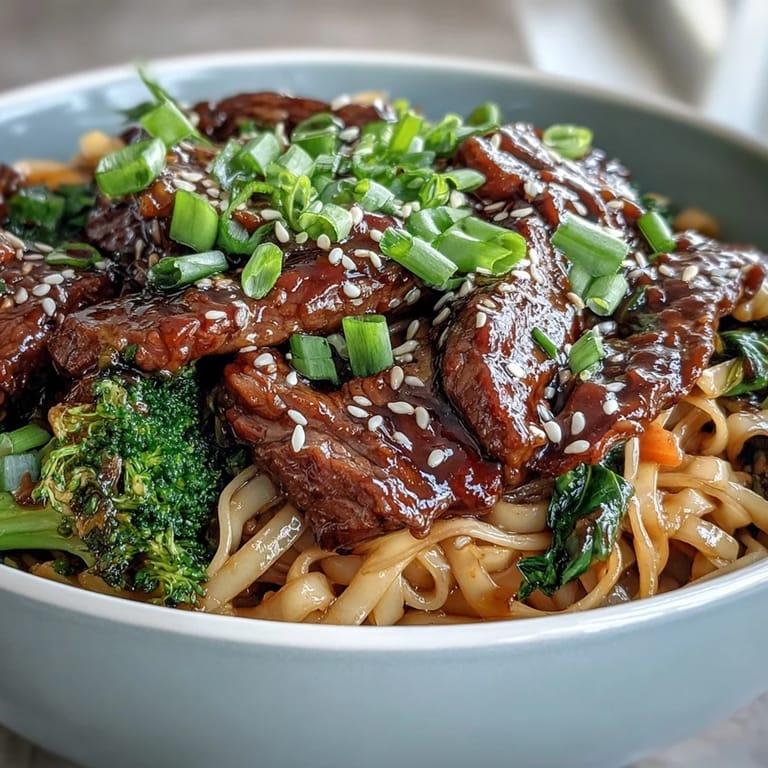
 My neighbor slid a small takeout container across the porch railing one evening, steam curling from the lid. Inside were glossy noodles tangled with seared beef and bright vegetables, and the smell alone made me cancel my dinner plans. She laughed when I asked for the recipe, admitting she'd thrown it together from memory after a trip to Seoul years ago. That spontaneous bite became my blueprint for weeknight comfort.
I made this for my brother the night he helped me move a couch up three flights of stairs. He sat on a cardboard box in my half-unpacked kitchen, twirling noodles with chopsticks and mumbling something about never ordering takeout again. The broccoli was slightly charred because I got distracted hunting for plates, but he said that made it better. Now he texts me every few weeks asking if I still have that garlic-ginger thing.
Ingredients
- Rice noodles: These turn silky and slippery when tossed with the sauce, soaking up flavor without getting mushy if you rinse them in cold water right after draining.
- Flank steak: Slicing against the grain keeps each bite tender, and a partial freeze for fifteen minutes makes thin slicing much easier.
- Broccoli florets: They hold their crunch under high heat and their little trees catch pools of sauce in the most satisfying way.
- Bell pepper: Red or yellow adds a sweet pop of color and a slight char when you let it sit undisturbed for a moment in the hot skillet.
- Carrot: Julienned strips cook quickly and add a gentle sweetness that balances the salty-savory sauce.
- Green onions: Chopped fresh at the end, they bring a sharp, grassy brightness that wakes up every other flavor.
- Garlic and ginger: Minced and grated, these two create the aromatic backbone that makes the whole kitchen smell like a market stall.
- Soy sauce: The salty anchor of the sauce, it deepens everything it touches without overpowering the natural sweetness of the vegetables.
- Brown sugar: Just enough to create a glossy glaze and round out the soy, turning sharp edges into something warm and crave-worthy.
- Sesame oil: A drizzle at the end adds a nutty, toasted finish that lingers on your palate.
- Vegetable oil: High smoke point means you can crank the heat without setting off the smoke alarm.
- Sesame seeds: A final sprinkle adds texture and a subtle crunch that makes each bite feel complete.
Tired of Takeout? 🥡
Get 10 meals you can make faster than delivery arrives. Seriously.
One email. No spam. Unsubscribe anytime.
Instructions
- Prepare the noodles:
- Cook the rice noodles according to package directions, then drain and rinse under cold water to stop them from clumping. Set them aside while you build the rest of the dish.
- Sear the beef:
- Heat vegetable oil in a large skillet or wok over medium-high heat until it shimmers, then add the thinly sliced flank steak in a single layer. Let it sizzle undisturbed for a minute before stirring, cooking for two to three minutes total until browned, then remove and set aside.
- Wake up the aromatics:
- In the same skillet, add the minced garlic and grated ginger, stirring constantly for thirty seconds until the air smells toasty and fragrant. Dont let them burn or theyll turn bitter.
- Stir-fry the vegetables:
- Toss in the broccoli, bell pepper, and julienned carrot, stirring every so often but letting them sit long enough to get a little char. Cook for about five minutes until tender yet crisp.
- Mix the sauce:
- While the vegetables cook, whisk together the soy sauce, brown sugar, and sesame oil in a small bowl until the sugar dissolves completely. The sauce should look glossy and smooth.
- Combine beef and sauce:
- Return the seared beef to the skillet and pour the sauce over everything, stirring to coat the beef and vegetables evenly. Let it bubble for a moment to thicken slightly.
- Toss in the noodles:
- Add the cooked rice noodles to the skillet and gently toss everything together using tongs or a spatula, making sure every strand gets coated. Heat through for about two minutes.
- Garnish and serve:
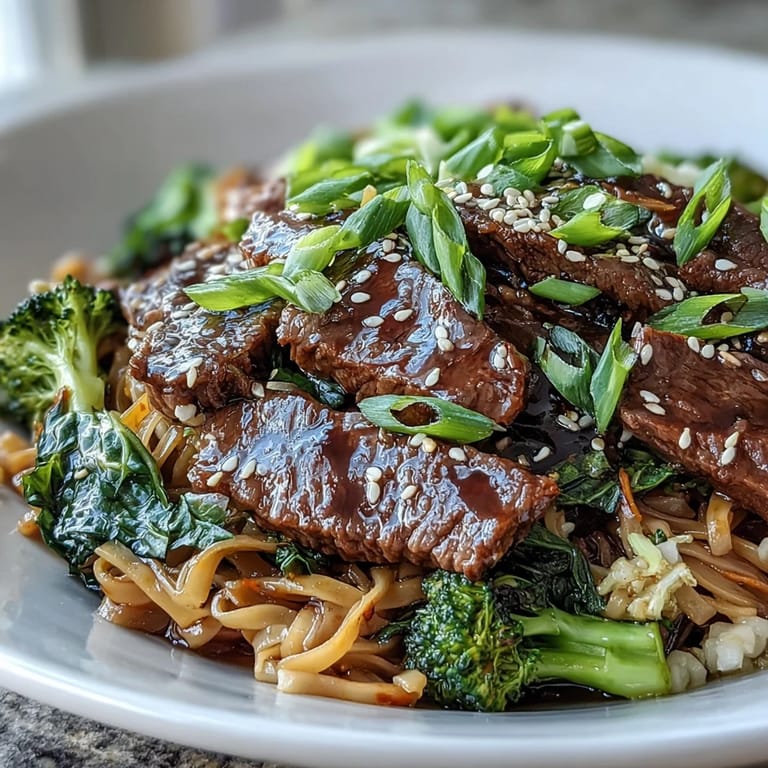
- Transfer to serving bowls and sprinkle with chopped green onions and sesame seeds. Serve immediately while the noodles are still glossy and warm.
 Save to Pinterest
 One rainy Saturday, I doubled the recipe and invited three friends over with no real plan beyond eating and talking. We sat on the floor with mismatched bowls, slurping noodles and laughing about nothing important. Someone spilled sesame seeds on the rug, and nobody cared. That meal didnt fix anything or celebrate anything, but it felt like the kind of night that makes a house feel like home.
Customizing Your Bowl
Snap peas and zucchini work beautifully if you want to swap vegetables, and they cook in the same amount of time as the broccoli. If you like heat, stir a spoonful of gochujang or sriracha into the sauce before tossing it with the noodles. Chicken thighs or extra-firm tofu can replace the flank steak, just adjust the cooking time so they get golden and crisp. I once used leftover rotisserie chicken and it tasted like a completely different dish in the best way.
Storing and Reheating
Leftovers keep in an airtight container in the fridge for up to three days, though the noodles will soak up more sauce as they sit. Reheat gently in a skillet over medium heat with a splash of water or soy sauce to loosen everything up. The microwave works in a pinch, but the skillet brings back that glossy, just-tossed texture. I sometimes add a handful of fresh greens or a fried egg on top when reheating to make it feel new again.
Serving Suggestions
This dish stands alone as a complete meal, but a side of quick-pickled cucumbers or a simple cabbage slaw adds a refreshing crunch that cuts through the richness. If youre feeding a crowd, set out small bowls of extra sesame seeds, sliced green onions, and chili oil so everyone can customize their bowl. A cold glass of iced barley tea or a light lager pairs surprisingly well with the savory-sweet flavors.
- Offer lime wedges on the side for a bright, citrusy lift.
- Sprinkle crushed peanuts or cashews over the top for extra crunch.
- Serve with steamed edamame or dumplings if you want to stretch the meal.
 Save to Pinterest
 Some recipes become regulars because theyre forgiving, fast, and always leave you wanting another bite. This one does all three without asking for much in return.
Recipe FAQs
- → What type of beef works best?
Flank steak sliced thinly against the grain delivers optimal tenderness. Sirloin or skirt steak also work beautifully when cut properly.
- → Can I make this dish spicy?
Absolutely. Stir sriracha, gochujang, or crushed red pepper flakes into the sauce to customize the heat level to your preference.
- → What vegetables can I substitute?
Snap peas, zucchini, mushrooms, bok choy, or snow peas all complement the flavors beautifully while adding varied textures.
- → How do I prevent rice noodles from sticking?
Rinse cooked noodles under cold water to halt cooking and remove excess starch. Toss with a teaspoon of oil before adding to the skillet.
- → Can I prepare components ahead?
Slice vegetables and beef up to 24 hours in advance. Mix the sauce beforehand for even faster assembly when ready to cook.
- → Is this dish freezer-friendly?
Best enjoyed fresh, but leftovers keep refrigerated for 3 days. Freezing may affect noodle texture, so freezing is not recommended.