 Save to Pinterest
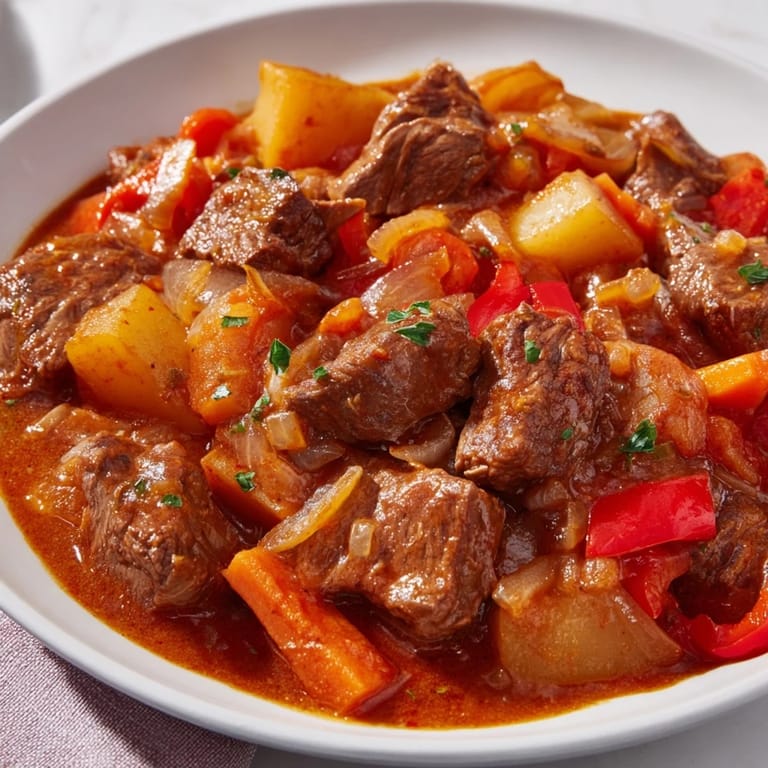
 My first real Hungarian goulash came together almost by accident one October evening when a friend's grandmother handed me a small jar of paprika with instructions that felt more like a secret handshake than a recipe. The spice hit my nose before I even opened the pot, and suddenly the whole kitchen smelled like autumn in Budapest, though I'd never been. That single jar of good paprika changed everything about how I understood stew.
I made this for a dinner party where everything else went sideways—the bread burned, I forgot to set the table—but the goulash pulled the evening together. People came back for seconds and thirds, and someone asked for the recipe. That's when I realized this stew has a quiet confidence about it. It doesn't need fancy plating or perfect timing; it just needs to simmer and become itself.
Ingredients
- 2 lbs beef chuck, cut into 1-inch cubes: This cut has just enough marbling to become silky when it braises, not dry and stringy like leaner cuts would be.
- 2 large onions, finely chopped: They're the foundation, breaking down into the sauce until they're almost invisible but absolutely essential.
- 2 medium carrots, sliced: They add sweetness and a bit of body to the broth as they cook down.
- 1 large red bell pepper, diced: This is your bright note, staying slightly tender rather than completely dissolving.
- 2 cloves garlic, minced: Just enough to whisper in the background, not shout.
- 2 medium potatoes, peeled and cubed: Optional, but they soak up the sauce like nothing else and make it more of a one-pot meal.
- 3 tbsp Hungarian sweet paprika: This is non-negotiable—buy the good stuff from a Hungarian market if you can, not the generic supermarket version.
- 1 tsp caraway seeds: They add an earthy, almost rye-bread quality that feels distinctly Hungarian.
- 1 tsp dried marjoram: Gentler than oregano, it rounds out the spice profile without taking over.
- 1/2 tsp freshly ground black pepper: Freshly ground makes a noticeable difference here.
- 1 tsp salt plus more to taste: Start conservative; you can always add more.
- 1 bay leaf: Remove it before serving—nobody wants to bite into that.
- 4 cups beef broth: The quality matters; use homemade if you have it, or a good low-sodium store brand.
- 2 tbsp tomato paste: It deepens the color and adds umami without making the stew taste tomato-forward.
- 2 tbsp vegetable oil or lard: Lard gives a richer flavor if you can find it, but oil works fine.
Tired of Takeout? 🥡
Get 10 meals you can make faster than delivery arrives. Seriously.
One email. No spam. Unsubscribe anytime.
Instructions
- Get your pot ready and start with the onions:
- Heat your oil in a large heavy-bottomed pot over medium heat. Chop those onions finely and let them sauté for about 8 minutes until they're golden and soft, which means they're releasing their sweetness into the fat. This is the flavor foundation, so don't rush it.
- Add garlic and let it bloom:
- Stir in the minced garlic and cook for just a minute until you catch that fragrant smell. This is the moment right before everything deepens.
- Brown the beef:
- Add your beef cubes and let them sit without moving too much for a minute, then stir and cook until they're browned on all sides, about 5 minutes total. You're not cooking the beef through here; you're just building color and flavor on the surface.
- Paprika moment—this is crucial:
- Sprinkle the paprika over everything and stir quickly for about 30 seconds. This prevents the spice from burning and sticking to the bottom of the pot, which would make it bitter. You want that paprika to coat every piece of meat.
- Build the base with tomato paste and spices:
- Stir in the tomato paste, caraway seeds, marjoram, black pepper, and salt. Let it all come together for a minute so the spices start releasing their oils into the fat.
- Add the vegetables:
- Toss in the carrots, bell pepper, and bay leaf. Stir everything together so nothing sticks to the bottom.
- Add broth and settle into a simmer:
- Pour in the beef broth, scraping the bottom of the pot to release any browned bits—that's where the flavor lives. Bring it to a simmer, then cover and reduce the heat to low.
- First long simmer:
- Let it cook gently for 1 hour, stirring every 15 minutes or so. The beef will gradually soften, and the broth will deepen in color.
- Add potatoes if you're using them:
- After the first hour, add your potato cubes and leave the lid off. Simmer for another 45 to 60 minutes until the beef is very tender and the potatoes are soft. The uncovered cooking helps the liquid reduce and concentrate.
- Taste and adjust:
- Before serving, taste it and add more salt if needed. Remove the bay leaf, and you're done.
 Save to Pinterest
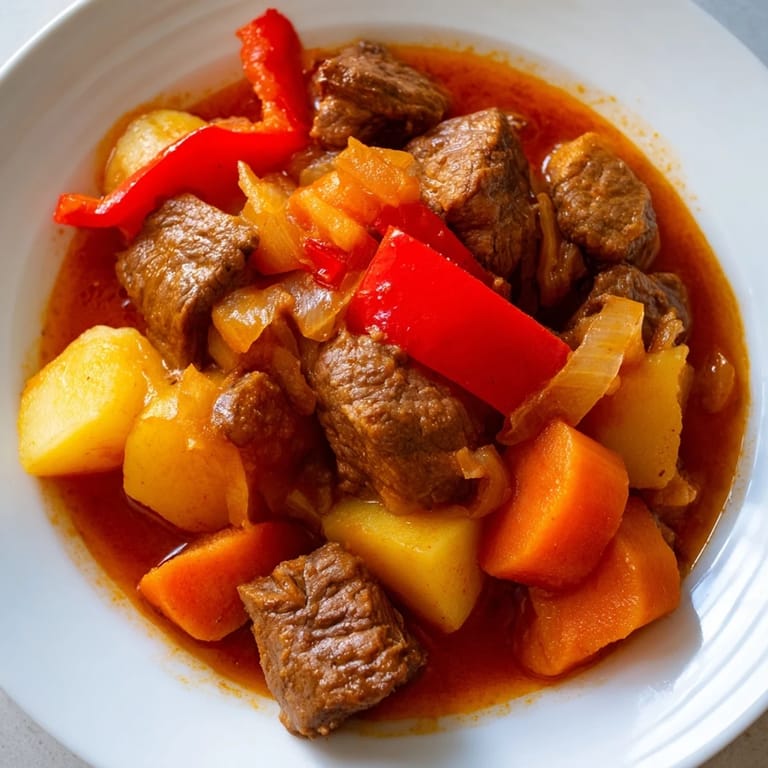
 There's something about serving this to people and watching their faces as they realize how much warmth and comfort is in a single bowl. It's the kind of dish that makes you feel like you're feeding people something that matters, something with history and intention.
The Soul of Paprika
Hungarian sweet paprika is the entire character of this dish, and it's worth understanding. It's not spicy or sharp—it's warm, almost fruity, with a depth that comes from the way Hungarian peppers are dried and ground. If you've only ever used supermarket paprika that tastes like dusty red powder, you're missing the entire point. Find a jar from a Hungarian market or a good online source, and you'll taste the difference immediately. It's the difference between a good stew and a stew that tastes like someone's grandmother made it.
Timing and Patience
This stew doesn't rush, and that's its gift. The two-hour cook time isn't a minimum—it's exactly what the beef needs to become tender enough to cut with a spoon, and what the broth needs to become silky and concentrated. If you try to speed it up with high heat, the beef toughens, the vegetables fall apart, and the sauce never develops that characteristic richness. Low and slow is the only way this works, and honestly, that's perfect because it means you can start it after work, let it do its thing, and come home to something that smells like dinner is already waiting for you.
Serving and Variations
Rustic bread is the traditional companion—something crusty on the outside, soft inside, perfect for soaking up the sauce. Egg noodles work beautifully too, or if you want to get authentic, search for csipetke, which are small pinched dumplings that soak up the sauce even better than noodles. Some people add a dollop of sour cream on top, which is wonderful even though it's not traditionally Hungarian, and if you want heat, a pinch of hot paprika or a chopped fresh chili stirred in at the end transforms it into something spicier.
- Leftovers actually improve with time, so make extra knowing you'll be happy about it later.
- This freezes beautifully for up to three months, making it perfect meal prep.
- If the stew is too thick when reheating, add a splash of broth; if it's too thin, simmer uncovered for a few minutes.
 Save to Pinterest
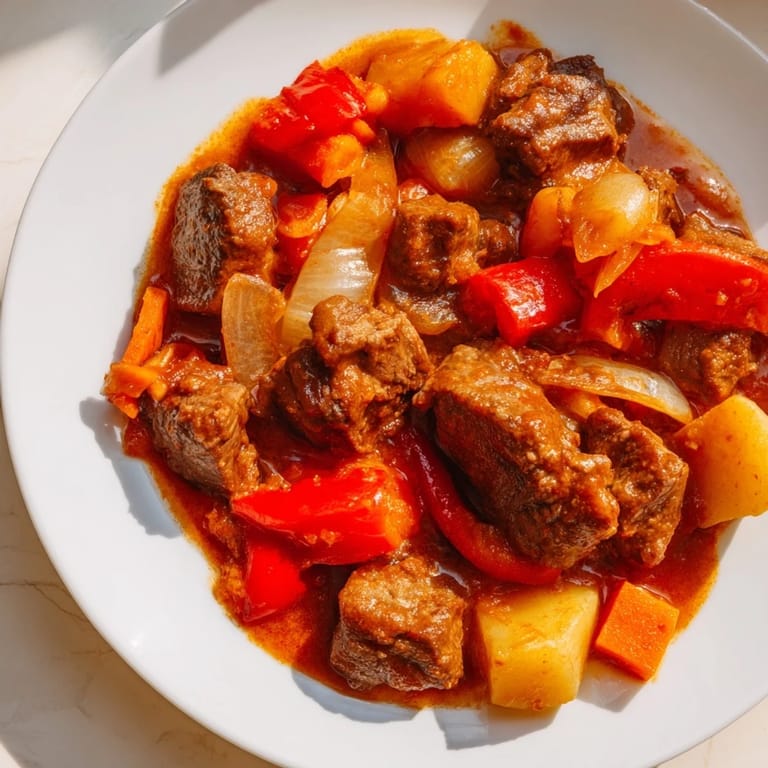
 This goulash has a way of becoming part of your regular rotation once you make it, the kind of dinner that people remember and ask for by name. There's real comfort in knowing how to make something this good.
Recipe FAQs
- → What cut of beef works best for this stew?
Beef chuck is ideal due to its marbling and ability to become tender after long, slow cooking.
- → Can I substitute vegetables in this dish?
Carrots, onions, and bell peppers are traditional, but you can add parsnips or celery for extra flavor.
- → How do the spices affect the flavor profile?
Sweet paprika provides warmth and color, while caraway and marjoram add depth and subtle earthiness.
- → Is slow simmering essential for this dish?
Yes, slow simmering breaks down beef fibers and allows flavors to fully develop for a rich stew.
- → What are good serving suggestions?
Serve with rustic bread, egg noodles, or traditional dumplings to soak up the flavorful broth.
- → Can I make this dish spicier?
Adding hot paprika or chopped chili peppers will introduce a pleasant heat without overpowering the original flavors.