 Save to Pinterest
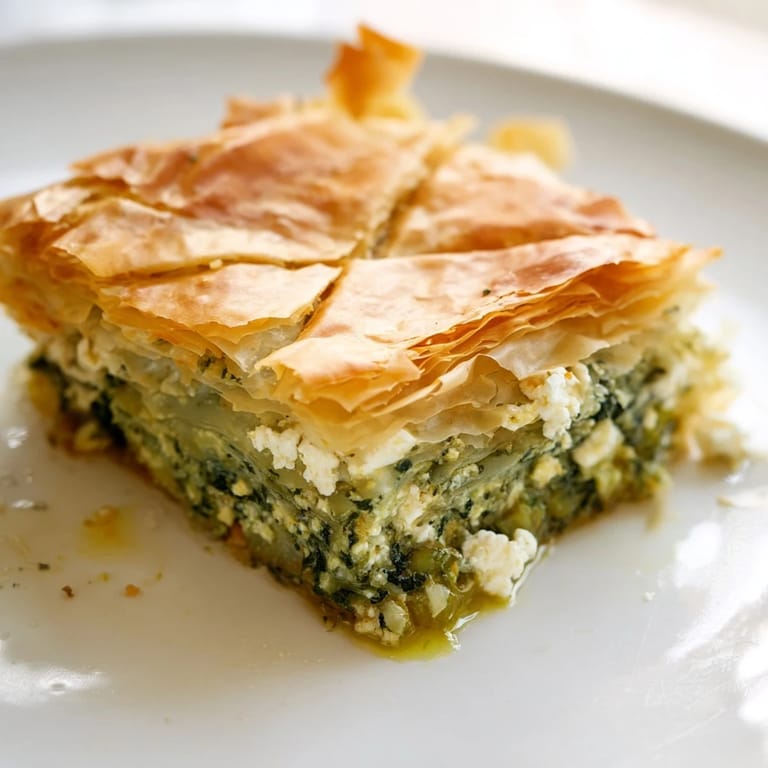
 The first time I truly understood spanakopita wasn't reading a recipe, it was watching my neighbor's grandmother fold phyllo sheets in her Astoria kitchen, moving with the kind of practiced grace that only comes from decades of repetition. She didn't measure the oil, didn't fuss over temperatures, just worked with her hands and instinct until something magical emerged from the oven—golden, shattering, filled with the most vibrant green filling I'd ever tasted. I've spent years trying to replicate that exact moment, and while I can't match her speed, I've learned that the soul of spanakopita lives in those crispy layers and the herbaceous spinach filling underneath.
I made spanakopita for a book club that turned into a three-hour conversation about nothing in particular, and it became the kind of thing people remembered more than the book itself—everyone kept coming back for another wedge, complimenting something they couldn't quite name. That's when I realized it wasn't just about the ingredients, it was about how it makes people slow down and savor something warm with their hands.
Ingredients
- Fresh spinach: Two pounds sounds like a lot until it wilts down to almost nothing—that's the magic of it, that concentration of flavor and earthiness.
- Yellow onion and scallions: The onion builds a sweet, mellow base while the scallions add a bright sharpness that keeps the filling from tasting one-note.
- Fresh dill and parsley: Dried herbs work, but fresh dill makes this taste like it came from somewhere real—use what you can find.
- Feta cheese: Buy it in blocks if you can and crumble it yourself; pre-crumbled tastes dusty by comparison.
- Ricotta or cottage cheese: This is optional but it's a revelation—it adds a creamy richness that transforms the filling from good to unforgettable.
- Eggs: They act as a binder and help everything hold together when you slice, so don't skip them.
- Phyllo dough: Let it thaw completely at room temperature or it'll crack and shatter as you work—patience here pays off.
- Olive oil or melted butter: Use whichever you prefer; olive oil keeps it vegetarian and adds its own flavor, while butter brings a different kind of richness.
Tired of Takeout? 🥡
Get 10 meals you can make faster than delivery arrives. Seriously.
One email. No spam. Unsubscribe anytime.
Instructions
- Set your stage:
- Preheat the oven to 350°F and lightly grease your 9x13-inch baking dish. This temperature is your friend—hot enough to crisp the phyllo but gentle enough not to burn it before the inside cooks through.
- Build the flavor foundation:
- Heat olive oil in a large skillet and sauté the onion and scallions until they're soft and sweet, about 5 minutes. You want them fragrant and slightly golden, not brown—this is where the whole dish starts gaining depth.
- Wilt and concentrate:
- Add your chopped spinach and cook it down, stirring occasionally, until most of the liquid has evaporated and the greens look almost dry. This step prevents a watery filling, which is non-negotiable for crispy phyllo.
- Make the filling:
- Once the spinach cools, combine it in a bowl with dill, parsley, crumbled feta, ricotta if using, beaten eggs, pepper, nutmeg, and salt. Taste as you go—this filling should taste bold and a little salty, because it has a lot of phyllo around it.
- Layer the base:
- Lay one sheet of phyllo in your prepared dish, letting edges hang over the sides, and brush it lightly with oil or melted butter. Repeat with 6 or 7 more sheets, brushing each one—this creates your crispy foundation.
- Spread the filling:
- Pour the spinach mixture evenly over your phyllo base, smoothing it out with a spatula so every bite will have filling in it.
- Crown with phyllo:
- Layer the remaining phyllo sheets on top, brushing each with oil or butter just as you did the bottom, then fold or tuck any overhanging edges into the dish to seal everything in.
- Score for success:
- Using a sharp knife, cut through the top layers in squares or diamonds—don't cut all the way to the bottom, just score the pastry so it knows where to break when it's baked and cooled.
- Bake until golden:
- Bake for 35 to 40 minutes, watching for the moment when it turns from pale cream to deep golden brown. You'll know it's done when the whole thing sounds crispy when you tap it.
- Let it rest:
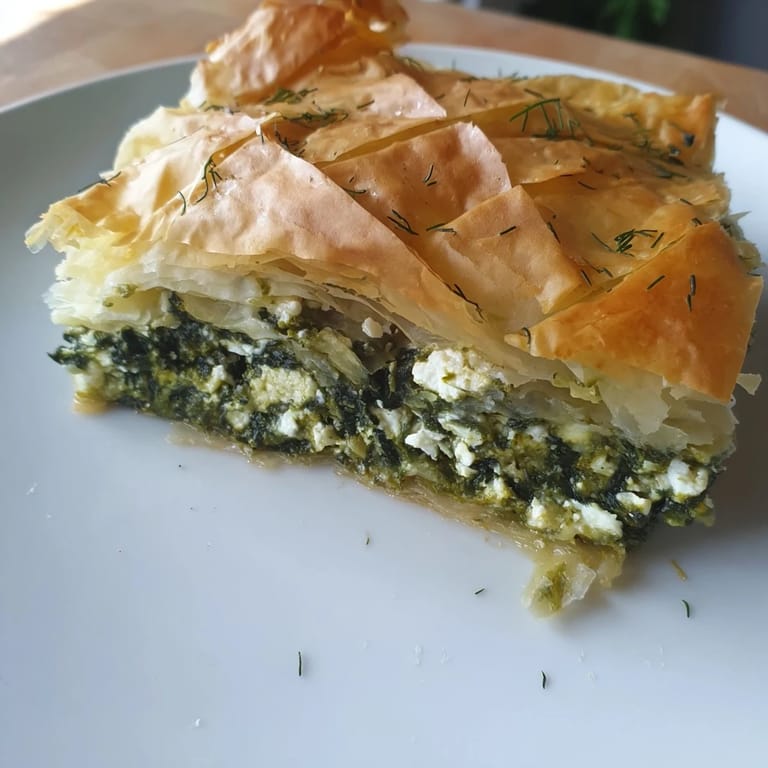
- Pull it out and let it cool for 10 minutes before slicing—this isn't just courtesy to your mouth, it's structure-building time for those crispy layers.
 Save to Pinterest
 I remember my daughter asking why spanakopita was so special compared to the spinach we ate in pasta, and I couldn't explain it in words—I just let her taste the contrast between that shattering phyllo and the herb-and-cheese filling, and she understood without me saying anything. That moment reminded me that food becomes meaningful when you notice the details, when you taste how the dill and parsley are singing in the background.
The Phyllo Mystery (It's Not Scary)
Phyllo has a reputation for being finicky, but it's really just one simple rule: it hates drying out and it loves fat. If you thaw it properly, keep it covered, and brush every layer with oil or butter, it will cooperate beautifully and reward you with those impossibly thin, crispy, golden sheets that make people ask what bakery you bought it from. The first time I worked with phyllo I was convinced I was doing it wrong, but by sheet seven I realized I'd been overthinking it—it just wants to be treated gently and kept moist.
Building Flavor in the Filling
The filling is where spanakopita lives or dies, and most home cooks undersalt it or forget how spices work in a vegetable-forward dish. Your filling should taste almost aggressive on its own—bold with herbs, salty with cheese, warm with nutmeg—because the phyllo and the baking mellow everything out. I learned this lesson by making it timid the first few times and ending up with something that tasted like a sad salad wrapped in pastry, so now I taste as I go and adjust until it makes my mouth want more.
Serving and Storage
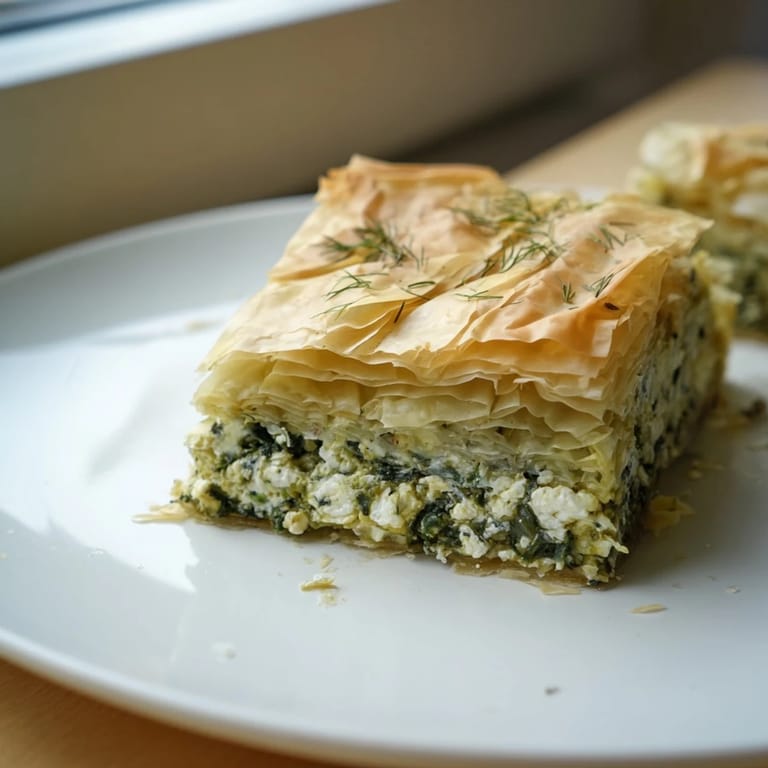
Spanakopita is at its best within a few hours of baking, when the phyllo is still crisp and the filling is still warm and melded together. It reheats reasonably well in a 300°F oven for about 10 minutes if you cover it loosely, and it keeps in an airtight container for up to three days, though honestly it's best eaten fresh and warm.
- Serve it with a squeeze of fresh lemon if you want to brighten everything up—the acid cuts through the richness and makes it feel lighter.
- A crisp white wine like Assyrtiko or Sauvignon Blanc is the classic pairing, and for good reason.
- Leftovers work as a cold snack straight from the fridge, which is why it's always worth making an extra one.
 Save to Pinterest
 Spanakopita is the kind of recipe that gets better the more times you make it, when your hands start to understand the rhythm of brushing and layering without your brain getting in the way. Once you've made it a couple of times, it becomes something you can improvise with—using different greens, adjusting the cheese, playing with the herbs—but it all starts with respecting the fundamentals that have kept this dish alive for centuries.
Recipe FAQs
- → What is the best way to prepare the spinach for the filling?
Fresh spinach should be washed, chopped, and sautéed until wilted to remove excess moisture. Squeeze out any remaining liquid to prevent sogginess in the filling.
- → Can I use frozen spinach instead of fresh?
Yes, thaw and drain frozen spinach thoroughly before combining with other ingredients to maintain the right texture and avoid excess moisture.
- → How is the phyllo dough handled to ensure crisp layers?
Each sheet of phyllo is brushed lightly with olive oil or melted butter before layering, ensuring a crisp and flaky texture after baking.
- → What cheeses are included in the filling?
Crumbled feta is the main cheese, with ricotta or cottage cheese optionally added for creaminess and a softer texture.
- → How should the pie be scored before baking?
Score the top phyllo layers into squares or diamonds without cutting all the way through, which helps with even baking and easier serving.
- → Are there any recommended wine pairings?
Crisp white wines such as Assyrtiko or Sauvignon Blanc complement the savory herb and cheese flavors beautifully.