 Save to Pinterest
 I still remember the first time I assembled a proper French cheese board at home. It was a rainy afternoon in early autumn, and I'd just returned from a weekend in Paris with my sister. We'd spent hours in a tiny bistro near the Seine, watching the owner arrange their cheese platter with such casual grace that it looked effortless. That evening, inspired and determined, I recreated that moment in my own kitchen. What started as an attempt to capture that Parisian magic became something deeply personal—a way of bringing elegance into an ordinary weeknight, proving that refinement doesn't require complicated cooking, just intention and beautiful ingredients.
My favorite memory of this board happened when my mother-in-law visited and I served it for an impromptu lunch. She picked up a slice of baguette, spread it with the softest brie, added a sliver of fig, and closed her eyes. When she opened them, she said it reminded her of her honeymoon in Lyon fifty years ago. That's when I understood that a cheese board isn't just food—it's an invitation to pause, to remember, to taste something beyond ingredients.
Ingredients
- Fresh French baguettes: Choose ones baked that morning if you can find them. The slight crust gives way to that tender, airy crumb that's the foundation of everything here. I slice mine on a slight diagonal because it feels intentional and looks more sophisticated than straight cuts.
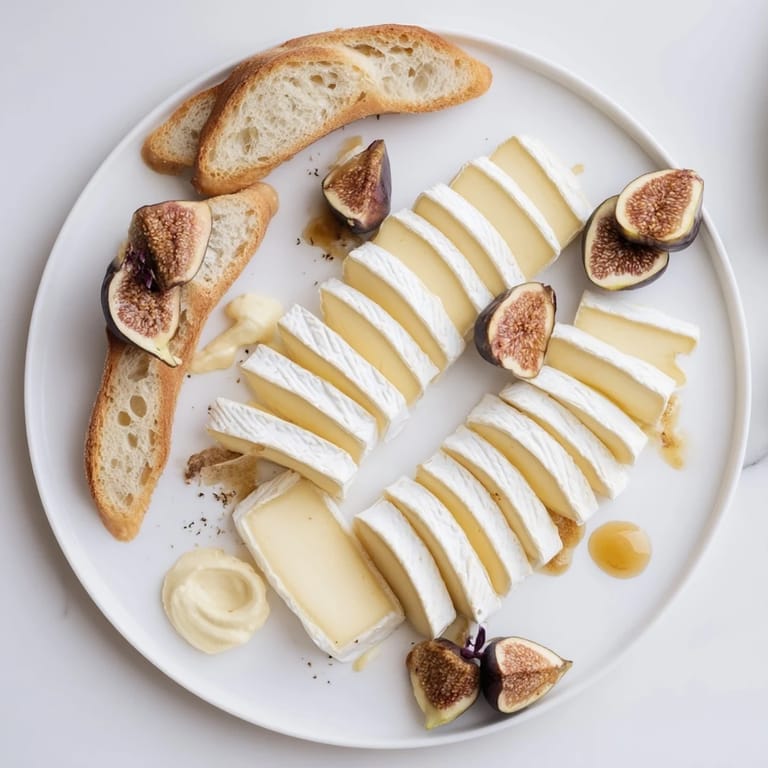
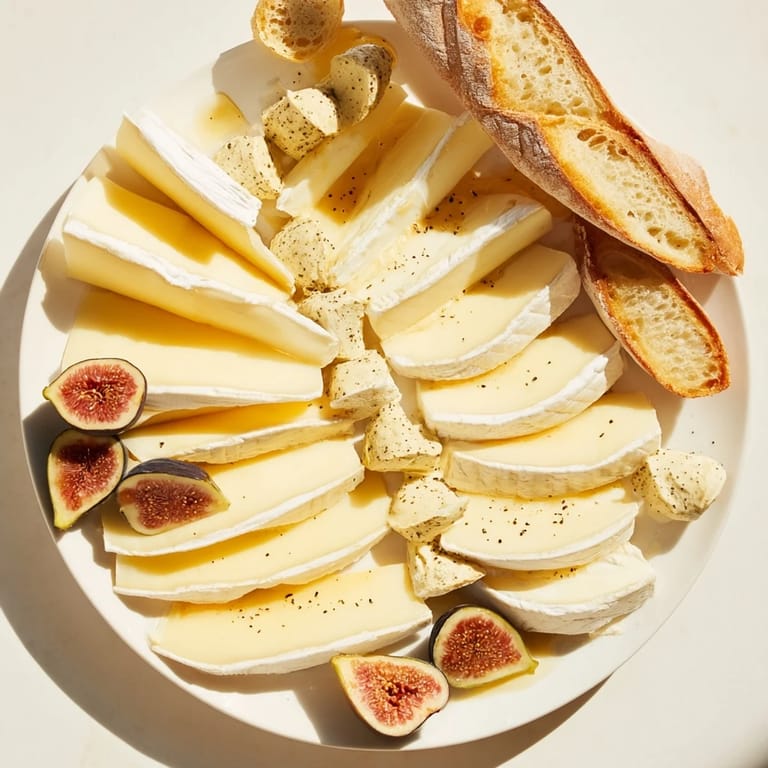
- Brie cheese: Seek out a truly soft, creamy brie rather than one that's been in a cold case for weeks. The difference is everything. Fanning the slices keeps them from clumping together and shows off their creamy color.
- Comté cheese: This nutty, caramel-hued cheese adds depth. Its firm texture means it slices beautifully and holds its shape on the platter, creating those perfect overlapping rows.
- Chèvre: The tart, tangy goat cheese is your counterpoint to the rich brie and sweet comté. Its brightness wakes up your palate.
- Fresh figs or grapes: These aren't just decoration—they're flavor contrast and sweetness that balances the savory cheeses. Figs feel more elegant if I'm being honest.
- Unsalted butter: Room temperature so it spreads like silk. Quality matters here because it's a starring role, not a supporting one.
- Honey: The good stuff that tastes like flowers and sunshine. It's meant to drizzle over cheese, not just sit in a jar.
- Whole grain Dijon mustard: Sharp enough to cut through richness, with those visible seeds that make it look artisanal.
- Flaky sea salt and black pepper: The finishing touch that says someone cared about every detail.
Tired of Takeout? 🥡
Get 10 meals you can make faster than delivery arrives. Seriously.
One email. No spam. Unsubscribe anytime.
Instructions
- Slice your baguette with purpose:
- Using a sharp bread knife, slice the baguettes diagonally into thin, even pieces—about a quarter inch thick. The angle matters because it creates elegant ovals instead of clunky rounds. Arrange them around the edge of your platter, leaving breathing room between slices. Think of it like placing guests at a dinner party where everyone has space to be themselves.
- Create your cheese composition:
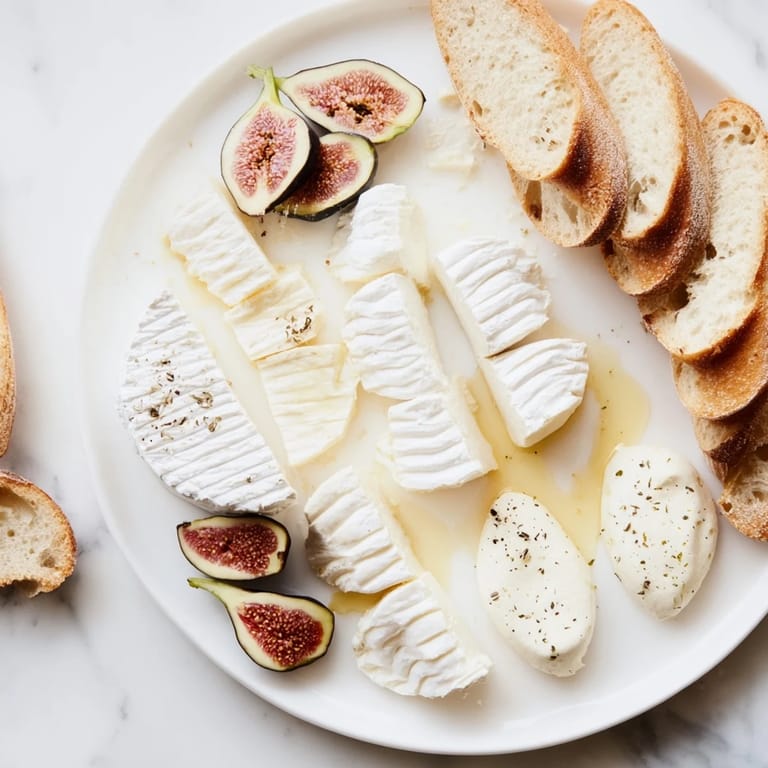
- Fan out the brie slices in one area, overlapping them like a deck of cards that's been gently spread. Do the same with the comté in a separate section. Slice the chèvre into neat pieces and arrange it nearby. The separation lets each cheese tell its own story while the overall arrangement feels cohesive. This is where you slow down and think about balance and whitespace.
- Scatter your fruit like a painter:
- Place clusters of figs or grapes in the gaps between cheeses. Don't overcrowd—let the platter breathe. These pops of color should feel intentional, not accidental.
- Add your accompaniments with intention:
- Spoon the butter into a small ramekin, or if you're feeling confident, dollop it directly onto the platter in a small artful mound. Do the same with the honey and mustard. These aren't afterthoughts—they're flavor bridges that guests will discover as they build their bites.
- Finish with refinement:
- Lightly sprinkle flaky sea salt and freshly ground black pepper over the cheeses. A light hand is key—you want people to taste the cheese, not the salt. The pepper should be visible but gentle.
- Bring it to the table with confidence:
- Serve immediately while the baguette is still warm and the cheese is at its creamy best. Encourage your guests to build their own bites, layering flavors as they go. This is interactive eating at its finest.
 Save to Pinterest
 I've learned that putting together a cheese board is really about giving yourself permission to be a little bit fancy on an ordinary day. It's about saying 'this meal matters' without stress or complicated recipes. That's when the magic happens.
Choosing Your Cheeses Wisely
The difference between a good cheese board and an unforgettable one is knowing your cheeses. Brie should be soft enough that your knife glides through it without crumbling. Comté should have that subtle sweetness that comes from aging, and real chèvre should have a slight tang that makes your eyes close a little. I've spent time at French markets watching how they select and arrange cheese, and I've noticed they never force anything. Each cheese sits in its own space, confident and visible. That's the lesson I bring home: let your cheeses shine individually before they come together as a whole.
The Art of Negative Space
One of the most important things I've learned about plating, cheese boards, or any kind of beautiful food presentation is that empty space is not wasted space. It's like a good conversation—the pauses matter as much as the words. When you leave gaps between your baguette slices, between your cheese fans, you're actually making the platter feel more abundant, not less. It's counterintuitive, but it works. Your eye rests, and everything feels more precious and intentional. This principle changed how I plate everything now, from everyday lunches to fancy dinners.
Wine Pairings and Serving Moments
A French cheese board deserves a French wine, and I've found that Sancerre is the quiet genius pairing. Its acidity cuts through the richness of brie without overpowering the delicate nuttiness of comté. Champagne works too if you want to feel celebratory. But here's something I've discovered: the wine doesn't have to be expensive. It has to be something you actually want to drink. The moment this board becomes magical is when someone pours themselves a glass, takes a bite that combines bread, cheese, fig, and honey, and pauses. In that pause, everything is perfect.
- Chill your wine beforehand so it's ready the moment your platter is assembled.
- Use proper wine glasses even though it's casual—it changes how you taste everything.
- Serve this as a complete meal with a green salad on the side, not just as an appetizer.
 Save to Pinterest
 This board is proof that some of the most elegant meals ask nothing of you but intention and good ingredients. Serve it when you want to remember why you love feeding people.
Recipe FAQs
- → What types of cheese are best for this platter?
Soft and semi-hard cheeses like Brie, Comté, and chèvre offer a balanced range of textures and flavors suited for elegant serving.
- → How should the bread be prepared?
Slicing the baguettes diagonally into thin, even pieces creates a perfect base for layering the cheeses and accompaniments.
- → Can other fruits be substituted for figs?
Yes, sliced pears or apples work well as alternative accompaniments, complementing the cheese and honey flavors.
- → What is the best way to arrange the platter?
Place bread slices along the edge with space between, fan cheeses in neat rows, and cluster fruits beside them to maintain a minimalist, elegant look.
- → How do honey and mustard contribute to the flavors?
Honey adds subtle sweetness while whole grain Dijon mustard brings a gentle tang, both enhancing the overall tasting experience.