 Save to Pinterest
 My neighbor Sini brought over a thermos of this soup on a gray October afternoon, and I watched the steam curl off the surface as she poured it into bowls at my kitchen table. There was something almost meditative about how the cream swirled into the amber broth, how the salmon pieces stayed so delicate and whole. She mentioned her grandmother made it every autumn when the salmon runs began, and that single bowl changed how I thought about cooking Nordic food, turning it from something distant into something I could actually recreate in my own kitchen.
I made this for my sister the first time she came home after moving abroad, and watching her face as she tasted it told me everything I needed to know about whether I'd nailed it. She closed her eyes and said it tasted like visiting Finland felt—clean, bright, and somehow both simple and luxurious at once. That's when I understood this wasn't just a recipe; it was a way to say I missed her without having to use words.
Ingredients
- Skinless salmon fillet, cut into bite-sized cubes: Use the freshest salmon you can find, and cutting it into cubes yourself means you control the size so every piece cooks evenly and stays tender rather than turning stringy.
- Potatoes, peeled and cut into 2 cm cubes: Keep them uniform so they finish cooking at the same time, and don't skip the peeling because it changes the texture of the finished soup.
- Carrot, sliced: Slice it thin enough that it softens in the same time as the potatoes but thick enough that you can still taste it distinctly.
- Leek, white and light green part only, thinly sliced: The white part is sweeter and more delicate than the dark green, which can turn bitter when cooked long; soak the slices in cold water first if you want to remove any grit hiding between the layers.
- Yellow onion, finely chopped: This becomes the flavor foundation of the soup, so don't rush the sautéing step.
- Fresh dill, finely chopped: Buy a bunch and chop it just before you need it because dill loses its bright punch once it sits around.
- Fish stock or water: Real fish stock elevates this into something special, but good water works if that's what you have, and some people swear by vegetable stock for a lighter version.
- Heavy cream: The soul of the soup lives here; don't substitute with lighter cream or you'll lose the luxurious mouthfeel that makes people ask for seconds.
- Bay leaf: One leaf is enough; too many and it overpowers everything else.
- Salt and white pepper: White pepper keeps the soup looking pristine without black specks, but regular black pepper tastes fine if that's what you have.
- Butter: One tablespoon might seem small, but it's the difference between good soup and soup people remember.
Tired of Takeout? 🥡
Get 10 meals you can make faster than delivery arrives. Seriously.
One email. No spam. Unsubscribe anytime.
Instructions
- Start with aromatics:
- Melt your butter in a large pot over medium heat until it stops foaming, then add the onion, leek, and carrot all at once. You'll know they're ready when the onion turns translucent and the whole pot smells sweet and fragrant, which usually takes about 4 to 5 minutes of gentle stirring.
- Build the base:
- Pour in your fish stock and add the potatoes along with the bay leaf, letting everything come to a rolling boil before you turn the heat down and let it simmer. The potatoes need 12 to 15 minutes until they're soft enough to break with a fork but still hold their shape.
- Welcome the salmon:
- Lower the heat to a gentle simmer and slide the salmon cubes into the pot, stirring gently so they don't stick to the bottom. In about 5 to 6 minutes, the edges will turn opaque and the centers will still have that barely-cooked softness that makes salmon special.
- Finish with care:
- Turn off the heat before you stir in the cream and dill, then taste and season with salt and white pepper until it feels balanced. Resist any urge to let it boil after you add the cream, because a rolling boil can separate the cream and turn your soup grainy.
- Serve and celebrate:
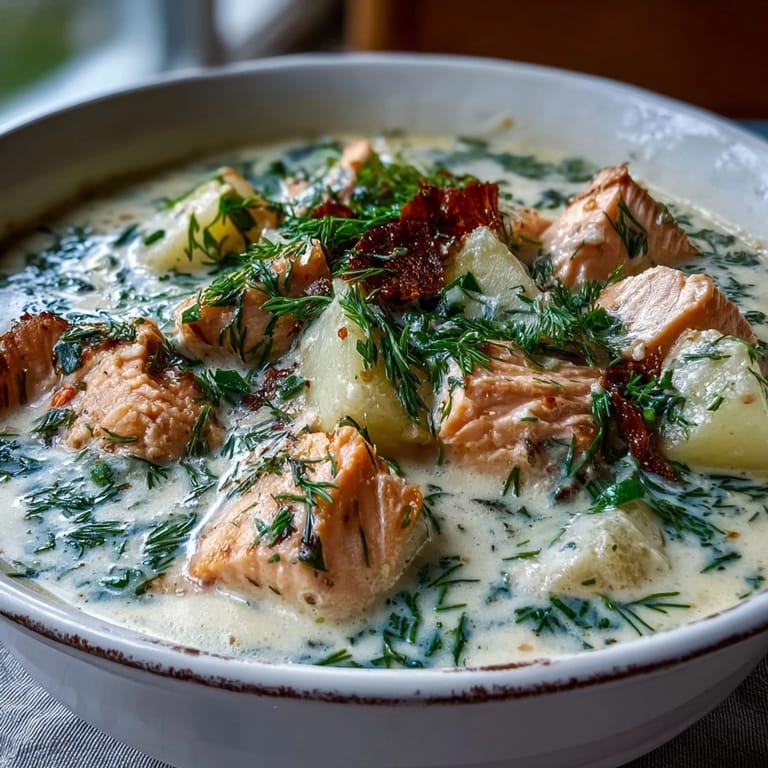
- Fish out the bay leaf, ladle the soup into bowls, and scatter fresh dill on top like you're garnishing something precious, because you are.
 Save to Pinterest
 My mother used to say that Finnish food teaches patience because nothing rushed ever tastes right, and making this soup proves she was right. There's something about waiting for potatoes to soften, watching cream turn the broth into liquid gold, and finally seeing those salmon pieces float just so that slows you down and makes you present in a way that feels rare in modern cooking.
Timing Is Everything
The magic of this soup lives in understanding that each ingredient has its own cooking rhythm, and respecting those timings is what separates a bowl of warm fish stew from something that tastes like it came from a grandmother's kitchen. Start with potatoes because they're the slowest, then add salmon only when everything else is nearly done, because salmon doesn't need more than a whisper of heat to turn from raw to perfect. Rush this and you'll have potato chunks in a salmon-colored broth; honor the timing and you'll have something that tastes effortless even though it required a little patience.
Choosing Your Salmon
Fresh salmon from the fishmonger's counter tastes cleaner and brighter than frozen, and the color should be a deep coral pink rather than pale or grayish, which tells you it's fresh. Ask the fishmonger to skin and debone the fillet for you if they will, and cut it at home into uniform cubes so each piece reaches that perfect tender stage at exactly the same moment. If you can only find frozen salmon, thaw it slowly in the refrigerator rather than at room temperature, and know that it will be slightly less delicate but still absolutely delicious in this soup.
Rounding Out the Meal
This soup is rich enough to be a complete meal, though Finns traditionally serve it with dark rye bread or thin, crispy crispbread that you can break into the bowl or use to scoop up the last spoonfuls. A simple green salad with just lemon and oil cuts through the richness beautifully if you're serving this to guests, and some people add a small glass of cold aquavit or white wine on the side as a palate cleanser. If you're making this for a quiet evening at home, honestly, the soup and a piece of buttered bread are all you need to feel taken care of.
- Keep rye bread warm by wrapping it in a kitchen towel while the soup simmers.
- For extra richness without heaviness, whisk a tiny bit of cream with a touch of butter and stir it in just before serving.
- Leftover soup keeps for two days in the fridge, though the salmon will be softer on day two, so reheat gently without boiling.
 Save to Pinterest
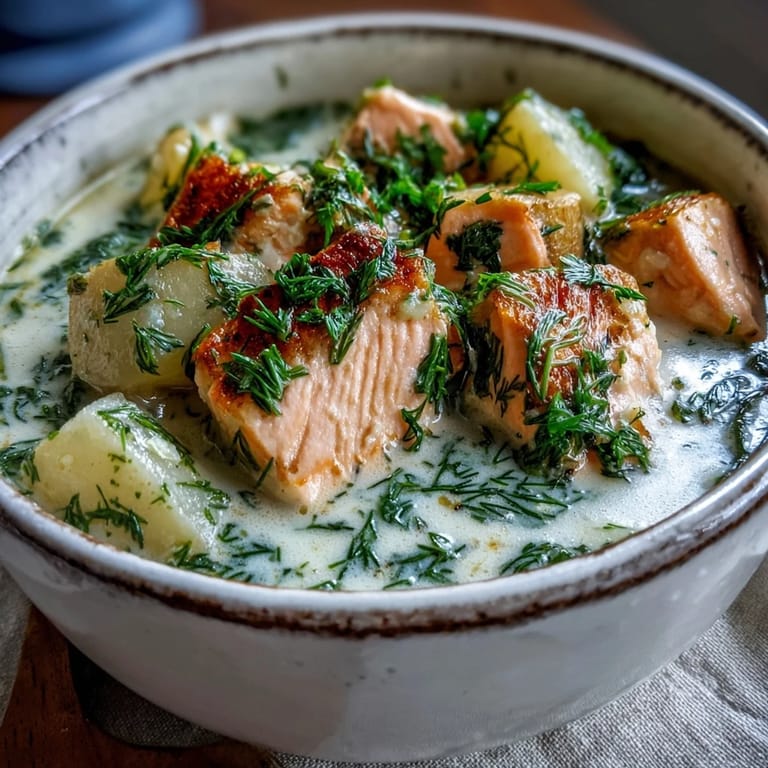
 This soup tastes like coming home, which is exactly what Finnish food is supposed to do. Make it for someone you love, and watch their face change as they taste it.
Recipe FAQs
- → What makes this soup traditionally Finnish?
The combination of salmon, cream, fresh dill, and white pepper creates the signature flavor profile of Finnish home cooking. The use of simple, readily available ingredients like potatoes and leeks reflects Nordic culinary traditions focused on comfort and sustenance.
- → Can I freeze this soup?
While possible, freezing may affect the creamy texture. For best results, freeze before adding the cream. When ready to serve, thaw and reheat the base, then stir in fresh cream and dill during the final minutes of cooking.
- → What's the best way to avoid overcooking the salmon?
Add salmon during the last 5-6 minutes of simmering. Watch closely - the fish should turn opaque and flake easily. Remove from heat immediately once cooked through to maintain tender, moist pieces in every bowl.
- → Can I make this dairy-free?
Substitute heavy cream with full-fat coconut milk or cashew cream for richness. Use olive oil instead of butter for sautéing vegetables. The result will be slightly different but still delicious and satisfying.
- → What sides pair well with this soup?
Traditional Nordic rye bread or crispbread complements the creamy texture perfectly. A simple green salad with vinaigrette adds freshness. Pickled cucumbers or fermented vegetables provide tangy contrast to the rich broth.
- → How do I store leftovers?
Refrigerate in an airtight container for up to 2-3 days. Reheat gently over low heat, stirring occasionally. Avoid boiling to prevent the cream from separating. The flavors often deepen and improve overnight.