 Save to Pinterest
 The first time I made Czech goulash, I wasn't trying to be authentic—I was just hungry and cold, standing in front of my stove on a gray afternoon. A friend had mentioned her grandmother's version, how the paprika would bloom in the hot oil and fill the whole kitchen with this warm, almost sweet smell that made you want to immediately sit down with a bowl. I found myself chasing that memory, layering in the spices, letting the beef braise until it fell apart, and suddenly I understood why this dish has fed generations of people through long winters.
I made this for my partner on our first winter together, before I really knew what I was doing in the kitchen. He'd mentioned missing home cooking, something hearty that stuck with you. Watching him close his eyes after that first spoonful of tender beef and potato—that's when I realized goulash wasn't just a recipe, it was a way of saying 'I thought of you.'
Ingredients
- Beef chuck, 800g cut into 2.5 cm cubes: This cut has just enough marbling to become incredibly tender during the long braise, and the connective tissue breaks down into gelatin that thickens your sauce naturally.
- Sweet Hungarian paprika, 2 tbsp: This is non-negotiable—it's the soul of the dish, so buy the good stuff and keep it away from direct light or it'll fade to dusty and forgettable.
- Caraway seeds, 1 tsp: A whisper of anise flavor that tastes like the Bohemian countryside, though you can skip it if caraway isn't your friend.
- Onions, 2 large finely chopped: They become the base, sweetening as they cook and creating depth you'll taste in every spoonful.
- Beef broth, 750 ml: Use homemade if you can—it makes a visible difference in how the sauce tastes, but good quality store-bought works in a pinch.
- Potatoes, 4 large for frying: Starchy varieties like Russets are your friend here; they crisp up faster and stay golden longer than waxy potatoes would.
- Vegetable oil, 500 ml for frying: Keep it at temperature—a thermometer is your safety net, preventing soggy potato strips that nobody came for.
- Tomato paste, 2 tbsp: A small amount adds depth without overwhelming the paprika's gentle warmth.
- Garlic, 3 cloves minced: Add it after the onions soften or it'll burn and turn bitter on you.
- Bay leaf, marjoram, salt, pepper, all-purpose flour: These are your supporting cast—the bay leaf simmers quietly, marjoram ties it all together, and the flour quietly thickens the sauce.
- Bell pepper, 1 diced: It softens as the goulash braises and adds a gentle sweetness that balances the savory depth.
Tired of Takeout? 🥡
Get 10 meals you can make faster than delivery arrives. Seriously.
One email. No spam. Unsubscribe anytime.
Instructions
- Start with your aromatics:
- Heat the oil until you can feel the warmth radiating from the pot, then add onions and let them take their time—you're aiming for golden, which takes about 8 minutes of patient stirring. This slow sweetening is where the foundation of flavor actually lives.
- Bloom the spices:
- Once the onions are soft and golden, add garlic, caraway seeds, and paprika, stirring constantly for just 1 minute. You'll smell it shift from raw to toasted, and that's your signal to move forward before anything catches.
- Brown the beef:
- Add the cubed meat and let it sit undisturbed for a minute or two before stirring—this develops color and flavor through the Maillard reaction, which is just fancy for 'the meat develops a crust that tastes incredible.'
- Build the sauce:
- Stir in tomato paste, marjoram, salt, pepper, and bay leaf, then sprinkle flour over the meat and stir thoroughly to distribute it evenly. The flour will thicken everything as it braises.
- Simmer low and slow:
- Pour in the broth, add diced bell pepper, bring to a boil, then lower the heat so it barely murmurs—a gentle simmer for 1.5 to 2 hours is the secret. The meat should shred with a spoon when it's ready.
- Prepare the potatoes:
- While the goulash works its magic, cut potatoes into thin matchsticks and soak them in cold water to remove excess starch. Dry them thoroughly before frying—wet potatoes will steam instead of crisp.
- Fry with intention:
- Heat oil to 180°C (350°F), then fry the potato strips in small batches, 3 to 4 minutes until they're deep golden. Don't overcrowd the pan or the temperature will drop and they'll absorb oil instead of crisping.
- Finish and serve:
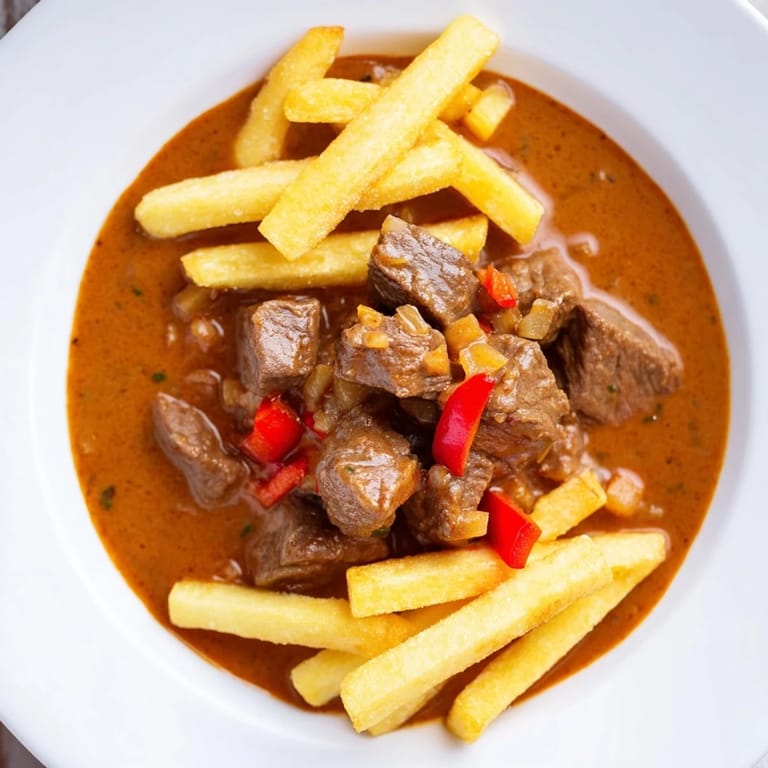
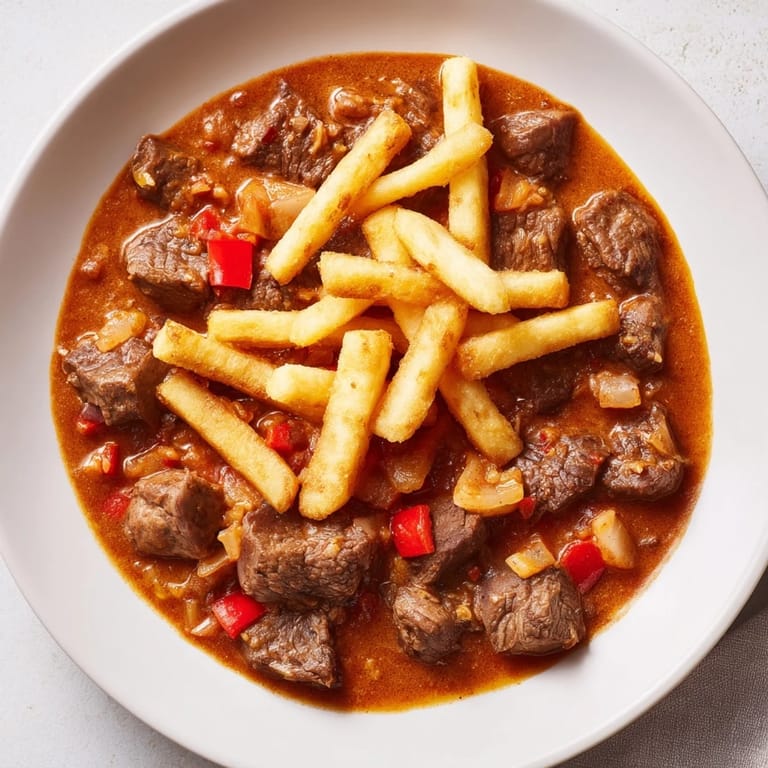
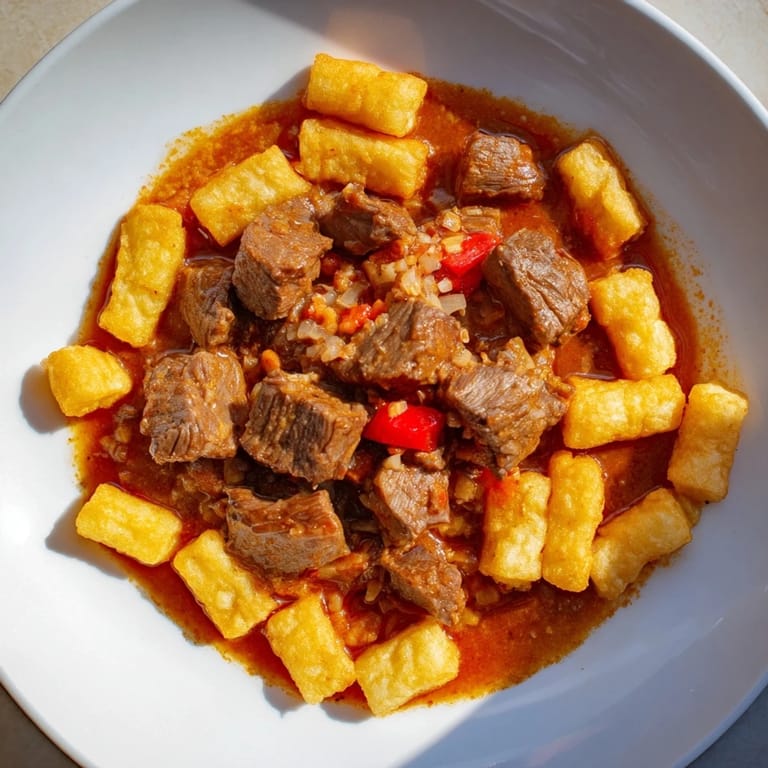
- Fish out the bay leaf, taste the goulash and adjust seasoning if needed, then ladle it into bowls and crown each one with a generous handful of those golden potato strips.
 Save to Pinterest
 One night I served this to friends who'd driven hours in the snow, and nobody said much—they just ate quietly and steadily until their bowls were empty and they were asking for more. That's when I understood the quiet power of this dish: it doesn't need to be fancy or complicated to matter.
Why Goulash Became a Winter Ritual
There's something about goulash that invites you to slow down. The house fills with paprika and beef and the promise of something warm, and somehow that alone is enough to make the day feel a little less rushed. I've learned that the best meals aren't the ones that look impressive—they're the ones that make people feel like someone was thinking of them.
The Potato Strip Secret
The crispy potatoes are where the magic lives, honestly. They're the contrast—a textural relief that keeps every spoonful interesting, that little crunch that makes you feel like you're eating something luxurious. I've tried making goulash without them, serving it with bread or rice or sour cream, and it's fine, but something essential is missing.
Serving and Sharing
A dollop of sour cream is traditional, though I've learned to add it only to individual bowls so people can decide how much richness they want. Fresh parsley scattered on top adds color and a subtle freshness that keeps the dish from feeling too heavy. If you're serving this to someone who likes heat, a small dish of hot paprika or chili flakes on the side lets them make it their own.
- Czech Pilsner is the natural pairing—something light enough to cut through the richness without competing for attention.
- A light red wine like Pinot Noir works beautifully if beer isn't your style.
- Leftovers actually improve after a day or two as the flavors meld, so make extra and embrace the gift of easy dinners to come.
 Save to Pinterest
 This goulash has taught me that sometimes the most satisfying meals are the ones that ask for time and patience. It's honest food—no tricks, no shortcuts that matter, just good ingredients and the willingness to let them become something extraordinary together.
Recipe FAQs
- → What cut of beef works best for this dish?
Beef chuck cut into cubes is ideal for slow cooking as it becomes tender and flavorful after simmering.
- → How is the paprika used in the preparation?
Sweet Hungarian paprika is sautéed briefly with onions and garlic to release its aroma before adding the beef and liquids.
- → What is the best way to prepare the potato strips?
Peel and cut potatoes into thin matchsticks, rinse to remove excess starch, dry, then fry in hot oil until golden and crispy.
- → Can this dish be made gluten-free?
Yes, by using gluten-free flour as a thickener and ensuring all ingredients are gluten-free, it suits a gluten-free diet.
- → How long should the beef cook to achieve tenderness?
Simmering the beef slowly for about 1.5 to 2 hours ensures it becomes tender and the sauce thickens properly.