 Save to Pinterest
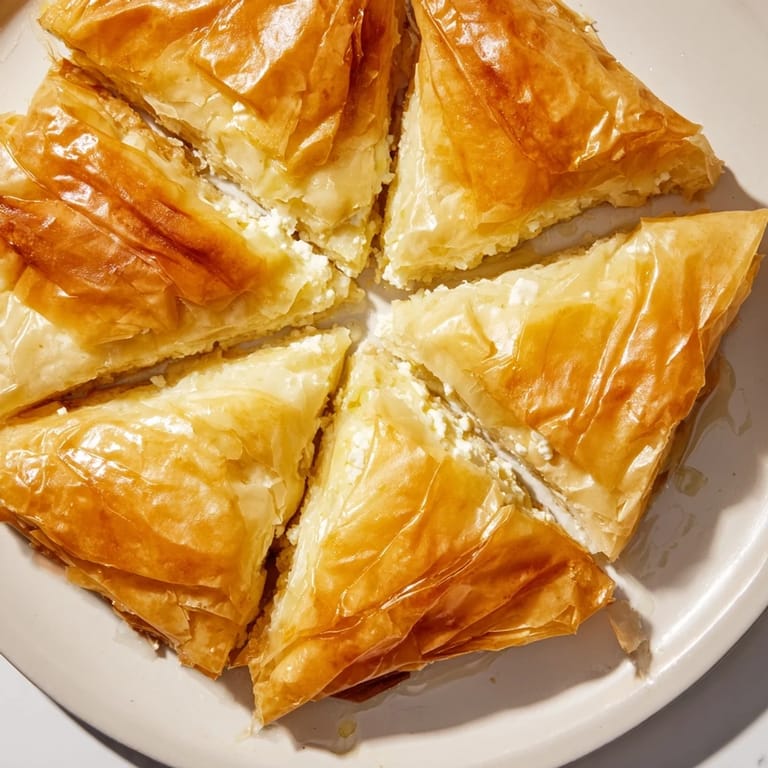
 My first banitsa came wrapped in newspaper from a small bakery near the old market in Sofia, the grease seeping through the paper as I walked home in the crisp morning air. I bit into that golden triangle and everything changed—the crackle of phyllo, the salty richness of feta mixing with silky egg, the way yogurt made it all impossibly tender. Years later, I realized I could make this at home, and that first attempt in my own kitchen, though imperfect, tasted like coming home to a place I'd never lived.
I made this for my neighbor Elena one Sunday morning, and she walked back over an hour later just to ask if I'd use the recipe again next weekend. We ended up sitting at my kitchen counter with coffee, pulling apart warm banitsa and talking about her grandmother's version, the way butter pooled on the plate, how she'd never had homemade until that day. It became our ritual after that.
Ingredients
- Feta cheese: Don't shy away from quality here—crumbled by hand if you have time, it distributes more evenly and feels less industrial than pre-crumbled.
- Plain yogurt: The secret weapon that keeps the filling creamy and slightly tangy, a distinctly Bulgarian touch that elevates everything.
- Eggs: They're the binder that transforms cheese into something custardy and luxurious when baked.
- Phyllo dough: Buy it thawed or thaw it yourself slowly in the fridge; rushing this step leads to cracking and tears that frustrate you.
- Unsalted butter, melted: Brush generously—this is what gives you that shatter-when-you-bite-it crust.
- Whole milk: It softens the yogurt mixture and prevents the filling from being too dense.
- Salt and black pepper: Taste as you go; banitsa wants seasoning, not whispers of it.
Tired of Takeout? 🥡
Get 10 meals you can make faster than delivery arrives. Seriously.
One email. No spam. Unsubscribe anytime.
Instructions
- Set your stage:
- Preheat to 180°C and butter your baking dish thoroughly so nothing sticks. Thaw your phyllo completely and keep it covered with a damp towel from the moment you unroll it—phyllo dries faster than you'd believe.
- Build the filling:
- Whisk eggs, yogurt, and milk until smooth, then fold in crumbled feta gently so you keep some texture. The mixture should feel luxurious, not grainy.
- Layer with intention:
- Start with 4 buttered sheets as your base, then alternate filling and phyllo in a rhythm that feels natural to you. Each sheet gets a light brush of butter—you're building, not drowning.
- Cut before baking:
- Use a sharp knife and score all the way through into squares or diamonds while the pastry is still cool. This prevents the layers from moving around and cracking unevenly.
- Final touches:
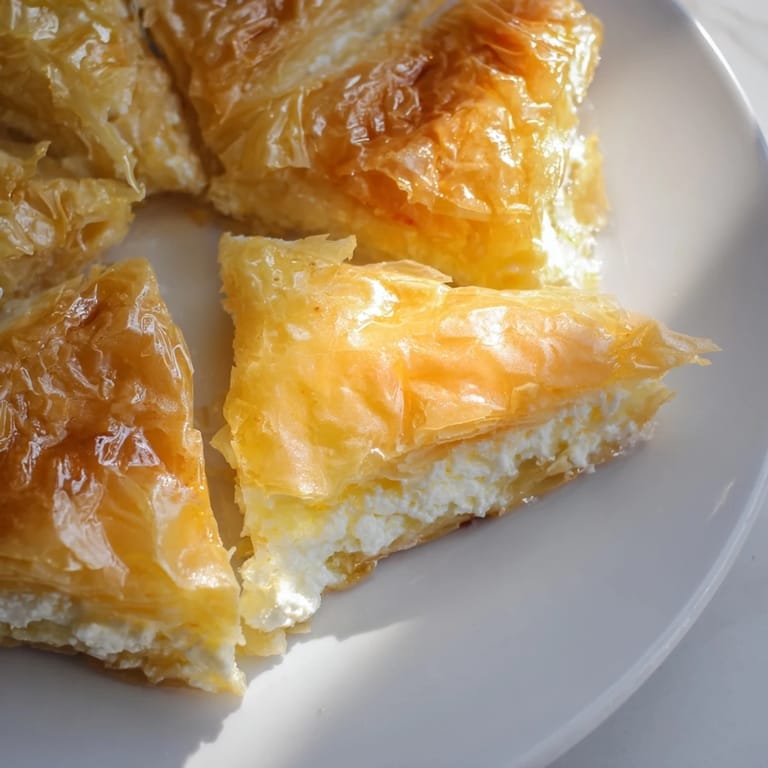
- Drizzle any remaining butter over the top, then bake until the edges are golden and crispy, about 30 to 35 minutes. The sound of it crackling as it cools is your signal it's perfect.
 Save to Pinterest
 There's a moment, always, when someone takes their first bite and their face softens—that's when banitsa stops being food and becomes memory. I've seen it happen dozens of times, and it's why I keep making it.
The Phyllo Secret
Phyllo seems temperamental until you understand it's simply thirsty and fragile. The damp towel isn't fussy—it's essential. I once tried working without one and watched sheet after sheet crack and shatter, turning my kitchen into a crispy graveyard. Now I drape that towel like it's protecting something precious, and suddenly phyllo becomes cooperative and beautiful.
Why Yogurt Changes Everything
Bulgarian yogurt in banitsa isn't just an ingredient—it's the difference between a drying cheese pie and something that stays moist and tender for days. The tang it brings is subtle but unmistakable, a whisper that makes your palate sit up and pay attention. It's the kind of detail that separates homemade from forgettable.
Making It Your Own
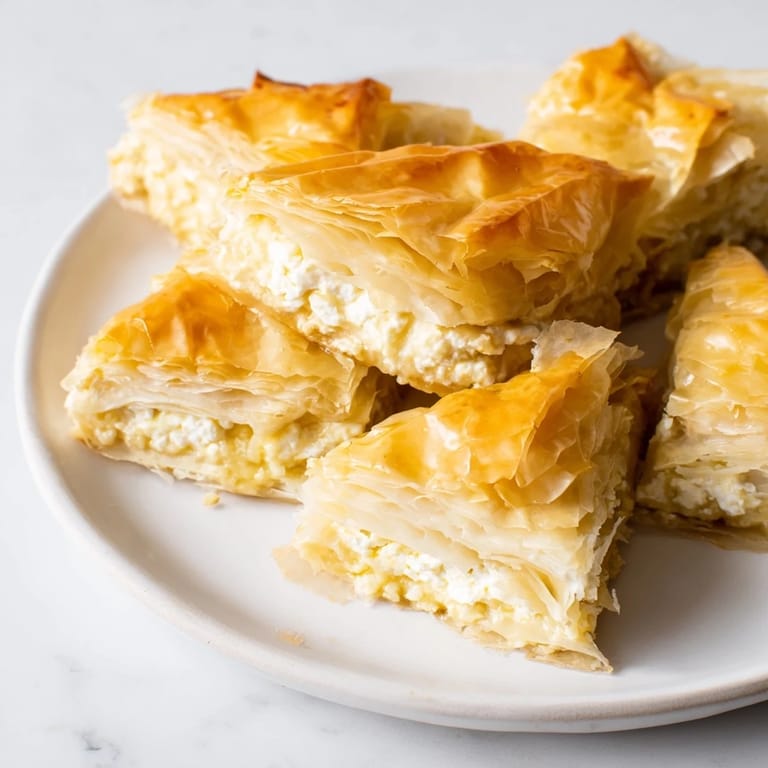
Once you've made banitsa once, you'll want to tinker—and that's the joy of it. Some mornings I add fresh dill or parsley to the filling, other times I stick with simplicity. Serve it warm with cold ayran if you can find it, or a crisp glass of white wine works just as well. The beauty is that banitsa is forgiving enough to welcome your improvisation.
- Try a handful of fresh dill or parsley stirred into the filling for a green, herbaceous note.
- Pair it with ayran if you can find it, or follow the Bulgarian way with a tomato-cucumber salad.
- Room temperature is just as delicious as warm, making it perfect for next-day breakfast or afternoon hunger.
 Save to Pinterest
 Banitsa is proof that simple ingredients, treated with care and respect, become something worth remembering. Make it for someone you love, or make it just for yourself on a quiet morning.
Recipe FAQs
- → What kind of cheese works best in Banitsa?
Feta cheese traditionally offers a tangy, crumbly texture that balances well with eggs and yogurt, but you can substitute with sirene or ricotta for a milder taste.
- → How should phyllo dough be handled to avoid drying out?
Keep phyllo covered with a damp towel until use to maintain its moisture and prevent cracking.
- → Can fresh herbs be added to the filling?
Yes, adding chopped dill or parsley enhances flavor, lending freshness to the rich, creamy filling.
- → What is the ideal baking temperature and time?
Bake the pastry at 180°C (350°F) for 30-35 minutes, until the top turns golden brown and crisp.
- → How can leftover Banitsa be served?
Enjoy leftovers warm or at room temperature; it pairs nicely with a cold ayran or light salad.