 Save to Pinterest
 I still remember the first time I encountered a noodle board like this—it was at a tiny Asian fusion restaurant tucked away in a quiet corner of the city. The server placed this stunning arrangement in front of me, and I was mesmerized. Every color seemed intentional, every texture a conversation waiting to happen. That night, I realized this wasn't just a meal; it was an invitation to play with your food in the best way possible. Now, whenever I recreate it at home, I'm transported back to that moment of pure culinary joy, and I get to share it with everyone gathered around my table.
There's a particular memory that comes to mind whenever I make this: my best friend came over feeling stressed about a work presentation, and I surprised her with this board. Watching her face light up as she saw all the options, the playfulness of mixing and matching ingredients, the way she started laughing and experimenting with different sauce combinations—that's when I knew this dish was about more than just eating. It became a moment of togetherness, of slowing down, of joy.
Ingredients
- Rice or soba noodles, 300 g: These are the foundation of your board. Rice noodles are delicate and won't overpower, while soba brings an earthy sophistication. The sesame oil isn't just seasoning—it prevents them from clumping and adds a subtle nutty warmth that ties everything together
- Cooked chicken breast, 200 g, thinly sliced: Buy a pre-cooked rotisserie chicken if you're short on time, then slice it yourself. This lean protein lets all the other flavors shine without competing
- Cooked shrimp, 150 g: The sweetness of shrimp creates a beautiful contrast with the savory sauces. If you're using frozen, thaw them gently under cool running water
- Boiled eggs, 2, halved: These add richness and are the little golden jewels that make the board feel complete. Boil them the night before and chill them—they're easier to halve when cold
- Julienned carrots, 1 cup: The bright orange is non-negotiable for a vibrant board. Use a julienne peeler or mandoline—it's faster and creates those elegant matchsticks that make the presentation sing
- Cucumber, 1 cup, thinly sliced: Choose a firm cucumber and slice it just before serving. This keeps it crisp and fresh, a cooling counterpoint to the warm spices in the sauces
- Red bell pepper, 1, julienned: Red is more visually stunning than other colors, though yellow or orange work too. The slight sweetness plays beautifully with both savory and spicy elements
- Red cabbage, 1 cup, thinly sliced: It's naturally crunchy, keeps for days, and adds that beautiful deep purple tone. I like to slice it thin enough to almost see through it
- Edamame, 1 cup, cooked and shelled: These little gems provide protein and a satisfying pop of texture. Keep them chilled until serving for the best experience
- Radishes, 4, thinly sliced: They're peppery, crisp, and add an unexpected brightness. Don't underestimate them—they're the secret ingredient that elevates the whole board
- Scallions, 2, sliced: The white and light green parts offer mild onion flavor, while the dark greens add color. Slice them just before serving so they stay perky
- Fresh cilantro and mint, 1/4 cup each: These herbs are where the magic happens. They brighten every bite and give the board that authentic Asian fusion soul. Choose the youngest, most tender leaves
- Roasted peanuts, 1/4 cup, chopped: Buy them already roasted and chop them coarsely just before serving. Their richness grounds all the fresh elements
- Toasted sesame seeds, 2 tbsp: Toast them yourself if you have time—the difference is remarkable. They add nutty depth and visual texture
- Lime wedges: These are your finishing touch. A squeeze of lime wakes up every single element on the board
- Dipping sauces—soy, peanut, hoisin, and sweet chili, 1/3 cup each: These are the soul of the dish. Even if everything else is simple, exceptional sauces transform the experience. Use quality versions, and if making peanut sauce from scratch, taste as you go
Tired of Takeout? 🥡
Get 10 meals you can make faster than delivery arrives. Seriously.
One email. No spam. Unsubscribe anytime.
Instructions
- Cook the noodles with intention:
- Bring a pot of water to a rolling boil. Add your noodles and cook according to the package—usually around 4 to 5 minutes for rice noodles, a bit longer for soba. You want them tender but still with a whisper of resistance. Drain immediately in a colander and rinse under cold running water, using your fingers to gently separate them. This stops the cooking and prevents them from becoming mushy. While they're still slightly warm, toss them with the sesame oil—this is the trick that keeps them from sticking together and adds an invisible layer of flavor that guests will taste but won't be able to name
- Prepare your canvas with care:
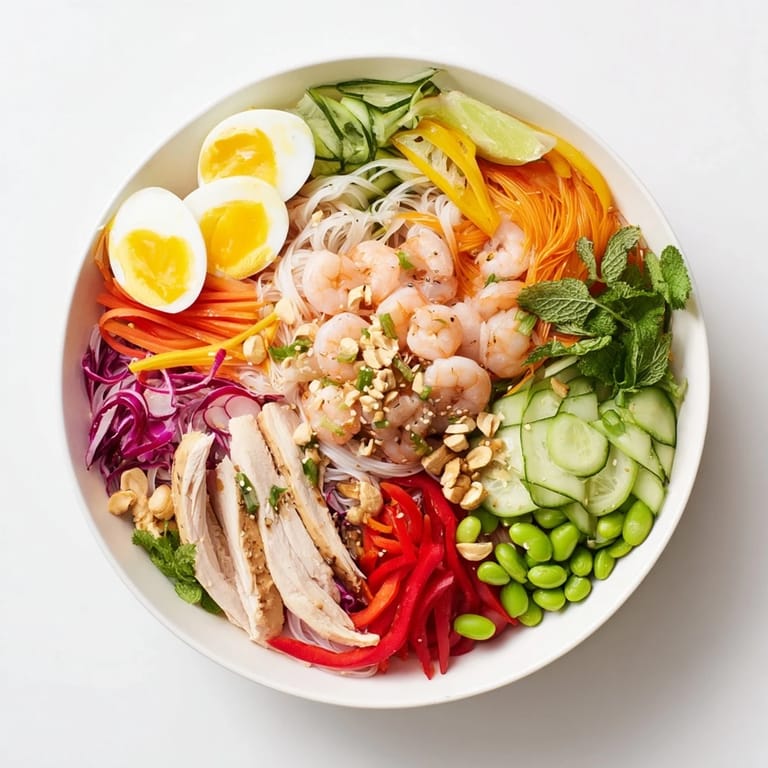
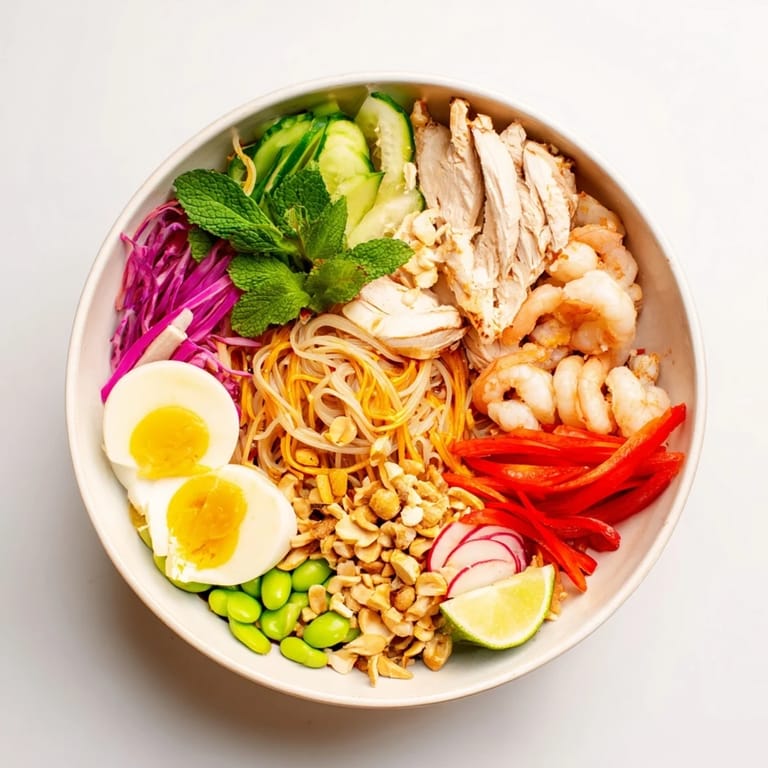
- This is where you slow down and become an artist. Use a sharp knife and a clean cutting board. Julienne your carrots and bell peppers so they're uniform and elegant. Slice your cucumber thin enough to drape gently. Create thin ribbons from your red cabbage. The consistency of your cuts matters more than you might think—it's what transforms ingredient prep into intentional presentation. Arrange everything on your large board or platter as you go, creating neat sections or fans. Think about color placement like you're painting: bright oranges next to deep purples, reds beside whites
- Build your protein zones:
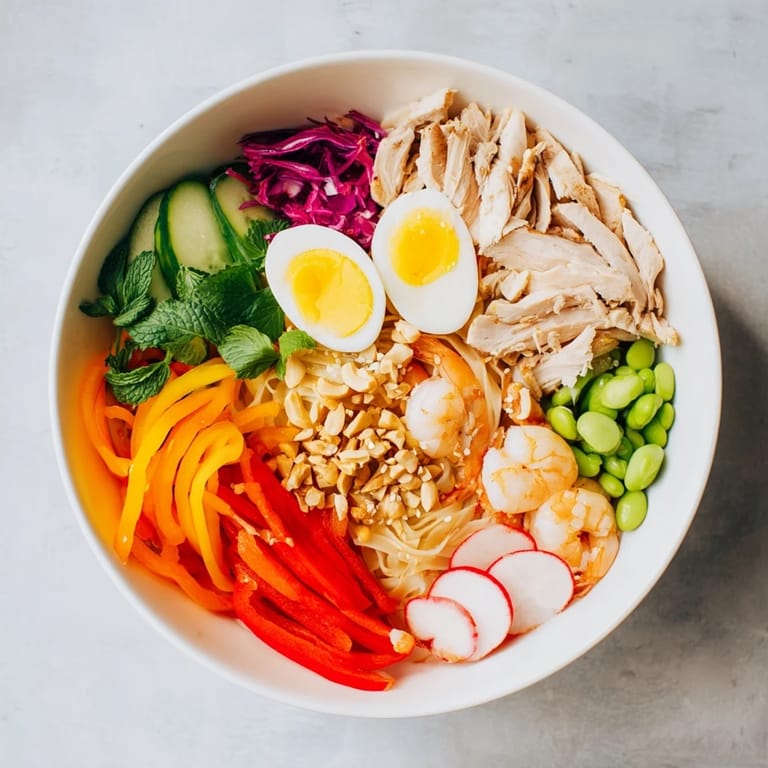
- In separate sections of your board, arrange your sliced chicken breast, shrimp, and halved eggs. These proteins don't need to touch each other—give them their own space so guests can choose their adventure. Keep them chilled until serving time if possible
- Create the sauce heart:
- Place your central bowl right in the middle of the board. If you have a divided bowl with four sections, use that—it's beautiful. If not, use four small bowls and nestle them together in the center. Pour each sauce into its own section: deep amber soy sauce, rich brown peanut sauce, glossy hoisin, and bright red sweet chili. These colors are part of your presentation, so take a moment to admire them before guests arrive
- Fill the remaining space with intention:
- Pile your cooled noodles into available spaces on the board. Scatter your garnishes—cilantro, mint, peanuts, sesame seeds—across the board so they're distributed but not overwhelming. Add your lime wedges to one corner. The goal is abundance and balance: enough variety that everyone finds something that speaks to them, but organized enough that it feels intentional, not chaotic
- Serve with ceremony:
- Bring the board to the table before anyone sits down. Give people a moment to take it in. Let them see the colors, the abundance, the care you've taken. Provide small individual bowls or plates and let guests build their own combinations. This is the whole point—the interactivity, the choice, the conversation that happens as people sample different combinations
 Save to Pinterest
 The most meaningful moment I've had with this dish happened when my mother visited from out of town. She stood in my kitchen watching me arrange everything and just started telling me stories—about dishes from her childhood, about flavors she missed, about how food was her love language. As we built our bowls together, she mixed and tasted, her face lighting up with recognition when she found a combination that transported her. That's when I truly understood: this board isn't just about feeding people. It's about creating space for connection, for memory, for joy.
The Art of the Perfect Board
Making a beautiful noodle board is about understanding that presentation isn't shallow—it's an invitation. When food looks stunning, people slow down. They notice flavors they might have rushed past. They become more thoughtful about their combinations. The arrangement is part of the recipe itself. Think about color, texture, and balance. Bright colors should dance across the board, not cluster in one corner. Soft items like noodles and eggs should be anchored by crunchy vegetables. The sauces in the center are the destination, but everything else is the journey toward them.
Customizing for Your Crowd
One of the greatest gifts of this dish is its flexibility. Someone avoiding shellfish? Remove the shrimp and add more tofu. Vegetarian guests? Use only the egg and tofu as proteins. Someone who loves heat? Set out sriracha or chili oil on the side. Someone avoiding peanuts? Make sure the hoisin and sweet chili sauces are front and center. This board meets people where they are, which is perhaps the most generous thing a dish can do. The beauty of it is that everyone ends up with their perfect meal, not a compromise.
Drinks, Timing, and Gathering
Serving this board is an event. Pair it with something cold and crisp—a light white wine, sake, or even sparkling water with fresh ginger and lime. The meal itself takes about 20 minutes because people are building, tasting, adjusting, talking. There's no rush, which is exactly the point. The beauty of this format is that it works equally well for a casual weeknight with family or an impressive dinner party. You're not stuck in the kitchen—you're at the table with people, sharing in the experience. The only rule is to enjoy it together and give yourself permission to make a little mess.
- Chill your serving board in the freezer for 10 minutes before plating—it keeps everything fresher longer and looks elegant
- Prep all your vegetables the morning of, store them separately in sealed containers, and assemble the board just before serving
- Keep extra cilantro, mint, and lime wedges on the table so people can add more as they eat—these herbs are free flavor enhancement
 Save to Pinterest
 This noodle board is more than a recipe—it's a philosophy about how we eat and gather. Every time you make it, you're saying yes to abundance, to choice, to bringing people together. That's really all you need to know.
Recipe FAQs
- → Which noodles work best for this dish?
Rice noodles or soba noodles both work well; rice noodles provide a lighter texture, while soba add a nutty flavor.
- → How can I keep the noodles from sticking together?
Toss cooked noodles with sesame oil and rinse under cold water to prevent them from clumping.
- → Can I customize the protein options?
Yes, use chicken, shrimp, tofu, boiled eggs, or a combination to suit dietary preferences.
- → What are some good dipping sauces to serve?
Popular choices include soy sauce, spicy peanut sauce, hoisin sauce, and sweet chili sauce for varied flavors.
- → How should I prepare the vegetables for the platter?
Julienne or thinly slice fresh vegetables like carrots, cucumber, bell peppers, and cabbage for vibrant, textured layers.
- → Can this platter be made gluten-free?
Yes, substitute tamari for soy sauce and ensure all dipping sauces are gluten-free.