 Save to Pinterest
 My neighbor Sarah burst through the garden gate one April morning with a basket overflowing with bright yellow dandelions, insisting they were culinary gold and not just weeds. I was skeptical until she described how her grandmother used to bake them into scones for spring celebrations—tender, floral, impossibly delicate. That afternoon, I raided my own overgrown lawn and discovered she was right; something about those sunny petals transformed simple butter and flour into something that tasted like springtime itself.
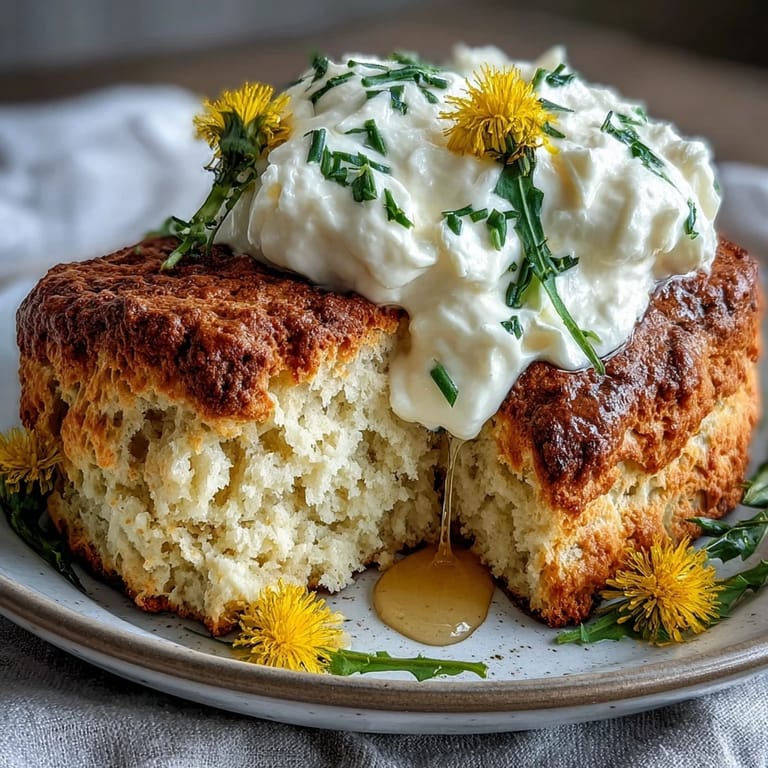
I tested this recipe on the morning of my daughter's tenth birthday party, and watching her friends' faces light up when warm scones appeared on the table—still steaming, glossy with honey and scattered with gold petals—felt like serving sunshine on a plate. One girl asked if they were "fancy flowers from a bakery," and I didn't correct her; sometimes the magic is in not knowing how simple they actually are to make.
Ingredients
- All-purpose flour (2 cups): The foundation that keeps everything light; measuring by weight ensures tender scones every single time.
- Granulated sugar (1/4 cup): Just enough sweetness to balance the earthiness of the dandelion petals without overwhelming them.
- Baking powder (1 tbsp): Your lift and rise agent; make sure it's fresh, as old baking powder won't give you that beautiful puff.
- Fine sea salt (1/2 tsp): Enhances everything else and keeps the sweetness from becoming cloying.
- Unsalted butter (1/2 cup, cold and cubed): Cold butter is non-negotiable—it creates those tender pockets of steam that make scones special.
- Whole milk (2/3 cup, cold): The cold liquid keeps the butter from melting too early in the mixing process.
- Dandelion petals (2 tbsp fresh, pesticide-free yellow parts only): Use only fully opened flowers from an untreated lawn or garden; the yellow petals hold the subtle floral flavor while green parts taste bitter and harsh.
- Honey (2 tbsp): Adds gentle sweetness and helps bind the dough while its warmth brings out the dandelion's delicate perfume.
- Large egg (1): Binds everything together and gives the scones a beautiful golden finish.
- Honey for drizzling (1 tbsp): Applied after baking, it catches the light and adds a glossy, inviting shine.
- Dandelion petals for garnish (2 tbsp): Fresh blooms scattered on top make these feel like springtime captured in a single bite.
- Clotted cream to serve: Rich, slightly tangy, and utterly essential—if you can't find it, whipped cream or mascarpone will work in a pinch, though they're gentler on the palate.
Tired of Takeout? 🥡
Get 10 meals you can make faster than delivery arrives. Seriously.
One email. No spam. Unsubscribe anytime.
Instructions
- Set the stage:
- Preheat your oven to 400°F (200°C) and line a baking sheet with parchment paper. This prevents sticking and gives your scones room to rise without spreading into one another.
- Combine the dry elements:
- In a large bowl, whisk together flour, sugar, baking powder, and salt until everything is evenly distributed. This ensures the leavening hits every part of the dough.
- Work in the cold butter:
- Cut the cold cubed butter into the flour mixture using a pastry cutter, two forks, or your fingertips until the mixture resembles coarse breadcrumbs. The visible little butter pieces are exactly what you want—they'll steam and create those tender layers.
- Prepare the flavor base:
- In a small bowl, whisk together cold milk, honey, egg, and the finely chopped dandelion petals until the petals are evenly distributed. Let this sit for a moment so the petals begin to release their subtle floral notes.
- Bring it together gently:
- Pour the wet mixture into the dry ingredients and stir with a fork until just barely combined. Overmixing develops gluten and creates tough, dense scones; you want some visible flour streaks remaining.
- Shape with a light hand:
- Turn the shaggy dough onto a lightly floured surface and very gently pat it into a 1-inch-thick round, about 6 inches across. Overworking the dough is the enemy of tender scones.
- Cut into wedges:
- Using a sharp knife or a dough cutter, divide the round into 8 equal wedges as you would a pizza. Transfer each to the prepared baking sheet, spacing them about an inch apart.
- Bake until golden:
- Bake for 16 to 18 minutes, watching until the scones are puffed and deeply golden on top. The honey in the dough helps them brown beautifully.
- Finish while warm:
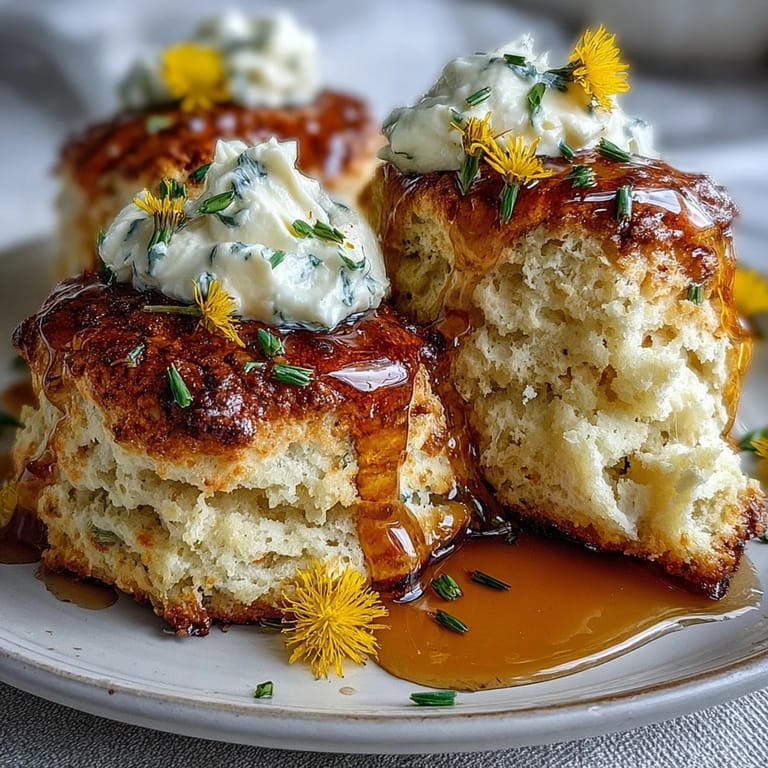
- Remove from the oven and let cool for just a minute or two, then drizzle with honey and scatter fresh dandelion petals across the tops. The warmth softens the honey into a glossy glaze.
- Serve with ceremony:
- Arrange the warm scones on a serving plate and set out generous dollops of clotted cream alongside. These are meant to be eaten warm, when they're at their most tender and the butter is still soft.
 Save to Pinterest
 Last spring, a friend who'd been dealing with a difficult season came over, and something about breaking open a warm scone, watching the steam rise, and spreading clotted cream into all those tender crevices seemed to shift the whole mood of the afternoon. She told me later that it was the first moment in weeks where she felt like something good might be possible again—and I've never forgotten that a simple scone can do more than feed hunger.
The Dandelion Discovery
The first time I ventured into foraging, I was nervous about whether dandelion petals would taste like the weeds I'd been pulling out of my flowerbeds for years. It turns out the flavor depends entirely on how you treat them—young, tender petals from flowers that haven't been stressed by drought or chemicals taste subtly sweet and almost honey-like, with a whisper of earthiness that makes honey taste even more honey-like in comparison. I learned to trust the flowers I found in the shadiest, most protected corners of the garden, where they seemed less bitter and more refined.
Why Cold Matters
One afternoon, I made the mistake of using room-temperature butter when I was in a hurry, and the resulting scones were flat, dense, and forgettable—nothing like the tender, crumbly ones that come from keeping everything as cold as possible. The cold butter doesn't melt into the flour during mixing; instead, it stays in distinct little pieces that create steam pockets in the oven, giving scones that signature airy texture. Now I keep my butter in the freezer, my milk in the coldest part of the fridge, and I even chill my mixing bowl if I have time.
Scone Timing and Storage
These scones are genuinely best eaten the day they're baked while they still have that just-cooled warmth and the clotted cream hasn't yet solidified the exterior. If you do have leftovers, wrap them in a kitchen towel and reheat gently in a 300°F oven for about five minutes to restore some softness. Here's what I've learned about making them part of your rhythm:
- Mix and bake within 30 minutes of deciding you want scones—they're faster than you'd expect.
- Pair these with floral white tea, sparkling wine, or even a simple cup of coffee, depending on what time of day you're serving them.
- If clotted cream isn't available where you are, mascarpone whipped with a tiny bit of honey works beautifully as a substitute.
 Save to Pinterest
 There's something quietly magical about scones that taste like spring, served warm with clotted cream and the knowledge that you made them yourself in under an hour. They're proof that fancy doesn't require fussing, only good ingredients treated with care.
Recipe FAQs
- → What gives the scones their unique floral flavor?
Fresh dandelion petals add a subtle, sweet floral note complementing the honey's natural sweetness.
- → How should the butter be incorporated for best texture?
Use cold, cubed butter cut into flour until the mix resembles coarse crumbs, ensuring a flaky texture.
- → Can I substitute clotted cream with another topping?
Yes, whipped cream or mascarpone offer creamy alternatives that pair well with the scones.
- → What is the ideal baking temperature and time?
Bake at 400°F (200°C) for about 16–18 minutes until golden brown and puffed.
- → How can I avoid bitterness from the dandelion petals?
Use only fully opened, yellow dandelion petals and avoid any green, bitter parts.