 Save to Pinterest
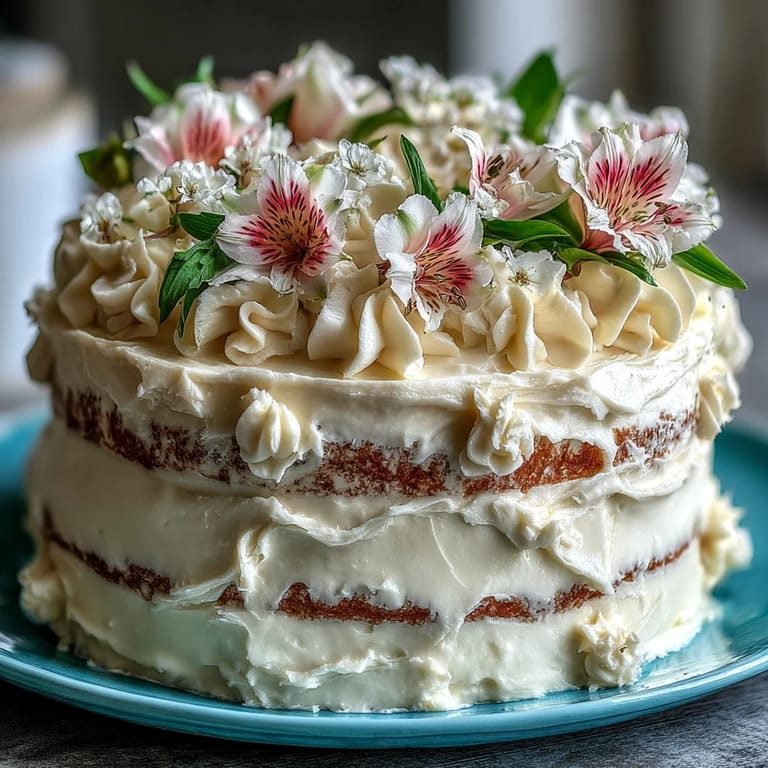
 My sister called me three weeks before her thirtieth birthday asking if I could make her a cake. Not just any cake—she wanted something that screamed spring, with soft pastels and delicate floral piping that looked almost too pretty to eat. I'd never attempted buttercream florals before, but something about the challenge excited me. Standing in my kitchen at midnight, sketching flower designs on scraps of paper, I realized this cake would become the centerpiece of her celebration in ways I hadn't expected.
Watching my sister's face light up when she saw the finished cake sitting on her dining room table was worth every minute spent practicing piped roses and delicate leaves. Her friends immediately pulled out their phones, and suddenly this cake became the main event before anyone had even taken a bite. That's when I understood the magic of baking something both delicious and beautiful.
Ingredients
- All-purpose flour (2 ½ cups): The foundation of the cake's tender crumb—measure by spooning into a cup rather than scooping directly from the bag to avoid compacting the flour.
- Baking powder (2 ½ tsp): Creates the lift that keeps this cake light and fluffy, not dense and heavy.
- Salt (½ tsp): Enhances the vanilla flavor and balances sweetness, so don't skip it.
- Unsalted butter (1 cup for cake, 1 ½ cups for buttercream): Room temperature butter creams properly and incorporates air for a fluffy texture.
- Granulated sugar (2 cups): Dissolves into the butter to create that signature light and fluffy crumb.
- Eggs (4 large ones): Room temperature eggs emulsify better with the butter, creating a smoother batter.
- Pure vanilla extract (1 tbsp for cake, 2 tsp for buttercream): Use pure, not imitation—it makes a noticeable difference in flavor depth.
- Whole milk (1 cup for cake, ¼ cup for buttercream): Room temperature milk mixes evenly and prevents lumps in the batter.
- Powdered sugar (6 cups, sifted): Sifting removes lumps that would otherwise leave grainy buttercream.
- Gel food coloring: Gel colors won't thin the buttercream like liquid colors do, keeping your frosting the right consistency for piping.
- Edible flower petals and sprinkles: Optional garnishes that add a finishing touch and coordinate with your pastel theme.
Tired of Takeout? 🥡
Get 10 meals you can make faster than delivery arrives. Seriously.
One email. No spam. Unsubscribe anytime.
Instructions
- Prepare your pans and preheat:
- Set your oven to 350°F and grease three 8-inch round pans, then line the bottoms with parchment paper so your cakes release cleanly. This step takes just a few minutes but saves you from cake-stuck-to-pan heartbreak.
- Combine dry ingredients:
- Whisk the flour, baking powder, and salt together in a medium bowl until evenly distributed. This ensures the leavening agent spreads throughout the batter, giving you even rise in every slice.
- Cream butter and sugar:
- Beat the room-temperature butter and sugar on medium-high speed for about 3 to 4 minutes until the mixture looks pale and fluffy, almost like clouds. You'll see the color lighten and the texture become airy—this is where the magic happens.
- Add eggs one by one:
- Add each egg individually, beating well after each addition so it incorporates fully into the butter mixture. This gradual process creates a stable emulsion that gives the cake its tender crumb.
- Mix in vanilla extract:
- Stir in the vanilla extract after all eggs are added, beating just until combined. The vanilla flavor becomes part of the entire batter rather than sitting in pools.
- Alternate wet and dry ingredients:
- Add the flour mixture and milk alternately, starting with flour and ending with flour, mixing on low speed just until combined. Overmixing develops gluten, which makes the cake tough instead of tender, so show restraint here even if it feels incomplete.
- Divide batter into pans:
- Distribute the batter evenly among the three prepared pans and smooth the tops with a spatula. Dividing evenly means the three layers bake at the same rate and stack evenly.
- Bake until golden:
- Bake for 25 to 30 minutes until a toothpick inserted in the center comes out clean or with just a few moist crumbs. Watch for the edges to pull slightly away from the sides of the pans—that's your signal they're nearly done.
- Cool completely:
- Let the cakes rest in their pans for 10 minutes, then turn them out onto wire racks to cool completely. This resting period prevents the delicate cake from cracking while still warm.
- Make the buttercream:
- Beat the room-temperature butter in a large bowl until it's pale and creamy, about 1 to 2 minutes, then gradually add the sifted powdered sugar, milk, vanilla, and salt. Continue beating for another 3 to 4 minutes until the mixture becomes fluffy and holds soft peaks.
- Divide and tint buttercream:
- Scoop the buttercream into separate bowls and tint each with gel food coloring, stirring gently until the color is even. Start with just a toothpick's worth of gel and add more if needed—gel color is concentrated and a little goes a long way.
- Stack and crumb coat:
- Place the first cake layer on your serving plate, spread buttercream on top, then repeat with the second and third layers. Apply a thin layer of buttercream over the entire cake to seal in crumbs, then chill for 20 minutes so this base layer sets.
- Decorate with florals:
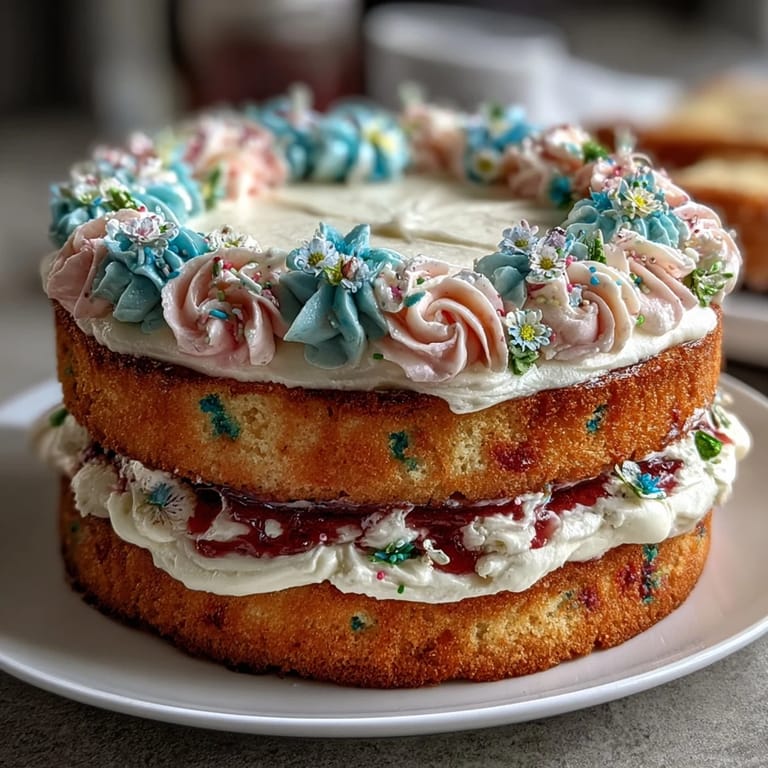
- Using piping bags fitted with various tips, pipe delicate floral designs across the top and sides of the cake using your tinted buttercreams. If piping feels intimidating, even simple swirls and dots look beautiful when done in pastel colors.
- Final chill and garnish:
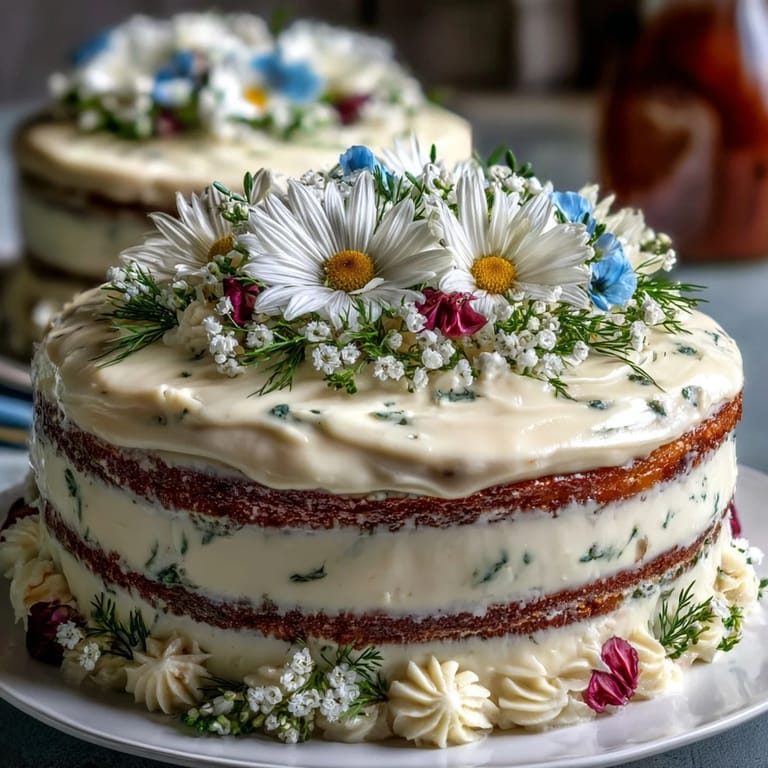
- Refrigerate the finished cake for 15 to 20 minutes to set the buttercream, then garnish with edible flower petals or sprinkles if desired. Chill until serving time.
 Save to Pinterest
 I'll never forget my sister calling me the next morning to say she'd woken up craving another slice, and that three of her friends had asked for my number wanting cakes of their own. That's when I realized this recipe wasn't just about celebrating a birthday—it was about creating a moment people wanted to remember and share.
The Secret to Tender Cake
The key to this cake's impossibly soft texture is the combination of creaming the butter and sugar thoroughly until light and fluffy, then alternating the flour with milk. The milk provides moisture that keeps the cake tender even days later, and the thorough creaming incorporates air that creates a delicate crumb. I learned this the hard way after making dense, dry cakes for years before understanding that technique matters as much as ingredients.
Mastering Pastel Buttercream
Pastel colors require a delicate touch with gel food coloring—you want enough color to be visible but not so much that the buttercream looks neon or unnatural. The beauty of pastels is that they photograph beautifully in natural light, making this cake perfect for anyone who wants their creation to look Instagram-worthy. I've found that mixing colors slightly creates more interesting shades, like adding a touch of pink to lavender for a mauve, or yellow to blue for a soft teal.
Piping Florals That Wow
You don't need to be a professional pastry chef to create beautiful floral designs on this cake. Even simple techniques like using a round tip to pipe dots that form flower centers, then adding leaves with a leaf tip, create an elegant effect when done in pastel colors. Practice on parchment paper before decorating the cake, but remember that small imperfections add character and show the cake was handmade with care.
- Start piping at the top center of the cake and work outward, leaving space for the design to feel balanced rather than crowded.
- Keep your piping bag at a consistent angle and pressure to create uniform shapes that look intentional rather than accidental.
- If you make a mistake, a small offset spatula can smooth out unwanted piping, and you can re-frost that section.
 Save to Pinterest
 This cake represents more than just a recipe—it's permission to slow down, practice a new skill, and create something beautiful for the people you love. Every time you make it, you'll find your own rhythm and discover what works best in your kitchen.
Recipe FAQs
- → What type of flour is best for this cake?
All-purpose flour helps achieve a tender yet sturdy crumb, supporting the layers and buttercream well.
- → How can I achieve smooth, pastel-colored buttercream?
Beat softened butter until creamy, then gradually add sifted powdered sugar and milk. Use gel food coloring sparingly to reach soft pastel shades.
- → What is the purpose of chilling the cake after crumb coating?
Chilling firms the crumb coat, making it easier to apply final decorative layers without crumbs mixing in.
- → Can I substitute any ingredients for dietary preferences?
The recipe uses dairy and eggs; substitutions may affect texture. Consider plant-based alternatives but test for desired results.
- → How long should the cake cool before frosting?
Cool layers completely on a wire rack after baking and initial pan rest to prevent buttercream melting.